Department of Biology and Microbiology, University of Wisconsin Oshkosh, Oshkosh, Wisconsin, USA.
PLoS Negl Trop Dis. 2011 Nov;5(11):e1261. doi: 10.1371/journal.pntd.0001261. Epub 2011 Nov 29.
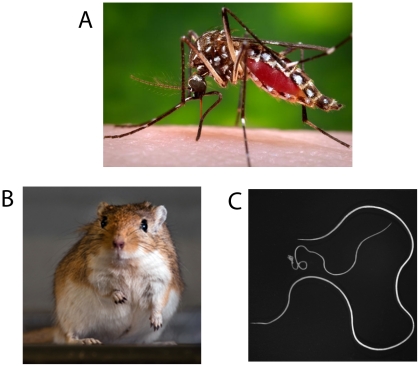
Filarial worms cause a variety of tropical diseases in humans; however, they are difficult to study because they have complex life cycles that require arthropod intermediate hosts and mammalian definitive hosts. Research efforts in industrialized countries are further complicated by the fact that some filarial nematodes that cause disease in humans are restricted in host specificity to humans alone. This potentially makes the commitment to research difficult, expensive, and restrictive. Over 40 years ago, the United States National Institutes of Health-National Institute of Allergy and Infectious Diseases (NIH-NIAID) established a resource from which investigators could obtain various filarial parasite species and life cycle stages without having to expend the effort and funds necessary to maintain the entire life cycles in their own laboratories. This centralized resource (The Filariasis Research Reagent Resource Center, or FR3) translated into cost savings to both NIH-NIAID and to principal investigators by freeing up personnel costs on grants and allowing investigators to divert more funds to targeted research goals. Many investigators, especially those new to the field of tropical medicine, are unaware of the scope of materials and support provided by the FR3. This review is intended to provide a short history of the contract, brief descriptions of the fiilarial species and molecular resources provided, and an estimate of the impact the resource has had on the research community, and describes some new additions and potential benefits the resource center might have for the ever-changing research interests of investigators.
丝虫引起人类的各种热带病;然而,由于它们具有复杂的生命周期,需要节肢动物中间宿主和哺乳动物终末宿主,因此很难研究。工业化国家的研究工作进一步复杂化,因为有些引起人类疾病的丝虫线虫对人类的宿主特异性仅限于人类。这可能使得研究难以承诺,成本高且限制多。40 多年前,美国国立卫生研究院-国家过敏和传染病研究所(NIH-NIAID)建立了一个资源,研究人员可以从中获得各种丝虫寄生虫物种和生命周期阶段,而不必花费必要的精力和资金在自己的实验室中维持整个生命周期。这个集中的资源(丝虫病研究试剂资源中心,或 FR3)为 NIH-NIAID 和主要研究人员节省了成本,因为它免除了赠款人员成本,并允许研究人员将更多资金用于有针对性的研究目标。许多研究人员,特别是那些刚涉足热带医学领域的人,都不知道 FR3 提供的材料和支持的范围。这篇综述旨在提供该合同的简短历史、提供的丝虫物种和分子资源的简要描述,以及对该资源对研究界的影响的估计,并描述了资源中心可能为研究人员不断变化的研究兴趣带来的一些新的补充和潜在好处。