Department of Pharmacology, Innsbruck Medical University, Peter-Mayr-Str. 1a, 6020, Innsbruck, Austria.
Psychopharmacology (Berl). 2012 Jun;221(3):527-35. doi: 10.1007/s00213-011-2599-3. Epub 2011 Dec 7.
The influence of ovarian hormones on behaviour is well accepted, and oestrogen replacement therapy has proven to be beneficial in several cases of menopausal mood disorders. However, there are also some adverse effects of such a therapy, like anxiety and dysphoria. In fact, some women feel better at low levels of oestrogen and worse when levels fluctuate. Still, it is unclear which receptors might mediate negative emotional effects.
The aim of this study was to identify which oestrogen receptor(s) are capable of mediating negative emotional effects and, therefore, may represent candidates responsible for the adverse side effects observed in oestrogen replacement therapy.
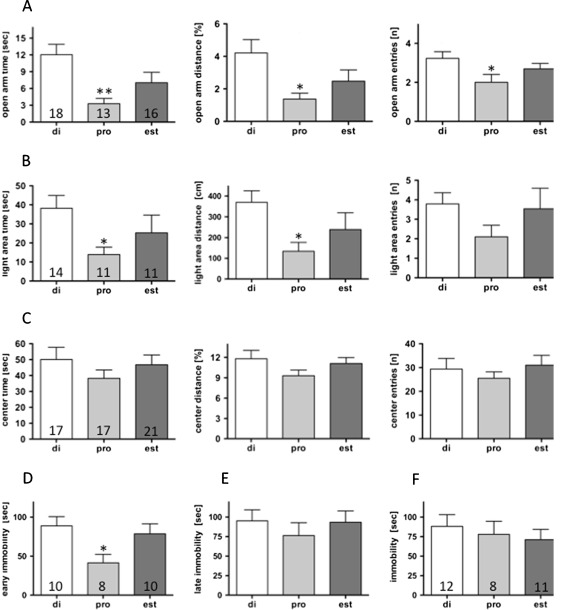
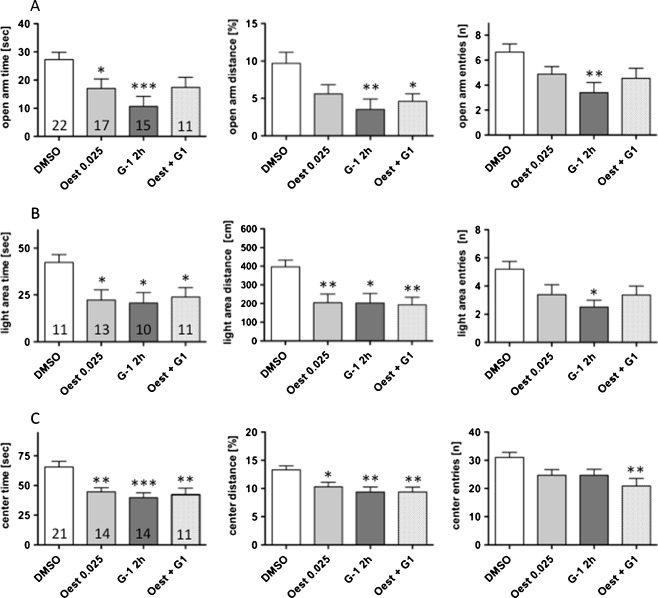
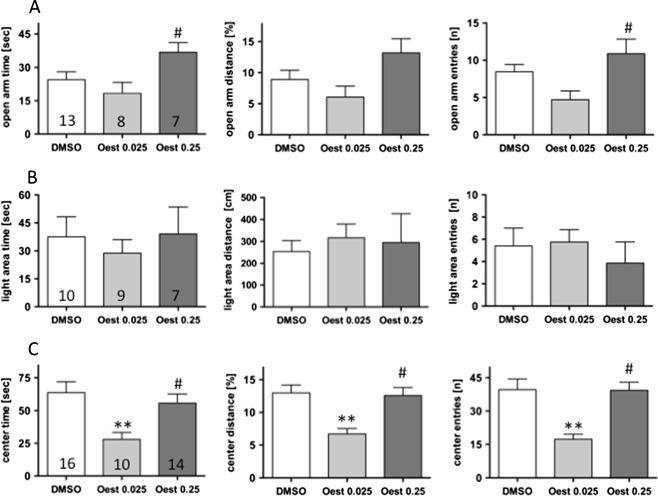
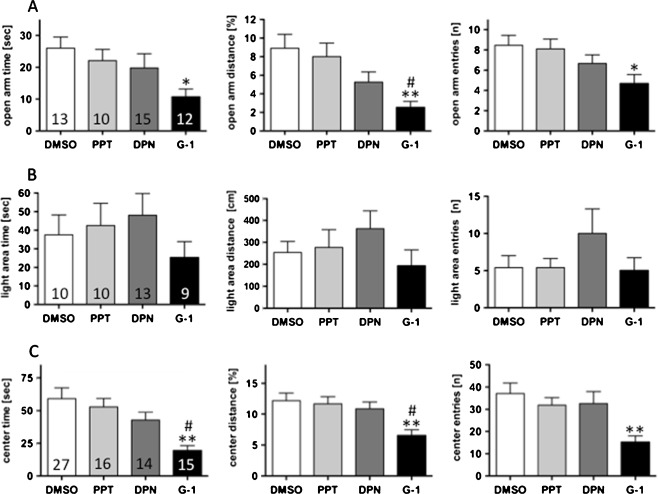
We provide evidence from mouse behavioural tests that oestrogen-induced anxiogenic-like effects might be mediated, at least in part, by the G protein-coupled receptor GPR30. The short-term application of specific agonists against the alpha and beta oestrogen receptors did not result in marked behavioural changes. In contrast, the specific stimulation of GPR30 in male and ovariectomized female mice induced anxiogenic effects. The anxiogenic effects induced by the specific GPR30 agonist G-1 were comparable (and non-accumulative) to those observed after low doses of the general oestrogen receptor agonist 17b-oestradiol in male mice, thereby reflecting the behavioural changes observed in intact female mice during early pro-oestrus.
Our data suggest that GPR30 induces acute anxiogenic effects of oestrogen in rodents. It is tempting to speculate that a potential imbalance in the expression of the anxiolytic beta oestrogen receptor and the anxiogenic GPR30 may also be involved in the negative symptoms of oestrogen replacement therapy in humans.
卵巢激素对行为的影响已得到广泛认可,雌激素替代疗法已被证明对几种更年期情绪障碍有效。然而,这种疗法也存在一些不良反应,如焦虑和不适。事实上,一些女性在雌激素水平较低时感觉更好,而在水平波动时感觉更糟。尽管如此,目前仍不清楚哪些受体可能介导负面情绪影响。
本研究旨在确定哪些雌激素受体能够介导负面情绪影响,因此可能是雌激素替代疗法中观察到的不良反应的候选受体。
我们提供了来自小鼠行为测试的证据,表明雌激素引起的焦虑样作用可能至少部分由 G 蛋白偶联受体 GPR30 介导。短期应用针对α和β雌激素受体的特异性激动剂不会导致明显的行为改变。相比之下,特异性刺激雄性和去卵巢雌性小鼠中的 GPR30 会引起焦虑样作用。特异性 GPR30 激动剂 G-1 诱导的焦虑样作用与在雄性小鼠中观察到的低剂量通用雌激素受体激动剂 17β-雌二醇相当(且非累积性),从而反映了完整雌性小鼠在动情前期早期观察到的行为变化。
我们的数据表明,GPR30 在啮齿动物中诱导雌激素的急性焦虑样作用。人们不禁推测,在雌激素替代疗法的负面症状中,可能也涉及到抗焦虑的β雌激素受体和焦虑诱导的 GPR30 表达的潜在失衡。