Singapore Immunology Network, BMSI, A*STAR, Singapore.
PLoS Pathog. 2011 Dec;7(12):e1002390. doi: 10.1371/journal.ppat.1002390. Epub 2011 Dec 1.
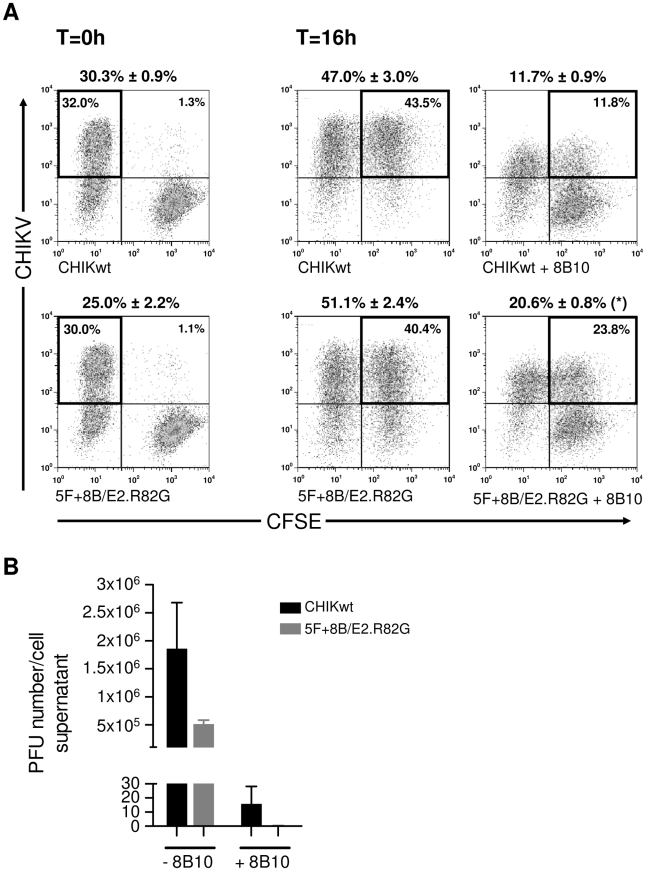
Chikungunya virus (CHIKV) is an alphavirus responsible for numerous epidemics throughout Africa and Asia, causing infectious arthritis and reportedly linked with fatal infections in newborns and elderly. Previous studies in animal models indicate that humoral immunity can protect against CHIKV infection, but despite the potential efficacy of B-cell-driven intervention strategies, there are no virus-specific vaccines or therapies currently available. In addition, CHIKV has been reported to elicit long-lasting virus-specific IgM in humans, and to establish long-term persistence in non-human primates, suggesting that the virus might evade immune defenses to establish chronic infections in man. However, the mechanisms of immune evasion potentially employed by CHIKV remain uncharacterized. We previously described two human monoclonal antibodies that potently neutralize CHIKV infection. In the current report, we have characterized CHIKV mutants that escape antibody-dependent neutralization to identify the CHIKV E2 domain B and fusion loop "groove" as the primary determinants of CHIKV interaction with these antibodies. Furthermore, for the first time, we have also demonstrated direct CHIKV cell-to-cell transmission, as a mechanism that involves the E2 domain A and that is associated with viral resistance to antibody-dependent neutralization. Identification of CHIKV sub-domains that are associated with human protective immunity, will pave the way for the development of CHIKV-specific sub-domain vaccination strategies. Moreover, the clear demonstration of CHIKV cell-to-cell transmission and its possible role in the establishment of CHIKV persistence, will also inform the development of future anti-viral interventions. These data shed new light on CHIKV-host interactions that will help to combat human CHIKV infection and inform future studies of CHIKV pathogenesis.
基孔肯雅病毒(CHIKV)是一种引发非洲和亚洲多次流行的甲病毒,会导致传染性关节炎,并有报告称与新生儿和老年人的致命感染有关。动物模型中的先前研究表明,体液免疫可以预防 CHIKV 感染,但尽管 B 细胞驱动的干预策略具有潜在的功效,但目前尚无针对该病毒的特异性疫苗或治疗方法。此外,据报道,CHIKV 可在人类中引发持久的病毒特异性 IgM,并在非人类灵长类动物中建立长期持久性,这表明该病毒可能逃避免疫防御,从而在人类中建立慢性感染。然而,CHIKV 可能采用的免疫逃避机制尚未得到充分描述。我们之前描述了两种能够有效中和 CHIKV 感染的人源单克隆抗体。在本报告中,我们对逃逸抗体依赖中和的 CHIKV 突变体进行了鉴定,以确定 CHIKV E2 结构域 B 和融合环“凹槽”是 CHIKV 与这些抗体相互作用的主要决定因素。此外,我们首次还证明了 CHIKV 细胞间传播作为一种机制的存在,该机制涉及 E2 结构域 A,与病毒对抗体依赖中和的抗性有关。鉴定与人类保护性免疫相关的 CHIKV 亚结构域将为开发 CHIKV 特异性亚结构域疫苗接种策略铺平道路。此外,明确证明 CHIKV 细胞间传播及其在 CHIKV 持续性建立中的可能作用,也将为未来抗病毒干预措施的发展提供信息。这些数据为 CHIKV 与宿主的相互作用提供了新的认识,有助于对抗人类 CHIKV 感染,并为未来 CHIKV 发病机制的研究提供信息。