Department of Human Genetics, University of Chicago, Chicago, Illinois, USA.
PLoS Biol. 2011 Dec;9(12):e1001211. doi: 10.1371/journal.pbio.1001211. Epub 2011 Dec 6.
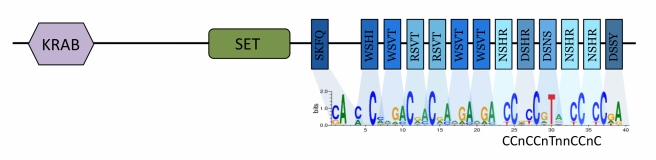
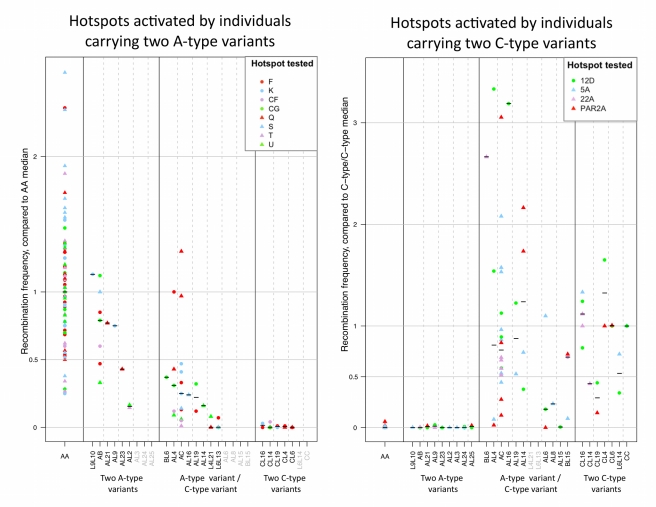
During mammalian meiosis, double-strand breaks are deliberately made throughout the genome and then repaired, leading to the exchange of genetic material between copies of chromosomes. How the locations of breaks are specified was largely unknown until a fortuitous confluence of statistical genetics and molecular biology uncovered the role of PRDM9, a DNA binding protein. Many properties of this protein remain mysterious, however, including how it binds to DNA, how it contributes to male infertility-both in humans, and in hybrid mice-and why, in spite of its fundamental function in meiosis, its binding domain varies extensively among humans and across mammals. We present a brief summary of what has recently been learned about PRDM9 in different fields, focusing on the puzzles yet to be resolved.
在哺乳动物减数分裂过程中,双链在整个基因组中被故意打断,然后修复,导致染色体副本之间遗传物质的交换。直到统计遗传学和分子生物学的偶然融合揭示了 PRDM9(一种 DNA 结合蛋白)的作用,断裂的位置如何被指定在很大程度上仍然是未知的。然而,这种蛋白质的许多特性仍然是神秘的,包括它如何与 DNA 结合,它如何导致男性不育——无论是在人类,还是在杂交老鼠中,以及尽管它在减数分裂中具有基本功能,但它的结合域在人类和哺乳动物中却广泛变化。我们简要总结了最近在不同领域中对 PRDM9 的了解,重点介绍了尚未解决的难题。