School of Life Sciences, University of Sussex, Falmer, Brighton, United Kingdom.
PLoS One. 2011;6(12):e28638. doi: 10.1371/journal.pone.0028638. Epub 2011 Dec 6.
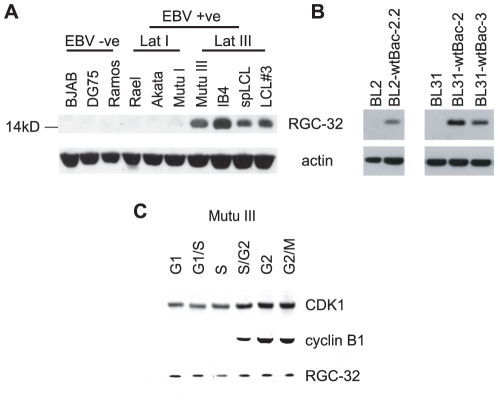
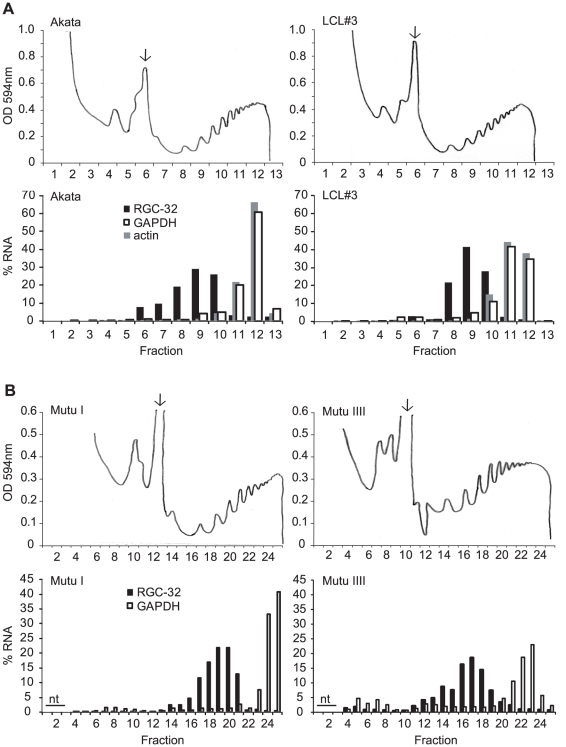
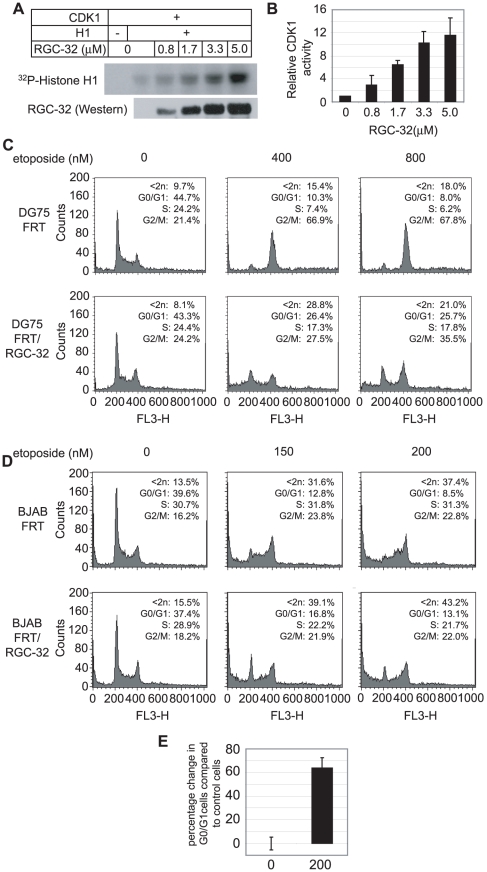
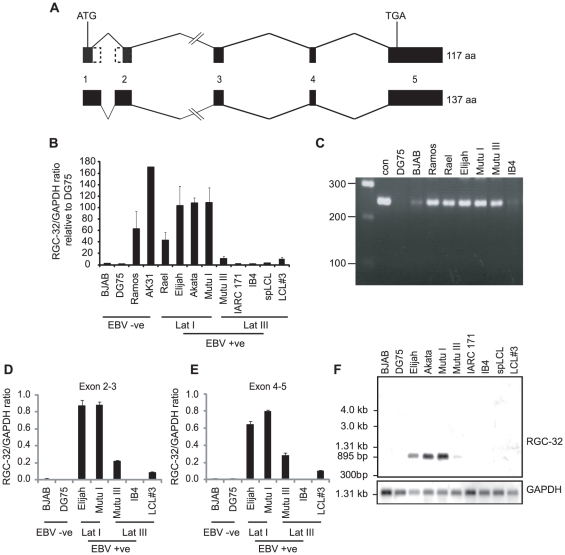
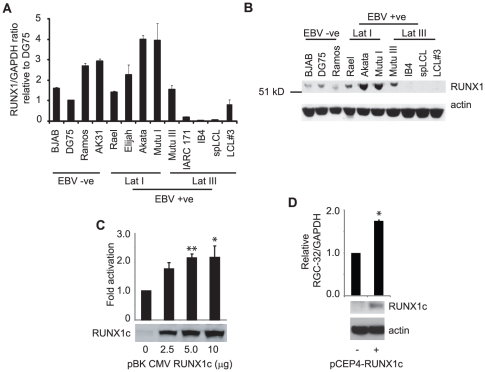
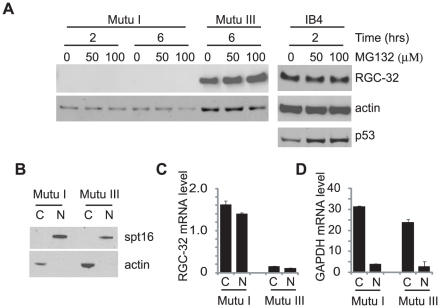
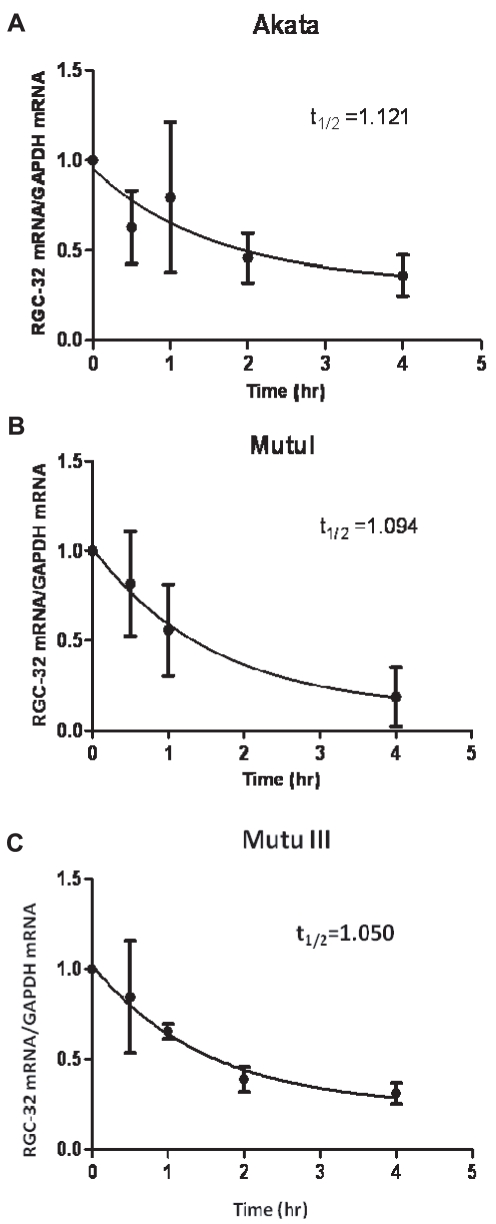
Epstein-Barr virus (EBV) is implicated in the pathogenesis of multiple human tumours of lymphoid and epithelial origin. The virus infects and immortalizes B cells establishing a persistent latent infection characterized by varying patterns of EBV latent gene expression (latency 0, I, II and III). The CDK1 activator, Response Gene to Complement-32 (RGC-32, C13ORF15), is overexpressed in colon, breast and ovarian cancer tissues and we have detected selective high-level RGC-32 protein expression in EBV-immortalized latency III cells. Significantly, we show that overexpression of RGC-32 in B cells is sufficient to disrupt G2 cell-cycle arrest consistent with activation of CDK1, implicating RGC-32 in the EBV transformation process. Surprisingly, RGC-32 mRNA is expressed at high levels in latency I Burkitt's lymphoma (BL) cells and in some EBV-negative BL cell-lines, although RGC-32 protein expression is not detectable. We show that RGC-32 mRNA expression is elevated in latency I cells due to transcriptional activation by high levels of the differentially expressed RUNX1c transcription factor. We found that proteosomal degradation or blocked cytoplasmic export of the RGC-32 message were not responsible for the lack of RGC-32 protein expression in latency I cells. Significantly, analysis of the ribosomal association of the RGC-32 mRNA in latency I and latency III cells revealed that RGC-32 transcripts were associated with multiple ribosomes in both cell-types implicating post-initiation translational repression mechanisms in the block to RGC-32 protein production in latency I cells. In summary, our results are the first to demonstrate RGC-32 protein upregulation in cells transformed by a human tumour virus and to identify post-initiation translational mechanisms as an expression control point for this key cell-cycle regulator.
EB 病毒(EBV)与多种淋巴和上皮来源的人类肿瘤的发病机制有关。该病毒感染并使 B 细胞永生化,从而建立了一种以 EBV 潜伏基因表达不同模式为特征的持续性潜伏感染(潜伏 0、I、II 和 III)。细胞周期蛋白依赖性激酶 1 激活剂,补体 32 反应基因(Response Gene to Complement-32,RGC-32,C13ORF15)在结肠癌、乳腺癌和卵巢癌组织中过度表达,我们在 EBV 永生化潜伏 III 细胞中检测到选择性高水平的 RGC-32 蛋白表达。重要的是,我们表明 RGC-32 在 B 细胞中的过表达足以破坏 G2 细胞周期阻滞,与 CDK1 的激活一致,表明 RGC-32 参与 EBV 的转化过程。令人惊讶的是,RGC-32 mRNA 在潜伏 I 型伯基特淋巴瘤(BL)细胞和一些 EBV 阴性 BL 细胞系中高水平表达,尽管无法检测到 RGC-32 蛋白表达。我们表明,由于差异表达的 RUNX1c 转录因子的转录激活,RGC-32 mRNA 在潜伏 I 细胞中的表达水平升高。我们发现,RGC-32 信使核糖核酸的蛋白酶体降解或阻止细胞质输出都不是潜伏 I 细胞中缺乏 RGC-32 蛋白表达的原因。重要的是,对潜伏 I 和潜伏 III 细胞中 RGC-32 mRNA 的核糖体关联分析表明,RGC-32 转录物在两种细胞类型中都与多个核糖体相关联,这表明在潜伏 I 细胞中,起始后翻译抑制机制在阻止 RGC-32 蛋白产生中起作用。总之,我们的结果首次证明了 RGC-32 蛋白在上皮来源的人类肿瘤病毒转化的细胞中上调,并确定了起始后翻译机制是这种关键细胞周期调节剂的表达调控点。