Laboratório de Transmissores de Leishmanioses, Instituto Oswaldo Cruz/FIOCRUZ, Rio de Janeiro, Rio de Janeiro, Brasil.
PLoS One. 2011;6(12):e27721. doi: 10.1371/journal.pone.0027721. Epub 2011 Dec 7.
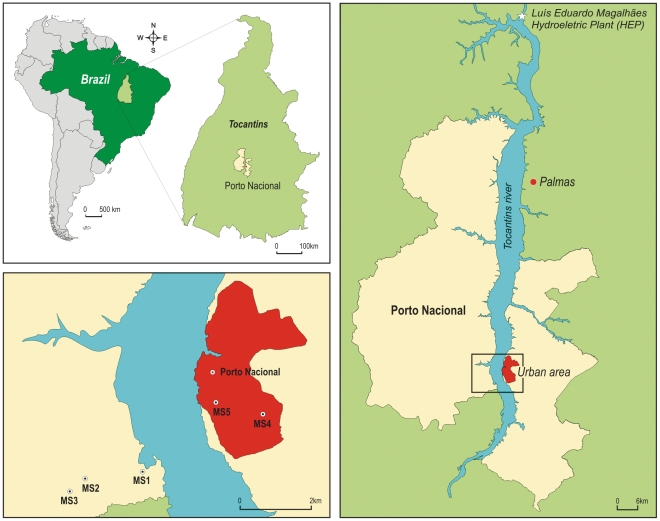
Although leishmaniases are regarded as serious public health issues in the State of Tocantins, as consequence of the impact of environmental changes, small advances in taxonomic and ecological studies of Phlebotominae fauna are taking place in this state. The present study aimed to improve the knowledge about the sand flies, as well as about the aspects of the bioecology of leishmaniases vectors from Porto Nacional, a city that was directly impacted by the construction of Luís Eduardo Magalhães Hydroelectric Plant (HEP-Lajeado).
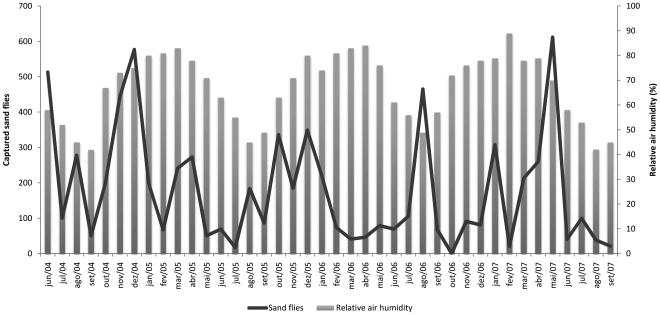
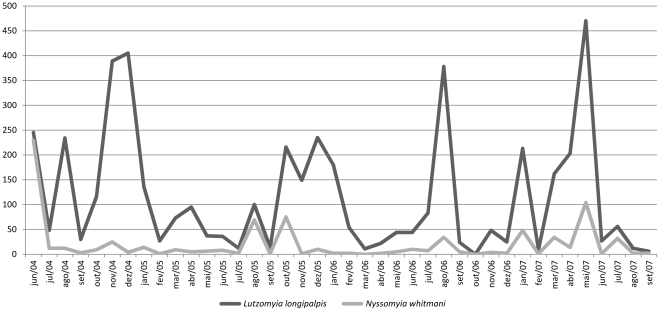
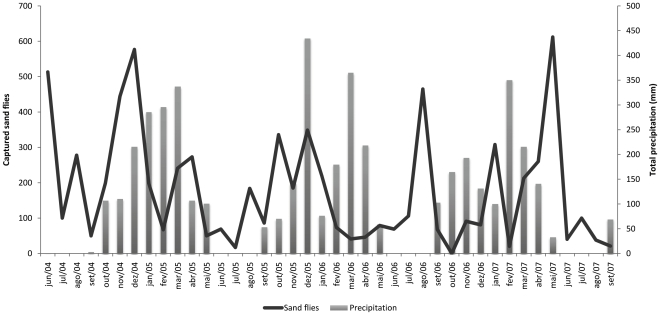
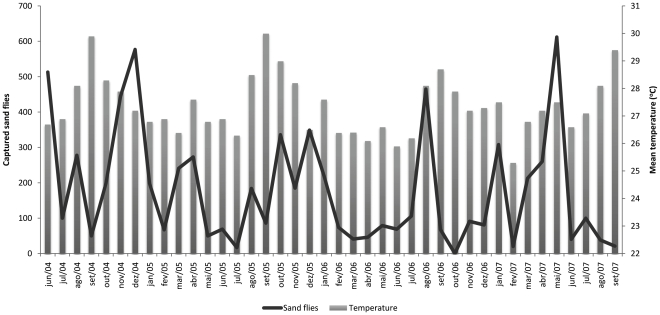
METHODOLOGY/PRINCIPAL FINDINGS: Sand flies were collected monthly using CDC light traps and Shannon traps for a period of 40 consecutive months, at different monitoring stations, where 7162 specimens were collected and 48 species were detected. Among the species found, 22 are first records in the state and seven are considered important vectors of leishmaniases. Lutzomyia longipalpis, the vector of American Visceral Leishmaniasis (AVL) showed higher frequency in urban compared to rural areas, and Nyssomyia whitmani, the vector of American Cutaneous Leishmaniasis (ACL), predominated in rural areas. The frequency and habits of sand fly vectors are discussed considering environmental characteristics and climatic factors.
CONCLUSIONS/SIGNIFICANCE: The construction of dams requires a great amount of labor, therefore attracting people from elsewhere. Increased migration, without adequate structure, leads to bad living conditions in new and unplanned settlements. It also leads to deforestation associated with environmental impacts, which can facilitate the spread of leishmaniases. This study discusses the importance of Lu. longipalpis and Ny. whitmani on the transmission cycles of leishmaniases in Porto Nacional and the record of Bi. flaviscutellata in periurban area of the city.
尽管莱什曼病被认为是托坎廷斯州的严重公共卫生问题,但由于环境变化的影响,在该州,关于鳞翅目动物区系的分类学和生态学研究仅取得了微小的进展。本研究旨在增进对该州沙蝇的了解,以及了解波图纳尔国家生物生态方面的知识,该城市直接受到拉杰多水电站的建设的影响。
方法/主要发现:在 40 个月的连续时间内,每月使用 CDC 灯诱捕器和 Shannon 诱捕器在不同的监测站收集沙蝇,共收集到 7162 只标本,检测到 48 种。在所发现的物种中,有 22 种是该州的首次记录,有 7 种被认为是重要的莱什曼病传播媒介。美洲内脏利什曼病(AVL)的传播媒介长角血蜱在城市地区的出现频率高于农村地区,而美洲皮肤利什曼病(ACL)的传播媒介白蛉在农村地区更为普遍。考虑到环境特征和气候因素,讨论了沙蝇传播媒介的频率和习性。
结论/意义:水坝的建设需要大量劳动力,因此吸引了来自其他地方的人。移民人数增加,而基础设施不完善,导致新的和无计划的定居点的生活条件恶化。它还导致与环境影响相关的森林砍伐,这可能会促进莱什曼病的传播。本研究讨论了在波图纳尔,长角血蜱和白蛉在莱什曼病传播周期中的重要性,以及在城市周边地区记录到的 Bi. flaviscutellata。