Department of Signal Theory, Communications and Telematic Engineering, University of Valladolid, 47011 Valladolid, Spain.
Sensors (Basel). 2010;10(7):6901-47. doi: 10.3390/s100706901. Epub 2010 Jul 19.
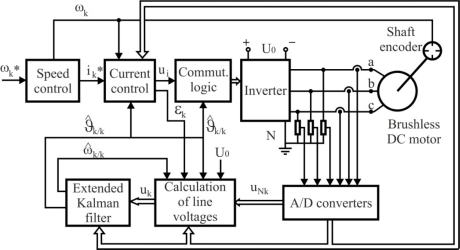
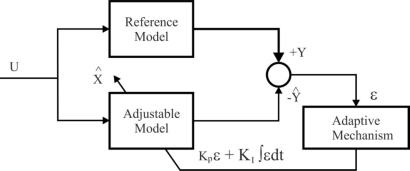
This paper provides a technical review of position and speed sensorless methods for controlling Brushless Direct Current (BLDC) motor drives, including the background analysis using sensors, limitations and advances. The performance and reliability of BLDC motor drivers have been improved because the conventional control and sensing techniques have been improved through sensorless technology. Then, in this paper sensorless advances are reviewed and recent developments in this area are introduced with their inherent advantages and drawbacks, including the analysis of practical implementation issues and applications. The study includes a deep overview of state-of-the-art back-EMF sensing methods, which includes Terminal Voltage Sensing, Third Harmonic Voltage Integration, Terminal Current Sensing, Back-EMF Integration and PWM strategies. Also, the most relevant techniques based on estimation and models are briefly analysed, such as Sliding-mode Observer, Extended Kalman Filter, Model Reference Adaptive System, Adaptive observers (Full-order and Pseudoreduced-order) and Artificial Neural Networks.
本文对无位置和速度传感器的控制无刷直流(BLDC)电机驱动方法进行了技术回顾,包括使用传感器的背景分析、限制和进展。由于无传感器技术改进了传统的控制和传感技术,因此 BLDC 电机驱动器的性能和可靠性得到了提高。然后,本文回顾了无传感器的进展,并介绍了该领域的最新发展及其固有的优点和缺点,包括对实际实施问题和应用的分析。该研究包括对反电动势感应方法的深入概述,其中包括端电压感应、三次谐波电压积分、端电流感应、反电动势积分和 PWM 策略。此外,还简要分析了基于估计和模型的最相关技术,如滑模观测器、扩展卡尔曼滤波器、模型参考自适应系统、自适应观测器(全阶和伪降阶)和人工神经网络。