Sensor Technology and Applications Group, Universiti Malaysia Perlis, 01000 Kangar, Perlis, Malaysia.
Sensors (Basel). 2011;11(8):7799-822. doi: 10.3390/s110807799. Epub 2011 Aug 9.
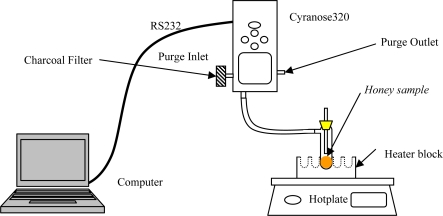
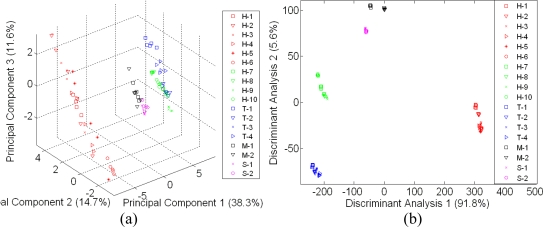
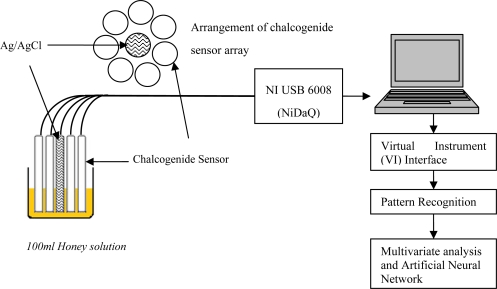
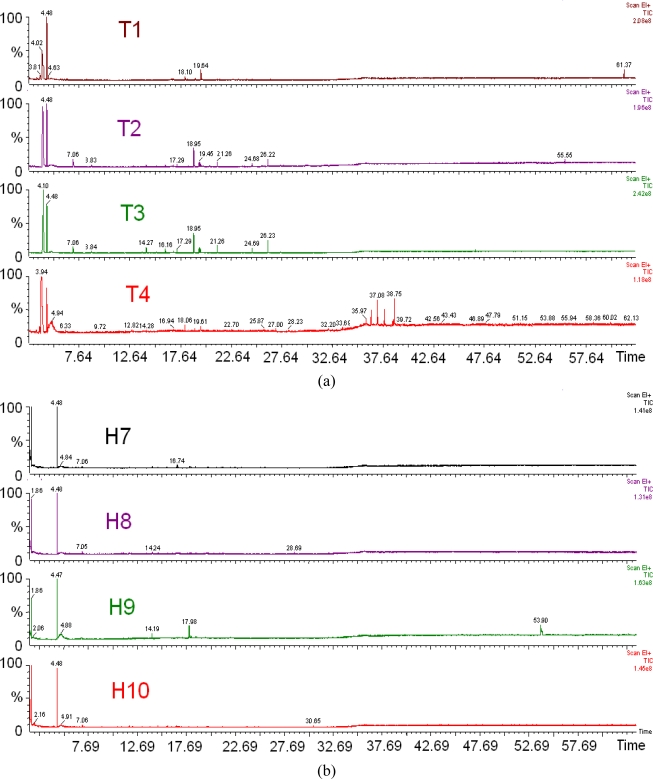
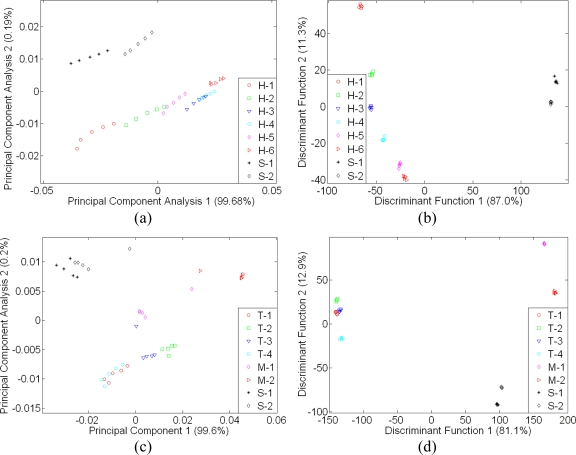
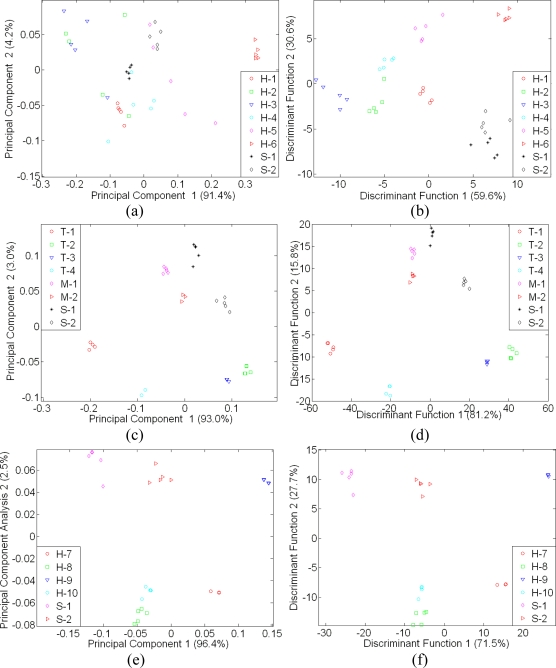
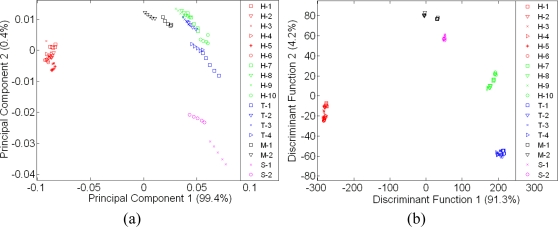
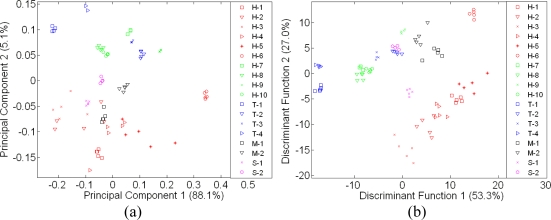
The major compounds in honey are carbohydrates such as monosaccharides and disaccharides. The same compounds are found in cane-sugar concentrates. Unfortunately when sugar concentrate is added to honey, laboratory assessments are found to be ineffective in detecting this adulteration. Unlike tracing heavy metals in honey, sugar adulterated honey is much trickier and harder to detect, and traditionally it has been very challenging to come up with a suitable method to prove the presence of adulterants in honey products. This paper proposes a combination of array sensing and multi-modality sensor fusion that can effectively discriminate the samples not only based on the compounds present in the sample but also mimic the way humans perceive flavours and aromas. Conversely, analytical instruments are based on chemical separations which may alter the properties of the volatiles or flavours of a particular honey. The present work is focused on classifying 18 samples of different honeys, sugar syrups and adulterated samples using data fusion of electronic nose (e-nose) and electronic tongue (e-tongue) measurements. Each group of samples was evaluated separately by the e-nose and e-tongue. Principal Component Analysis (PCA) and Linear Discriminant Analysis (LDA) were able to separately discriminate monofloral honey from sugar syrup, and polyfloral honey from sugar and adulterated samples using the e-nose and e-tongue. The e-nose was observed to give better separation compared to e-tongue assessment, particularly when LDA was applied. However, when all samples were combined in one classification analysis, neither PCA nor LDA were able to discriminate between honeys of different floral origins, sugar syrup and adulterated samples. By applying a sensor fusion technique, the classification for the 18 different samples was improved. Significant improvement was observed using PCA, while LDA not only improved the discrimination but also gave better classification. An improvement in performance was also observed using a Probabilistic Neural Network classifier when the e-nose and e-tongue data were fused.
蜂蜜中的主要化合物是碳水化合物,如单糖和二糖。这些化合物也存在于甘蔗糖浓缩物中。不幸的是,当糖浓缩物添加到蜂蜜中时,实验室评估发现无法有效检测到这种掺假。与追踪蜂蜜中的重金属不同,糖掺假的蜂蜜更难检测,而且传统上很难找到一种合适的方法来证明蜂蜜产品中存在掺假剂。本文提出了一种阵列传感器和多模态传感器融合的组合,可以有效地不仅根据样品中存在的化合物来区分样品,还可以模拟人类感知味道和香气的方式。相反,分析仪器基于化学分离,这可能会改变特定蜂蜜的挥发性或味道的性质。目前的工作重点是使用电子鼻(e-nose)和电子舌(e-tongue)测量的数据融合来对 18 种不同蜂蜜、糖浆和掺假样品进行分类。每组样品分别由 e-nose 和 e-tongue 进行评估。主成分分析(PCA)和线性判别分析(LDA)能够分别使用电子鼻和电子舌区分单一花蜂蜜和糖浆,以及多花蜂蜜和糖及掺假样品。与电子舌评估相比,电子鼻观察到能够更好地分离,特别是在应用 LDA 时。然而,当所有样品组合在一个分类分析中时,PCA 和 LDA 都无法区分不同花卉来源的蜂蜜、糖浆和掺假样品。通过应用传感器融合技术,对 18 种不同样品的分类得到了改善。使用 PCA 观察到了显著的改善,而 LDA 不仅提高了区分度,而且给出了更好的分类。当融合电子鼻和电子舌数据时,使用概率神经网络分类器也观察到了性能的提高。