School of Electrical & Electronic Engineering, Universiti Sains Malaysia, Engineering Campus, 14300 Nibong Tebal, Penang, Malaysia.
Sensors (Basel). 2012 Oct 17;12(10):14022-40. doi: 10.3390/s121014022.
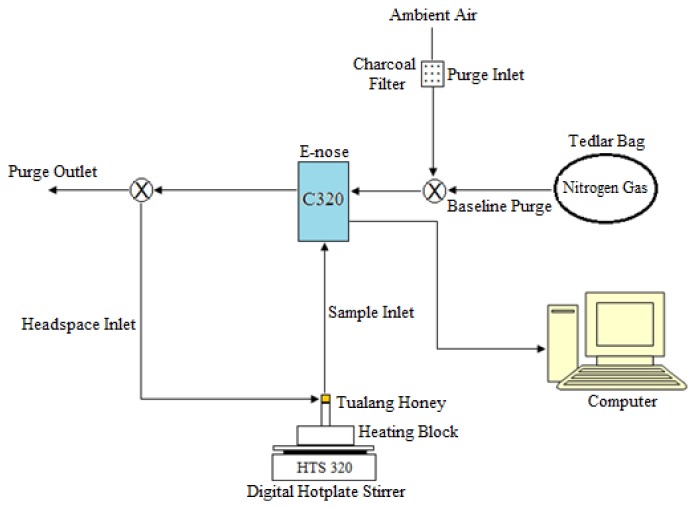
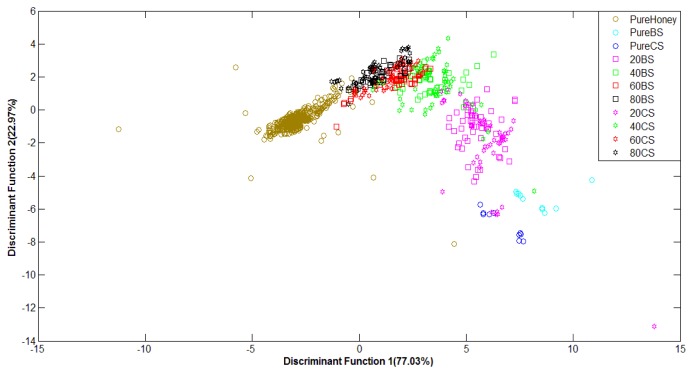
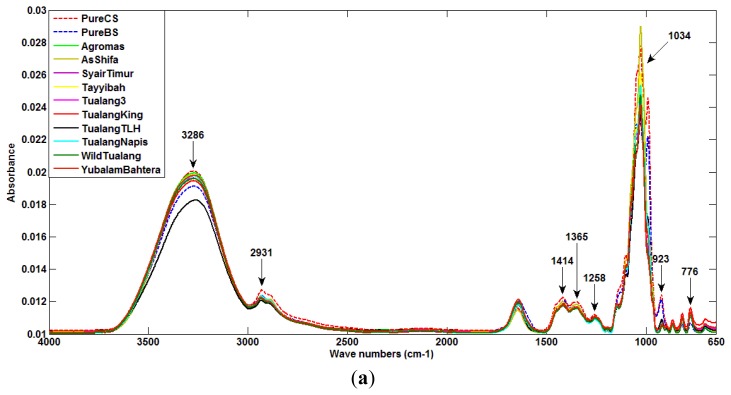
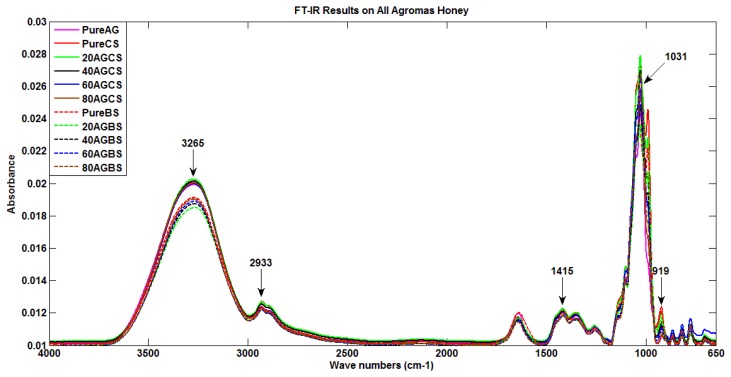
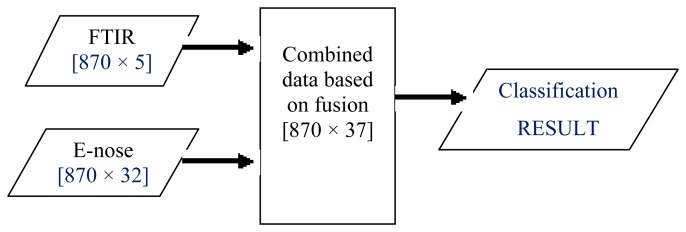
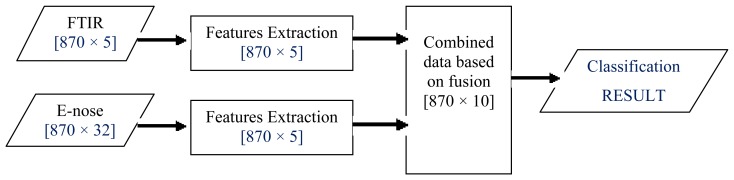
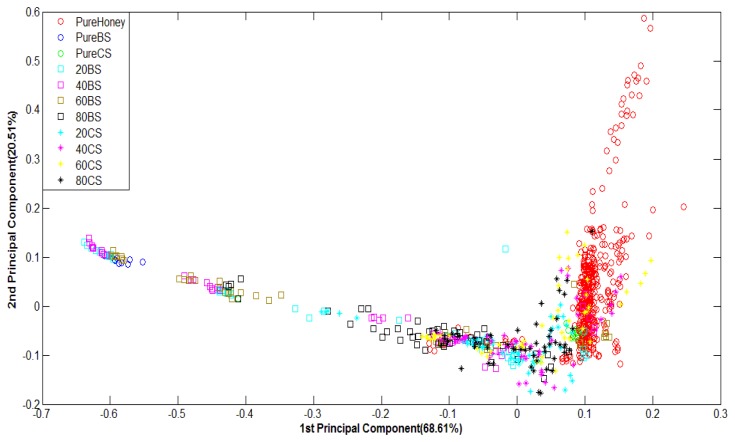
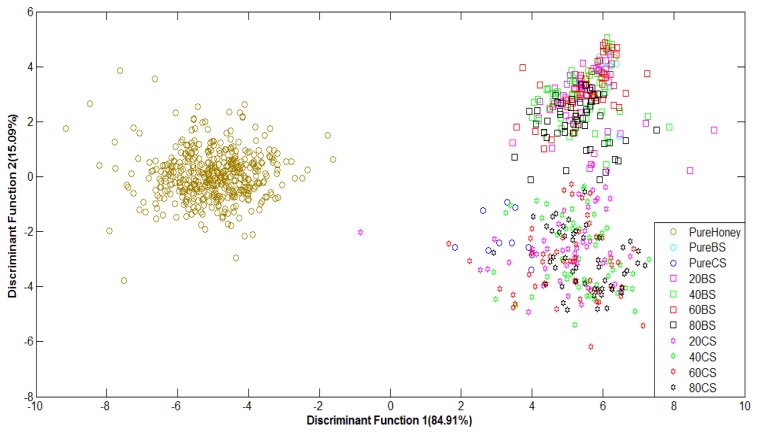
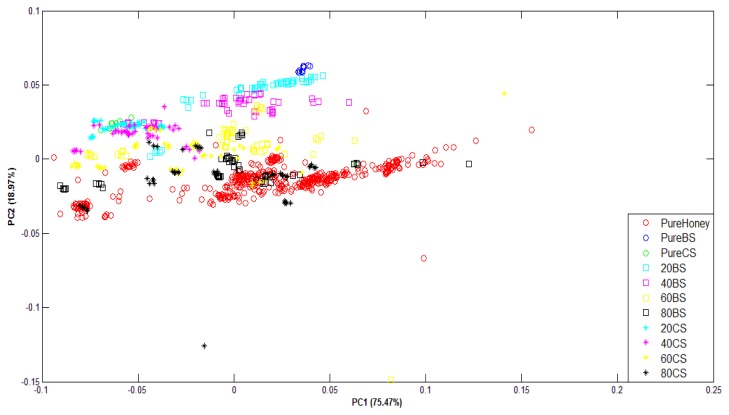
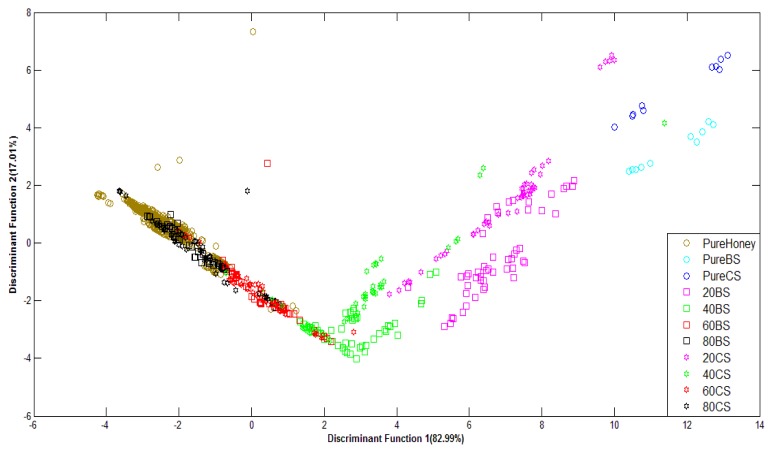
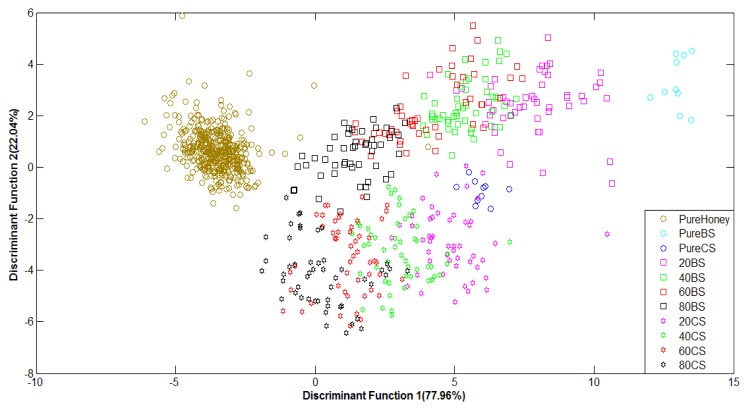
This paper presents a comparison between data from single modality and fusion methods to classify Tualang honey as pure or adulterated using Linear Discriminant Analysis (LDA) and Principal Component Analysis (PCA) statistical classification approaches. Ten different brands of certified pure Tualang honey were obtained throughout peninsular Malaysia and Sumatera, Indonesia. Various concentrations of two types of sugar solution (beet and cane sugar) were used in this investigation to create honey samples of 20%, 40%, 60% and 80% adulteration concentrations. Honey data extracted from an electronic nose (e-nose) and Fourier Transform Infrared Spectroscopy (FTIR) were gathered, analyzed and compared based on fusion methods. Visual observation of classification plots revealed that the PCA approach able to distinct pure and adulterated honey samples better than the LDA technique. Overall, the validated classification results based on FTIR data (88.0%) gave higher classification accuracy than e-nose data (76.5%) using the LDA technique. Honey classification based on normalized low-level and intermediate-level FTIR and e-nose fusion data scored classification accuracies of 92.2% and 88.7%, respectively using the Stepwise LDA method. The results suggested that pure and adulterated honey samples were better classified using FTIR and e-nose fusion data than single modality data.
本论文比较了单一模态和融合方法的数据,使用线性判别分析(LDA)和主成分分析(PCA)统计分类方法,对塔兰蜂蜜的纯品和掺假品进行分类。从马来西亚半岛和印度尼西亚苏门答腊获得了十种不同品牌的认证纯塔兰蜂蜜。本研究中使用了两种类型的糖溶液(甜菜糖和甘蔗糖)的不同浓度,以创建 20%、40%、60%和 80%掺假浓度的蜂蜜样品。从电子鼻(e-nose)和傅里叶变换红外光谱(FTIR)中提取了蜂蜜数据,并根据融合方法进行了分析和比较。分类图的直观观察表明,PCA 方法比 LDA 技术更能区分纯品和掺假品的蜂蜜样品。总体而言,基于 FTIR 数据的验证分类结果(88.0%)使用 LDA 技术比 e-nose 数据(76.5%)具有更高的分类准确性。使用逐步 LDA 方法,基于归一化低水平和中水平 FTIR 和 e-nose 融合数据的蜂蜜分类分别获得了 92.2%和 88.7%的分类准确性。结果表明,与单一模态数据相比,纯品和掺假蜂蜜样品的 FTIR 和 e-nose 融合数据的分类效果更好。