Division of Infection and Immunity, University College London Medical Research Council Centre for Medical Molecular Virology, London, United Kingdom.
PLoS Pathog. 2011 Dec;7(12):e1002439. doi: 10.1371/journal.ppat.1002439. Epub 2011 Dec 8.
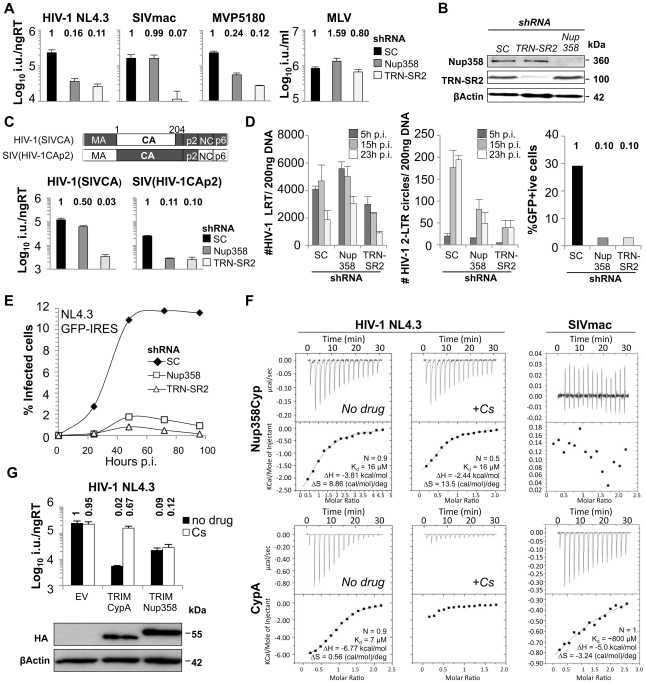
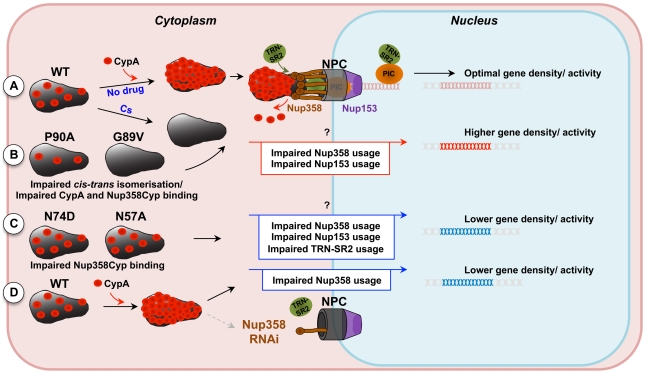
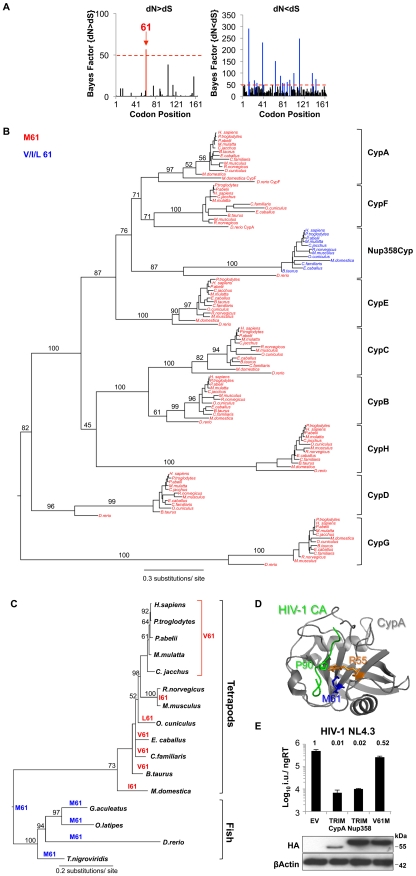
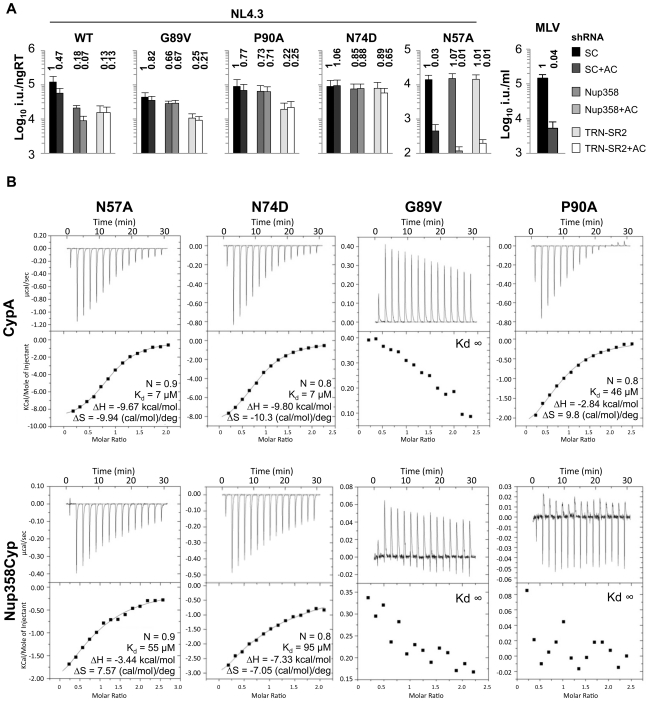
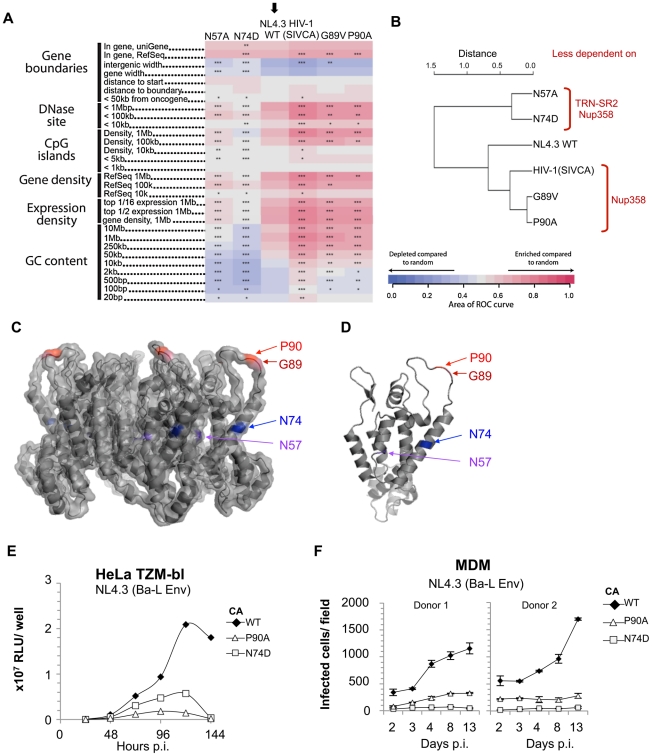
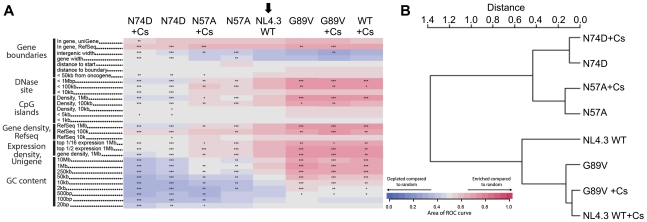
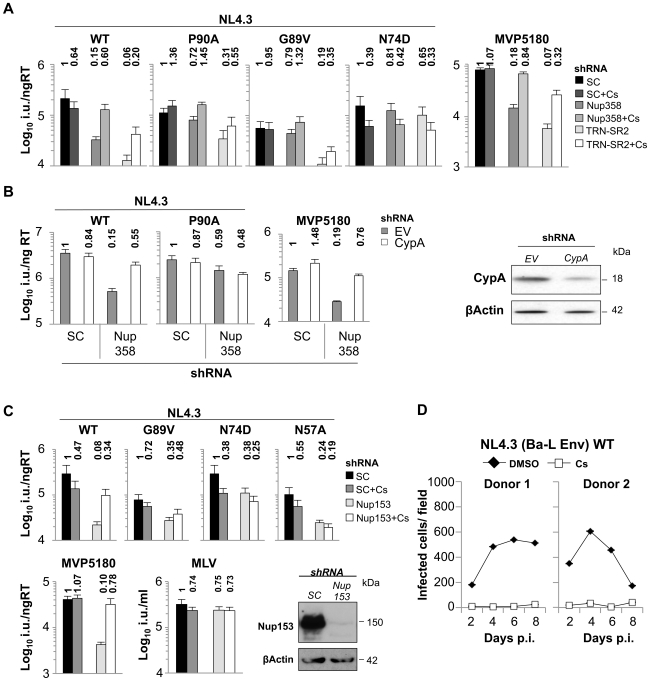
Lentiviruses such as HIV-1 traverse nuclear pore complexes (NPC) and infect terminally differentiated non-dividing cells, but how they do this is unclear. The cytoplasmic NPC protein Nup358/RanBP2 was identified as an HIV-1 co-factor in previous studies. Here we report that HIV-1 capsid (CA) binds directly to the cyclophilin domain of Nup358/RanBP2. Fusion of the Nup358/RanBP2 cyclophilin (Cyp) domain to the tripartite motif of TRIM5 created a novel inhibitor of HIV-1 replication, consistent with an interaction in vivo. In contrast to CypA binding to HIV-1 CA, Nup358 binding is insensitive to inhibition with cyclosporine, allowing contributions from CypA and Nup358 to be distinguished. Inhibition of CypA reduced dependence on Nup358 and the nuclear basket protein Nup153, suggesting that CypA regulates the choice of the nuclear import machinery that is engaged by the virus. HIV-1 cyclophilin-binding mutants CA G89V and P90A favored integration in genomic regions with a higher density of transcription units and associated features than wild type virus. Integration preference of wild type virus in the presence of cyclosporine was similarly altered to regions of higher transcription density. In contrast, HIV-1 CA alterations in another patch on the capsid surface that render the virus less sensitive to Nup358 or TRN-SR2 depletion (CA N74D, N57A) resulted in integration in genomic regions sparse in transcription units. Both groups of CA mutants are impaired in replication in HeLa cells and human monocyte derived macrophages. Our findings link HIV-1 engagement of cyclophilins with both integration targeting and replication efficiency and provide insight into the conservation of viral cyclophilin recruitment.
慢病毒,如 HIV-1,可以穿越核孔复合体(NPC)并感染终末分化的非分裂细胞,但具体机制尚不清楚。在之前的研究中,细胞质 NPC 蛋白 Nup358/RanBP2 被鉴定为 HIV-1 的辅助因子。在这里,我们报告 HIV-1 衣壳(CA)直接与 Nup358/RanBP2 的亲环素结构域结合。将 Nup358/RanBP2 的亲环素(Cyp)结构域与 TRIM5 的三肽基序融合,创造了一种新的 HIV-1 复制抑制剂,与体内相互作用一致。与 CypA 与 HIV-1 CA 的结合不同,Nup358 的结合对环孢素抑制不敏感,允许区分 CypA 和 Nup358 的贡献。CypA 的抑制降低了对 Nup358 和核篮蛋白 Nup153 的依赖,表明 CypA 调节了病毒所利用的核输入机制的选择。抑制 CypA 减少了对 Nup358 和核篮蛋白 Nup153 的依赖,表明 CypA 调节了病毒所利用的核输入机制的选择。抑制 CypA 减少了对 Nup358 和核篮蛋白 Nup153 的依赖,表明 CypA 调节了病毒所利用的核输入机制的选择。HIV-1 衣壳表面的另一个补丁中的突变体 CA G89V 和 P90A 有利于整合到转录单位密度较高且与野生型病毒相关的特征的基因组区域。在环孢素存在下,野生型病毒的整合偏好也被改变为转录密度较高的区域。相比之下,HIV-1 衣壳表面另一个使病毒对 Nup358 或 TRN-SR2 耗竭的敏感性降低的补丁上的突变体 CA N74D、N57A 导致整合到转录单位稀疏的基因组区域。这两组 CA 突变体在 HeLa 细胞和人单核细胞衍生的巨噬细胞中的复制能力都受到损害。我们的研究结果将 HIV-1 与亲环素的结合与整合靶向和复制效率联系起来,并为病毒亲环素募集的保守性提供了深入的了解。