Dharan Adarsh, Talley Sarah, Tripathi Abhishek, Mamede João I, Majetschak Matthias, Hope Thomas J, Campbell Edward M
Department of Microbiology and Immunology, Stritch School of Medicine, Loyola University, Chicago, Illinois, United States of America.
Integrative Cell Biology Program, Stritch School of Medicine, Loyola University, Chicago, Illinois, United States of America.
PLoS Pathog. 2016 Jun 21;12(6):e1005700. doi: 10.1371/journal.ppat.1005700. eCollection 2016 Jun.
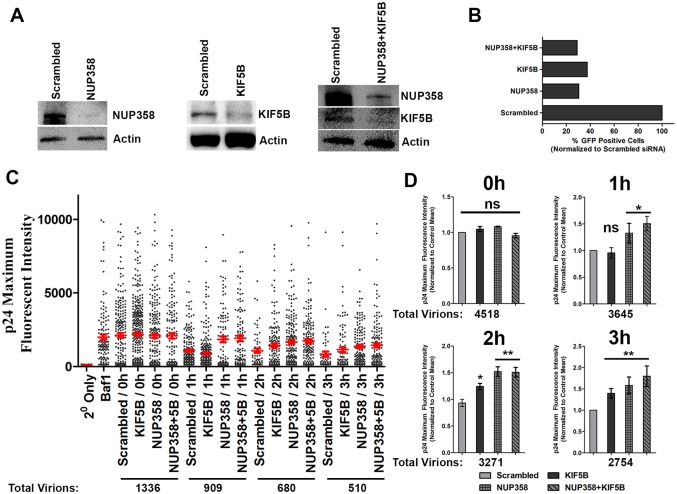
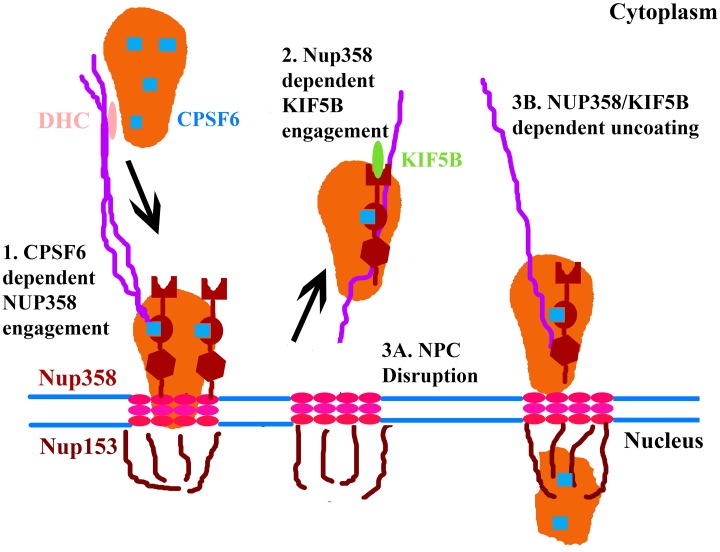
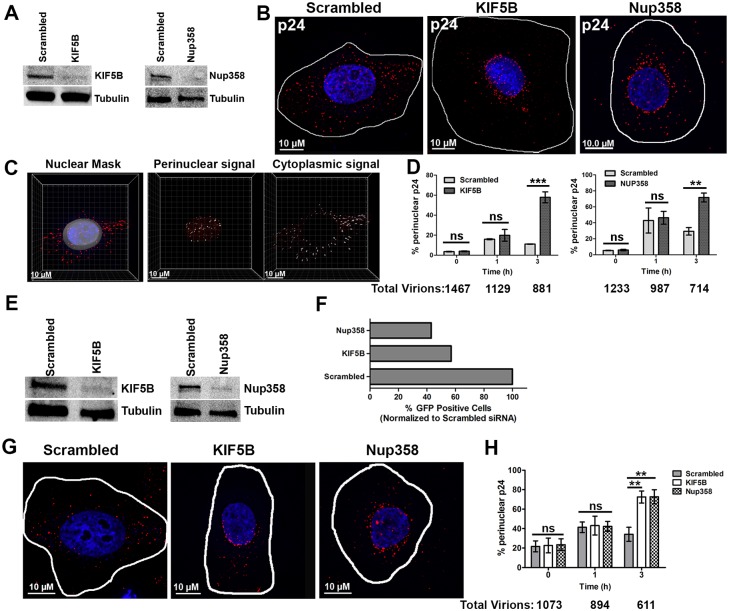
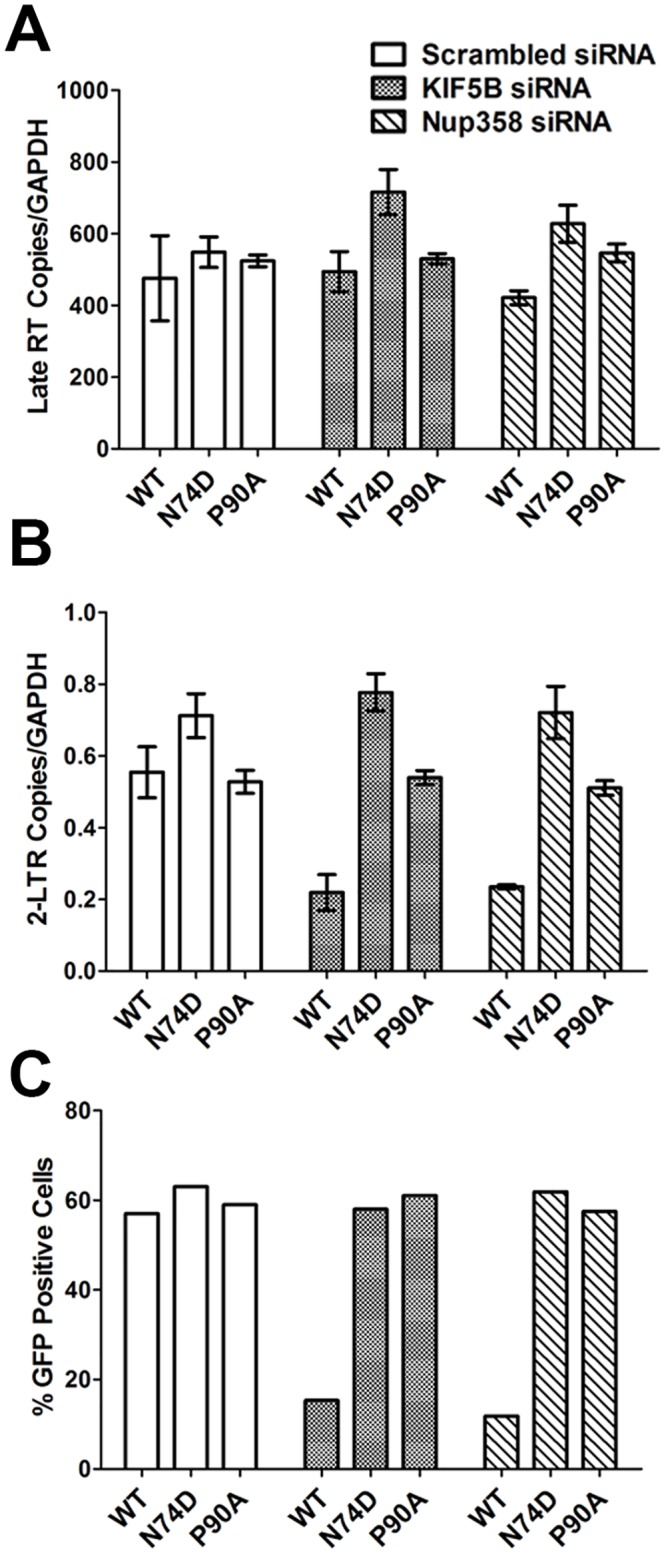
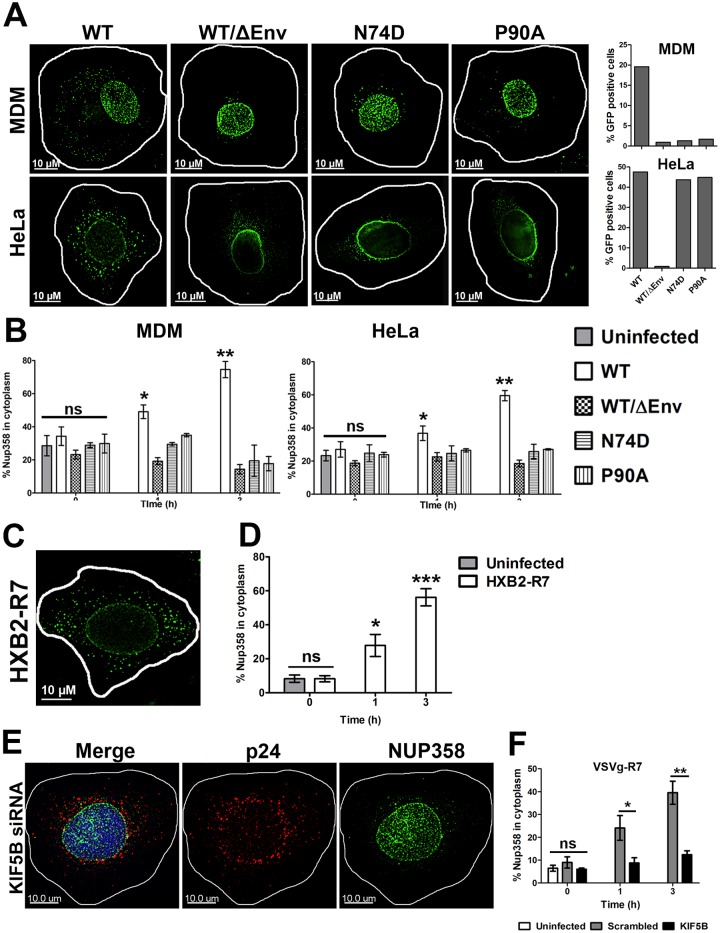
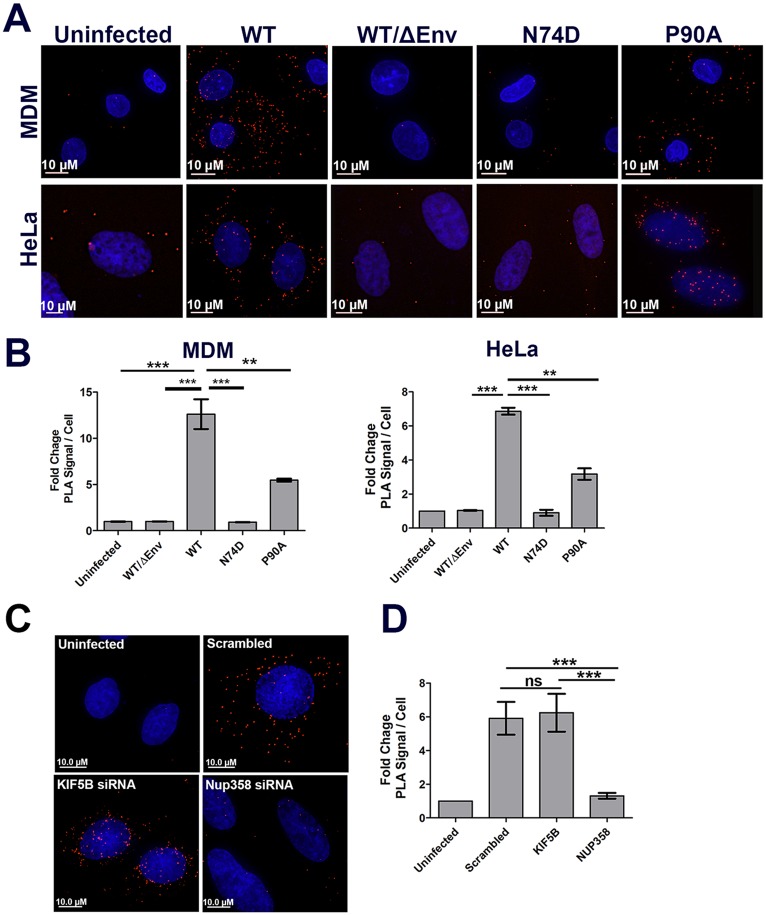
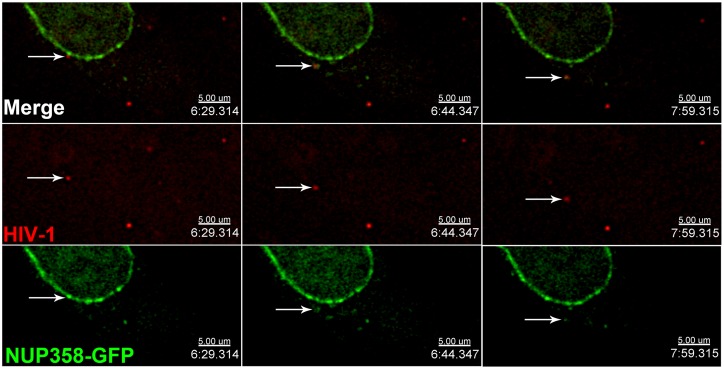
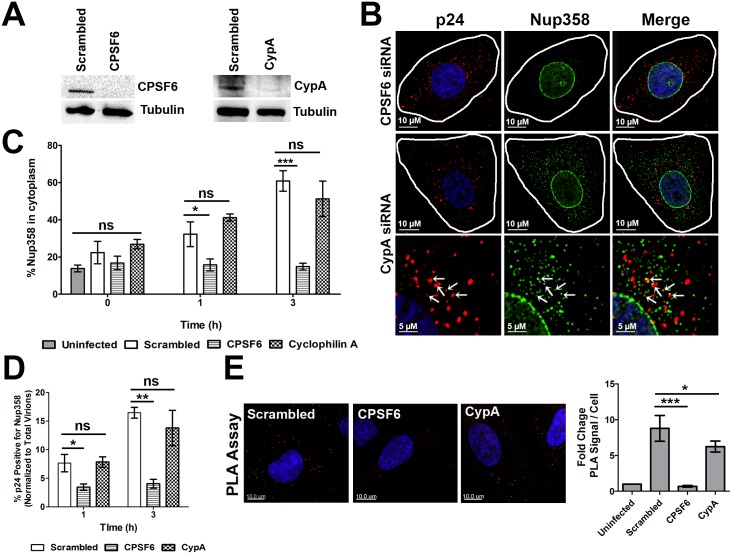
Following envelope mediated fusion, the HIV-1 core is released into the cytoplasm of the target cell and undergoes a series of trafficking and replicative steps that result in the nuclear import of the viral genome, which ultimately leads to the integration of the proviral DNA into the host cell genome. Previous studies have found that disruption of microtubules, or depletion of dynein or kinesin motors, perturb the normal uncoating and trafficking of the viral genome. Here, we show that the Kinesin-1 motor, KIF5B, induces a relocalization of the nuclear pore component Nup358 into the cytoplasm during HIV-1 infection. This relocalization of NUP358 is dependent on HIV-1 capsid, and NUP358 directly associates with viral cores following cytoplasmic translocation. This interaction between NUP358 and the HIV-1 core is dependent on multiple capsid binding surfaces, as this association is not observed following infection with capsid mutants in which a conserved hydrophobic binding pocket (N74D) or the cyclophilin A binding loop (P90A) is disrupted. KIF5B knockdown also prevents the nuclear entry and infection by HIV-1, but does not exert a similar effect on the N74D or P90A capsid mutants which do not rely on Nup358 for nuclear import. Finally, we observe that the relocalization of Nup358 in response to CA is dependent on cleavage protein and polyadenylation factor 6 (CPSF6), but independent of cyclophilin A. Collectively, these observations identify a previously unappreciated role for KIF5B in mediating the Nup358 dependent nuclear import of the viral genome during infection.
在包膜介导的融合之后,HIV-1核心被释放到靶细胞的细胞质中,并经历一系列运输和复制步骤,这些步骤导致病毒基因组的核输入,最终导致前病毒DNA整合到宿主细胞基因组中。先前的研究发现,微管的破坏,或动力蛋白或驱动蛋白的缺失,会扰乱病毒基因组的正常脱壳和运输。在这里,我们表明,驱动蛋白-1动力蛋白KIF5B在HIV-1感染期间诱导核孔成分Nup358重新定位到细胞质中。NUP358的这种重新定位依赖于HIV-1衣壳,并且NUP358在细胞质易位后直接与病毒核心结合。NUP358与HIV-1核心之间的这种相互作用依赖于多个衣壳结合表面,因为在用保守疏水结合口袋(N74D)或亲环蛋白A结合环(P90A)被破坏的衣壳突变体感染后未观察到这种结合。敲低KIF5B也可防止HIV-1的核进入和感染,但对不依赖Nup358进行核输入的N74D或P90A衣壳突变体没有类似作用。最后,我们观察到Nup358响应衣壳蛋白的重新定位依赖于切割和聚腺苷酸化因子6(CPSF6),但不依赖于亲环蛋白A。总的来说,这些观察结果确定了KIF5B在感染期间介导病毒基因组依赖Nup358的核输入中以前未被认识的作用。