Department of Microbiology and Molecular Genetics, University of Pittsburgh School of Medicine, Pittsburgh, Pennsylvania, USA.
Pittsburgh Center for HIV Protein Interactions, University of Pittsburgh School of Medicine, Pittsburgh, Pennsylvania, USA.
mBio. 2021 Mar 23;12(2):e03142-20. doi: 10.1128/mBio.03142-20.
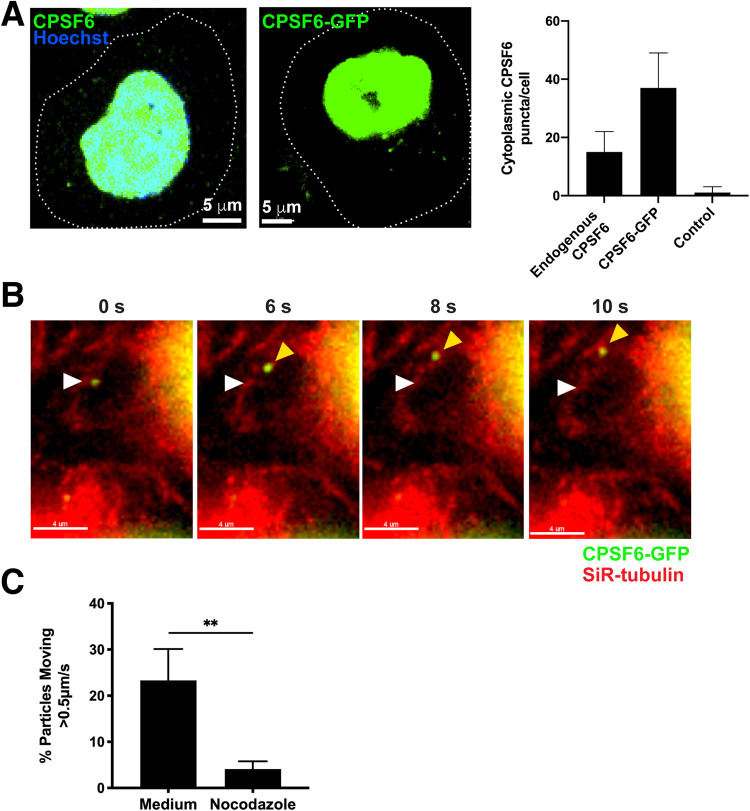
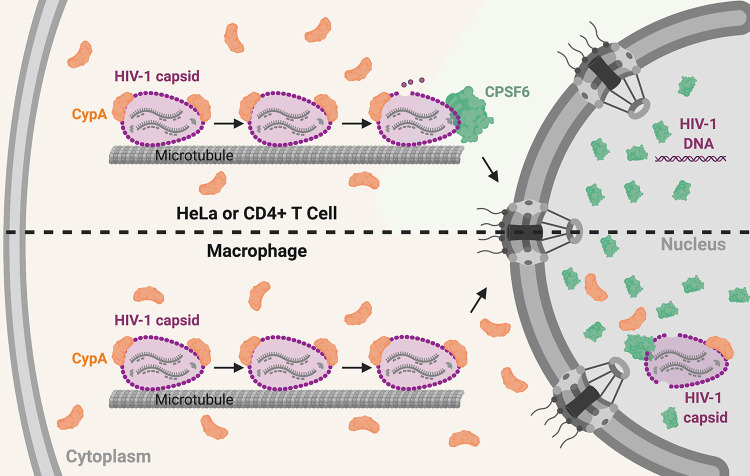
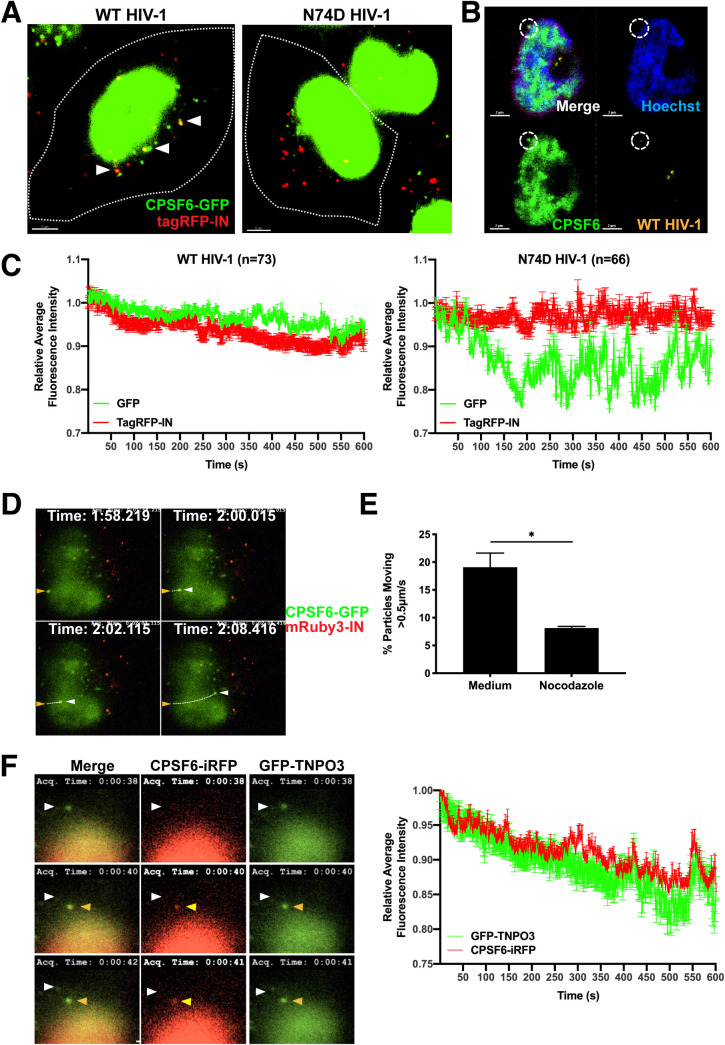
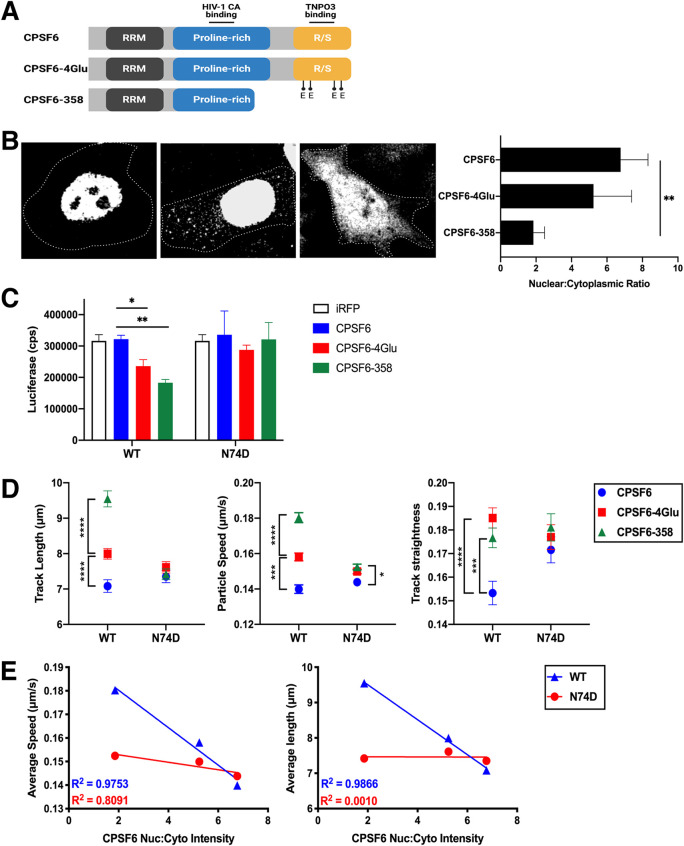
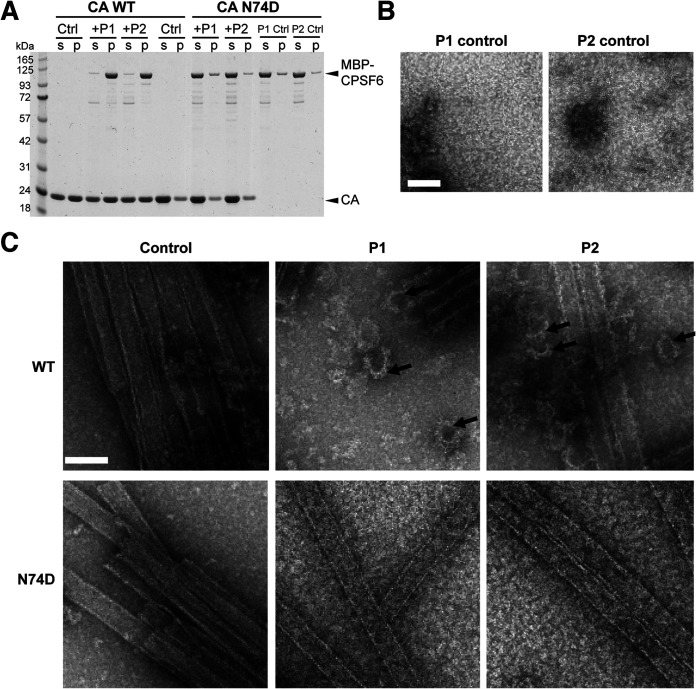
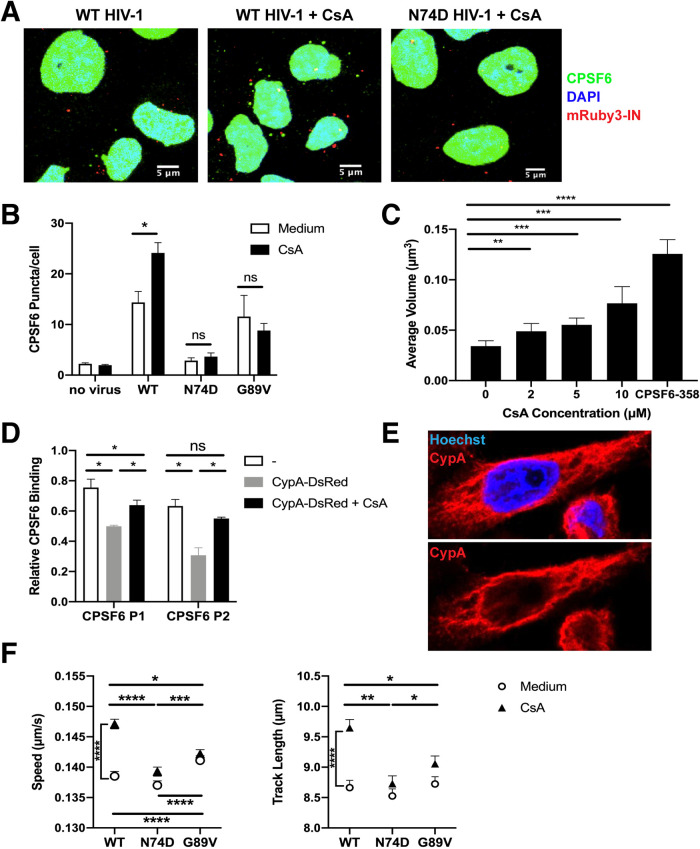
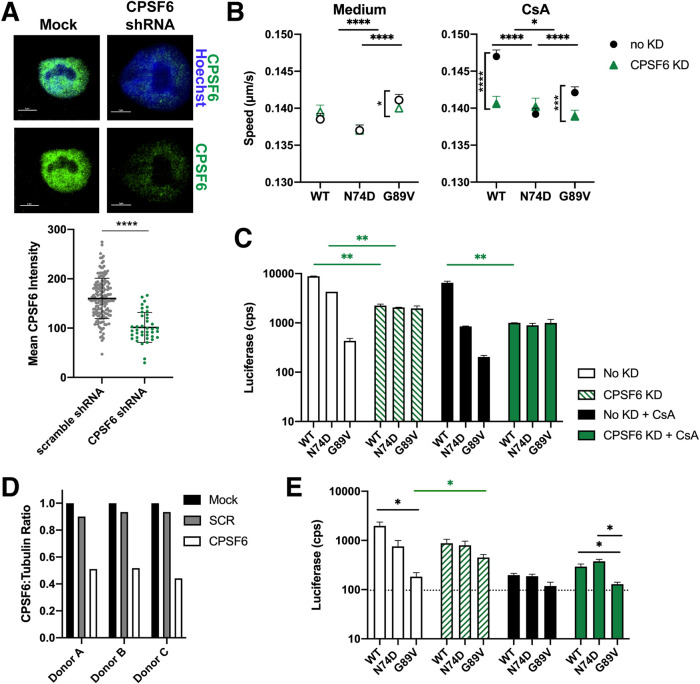
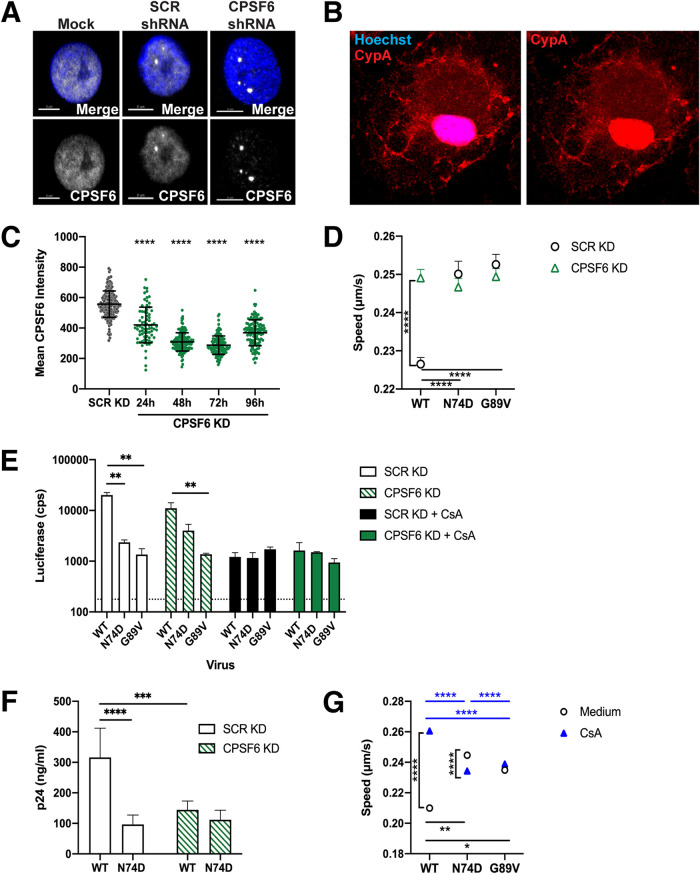
Human immunodeficiency virus type 1 (HIV-1) capsid binds host proteins during infection, including cleavage and polyadenylation specificity factor 6 (CPSF6) and cyclophilin A (CypA). We observe that HIV-1 infection induces higher-order CPSF6 formation, and capsid-CPSF6 complexes cotraffic on microtubules. CPSF6-capsid complex trafficking is impacted by capsid alterations that reduce CPSF6 binding or by excess cytoplasmic CPSF6 expression, both of which are associated with decreased HIV-1 infection. Higher-order CPSF6 complexes bind and disrupt HIV-1 capsid assemblies Disruption of HIV-1 capsid binding to CypA leads to increased CPSF6 binding and altered capsid trafficking, resulting in reduced infectivity. Our data reveal an interplay between CPSF6 and CypA that is important for cytoplasmic capsid trafficking and HIV-1 infection. We propose that CypA prevents HIV-1 capsid from prematurely engaging cytoplasmic CPSF6 and that differences in CypA cellular localization and innate immunity may explain variations in HIV-1 capsid trafficking and uncoating in CD4 T cells and macrophages. HIV is the causative agent of AIDS, which has no cure. The protein shell that encases the viral genome, the capsid, is critical for HIV replication in cells at multiple steps. HIV capsid has been shown to interact with multiple cell proteins during movement to the cell nucleus in a poorly understood process that may differ during infection of different cell types. In this study, we show that premature or too much binding of one human protein, cleavage and polyadenylation specificity factor 6 (CPSF6), disrupts the ability of the capsid to deliver the viral genome to the cell nucleus. Another human protein, cyclophilin A (CypA), can shield HIV capsid from premature binding to CPSF6, which can differ in CD4 T cells and macrophages. Better understanding of how HIV infects cells will allow better drugs to prevent or inhibit infection and pathogenesis.
人类免疫缺陷病毒 1 型(HIV-1)衣壳在感染过程中结合宿主蛋白,包括切割和多聚腺苷酸化特异性因子 6(CPSF6)和亲环素 A(CypA)。我们观察到 HIV-1 感染诱导更高阶的 CPSF6 形成,并且衣壳-CPSF6 复合物在微管上共运输。CPSF6-衣壳复合物的运输受降低 CPSF6 结合的衣壳改变或过多细胞质 CPSF6 表达的影响,这两者都与 HIV-1 感染减少有关。高阶 CPSF6 复合物结合并破坏 HIV-1 衣壳组装 破坏 HIV-1 衣壳与 CypA 的结合会导致更多的 CPSF6 结合和衣壳运输的改变,从而导致感染性降低。我们的数据揭示了 CPSF6 和 CypA 之间的相互作用,这对于细胞质衣壳运输和 HIV-1 感染很重要。我们提出 CypA 可防止 HIV-1 衣壳过早地与细胞质 CPSF6 结合,并且 CypA 的细胞定位和先天免疫的差异可能解释了 CD4 T 细胞和巨噬细胞中 HIV-1 衣壳运输和脱壳的变化。HIV 是艾滋病的病原体,目前尚无治愈方法。包裹病毒基因组的蛋白质外壳,即衣壳,在细胞内的多个步骤中对 HIV 复制至关重要。已经表明 HIV 衣壳在向细胞核移动的过程中与多种细胞蛋白相互作用,但在不同细胞类型的感染过程中,这一过程可能不同,其机制尚不清楚。在这项研究中,我们表明,过早或过多地结合一种人类蛋白,即切割和多聚腺苷酸化特异性因子 6(CPSF6),会破坏衣壳将病毒基因组递送到细胞核的能力。另一种人类蛋白,亲环素 A(CypA),可以保护 HIV 衣壳免受过早与 CPSF6 结合,而在 CD4 T 细胞和巨噬细胞中,这种结合可能会有所不同。更好地了解 HIV 如何感染细胞将有助于开发更好的药物来预防或抑制感染和发病机制。