Department of Biological Sciences, University of Alberta, Edmonton, Alberta, Canada.
PLoS One. 2011;6(12):e27787. doi: 10.1371/journal.pone.0027787. Epub 2011 Dec 13.
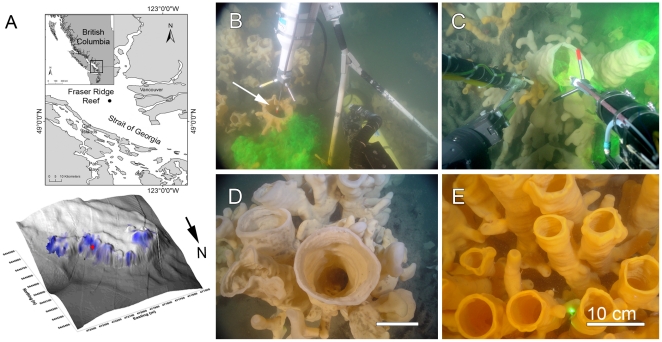
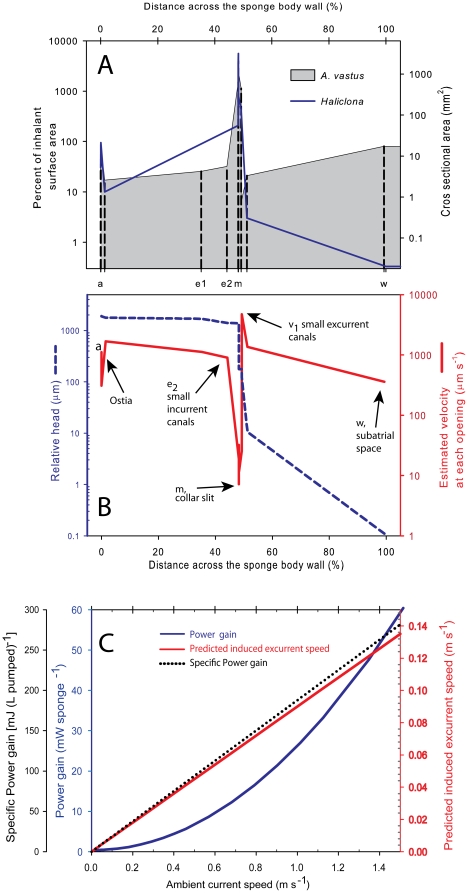
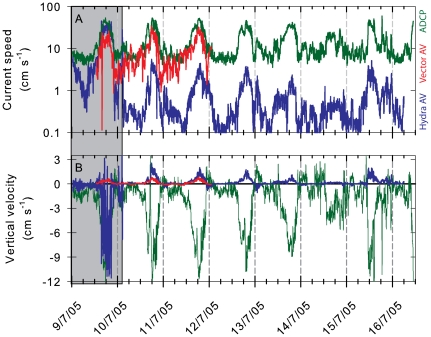
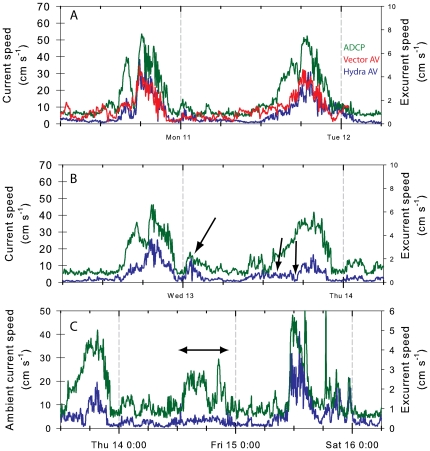
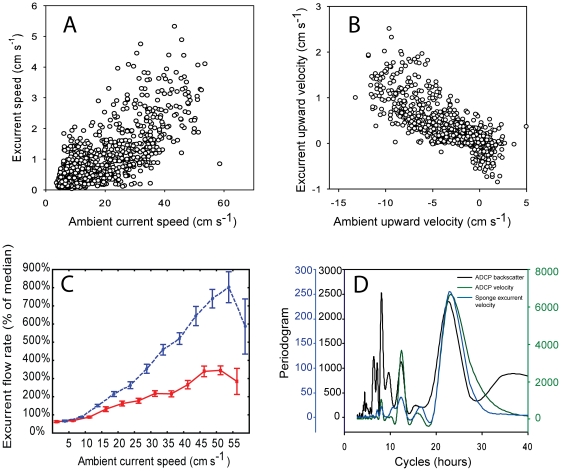
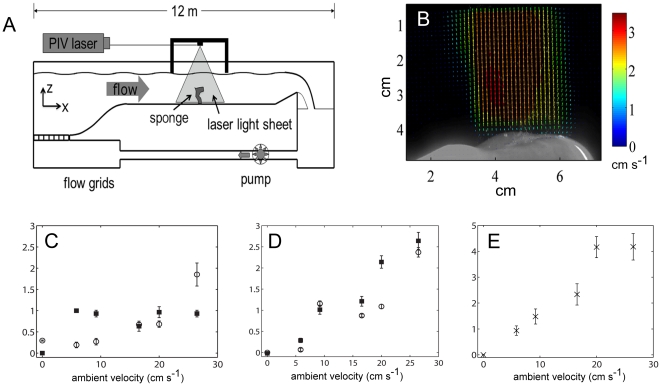
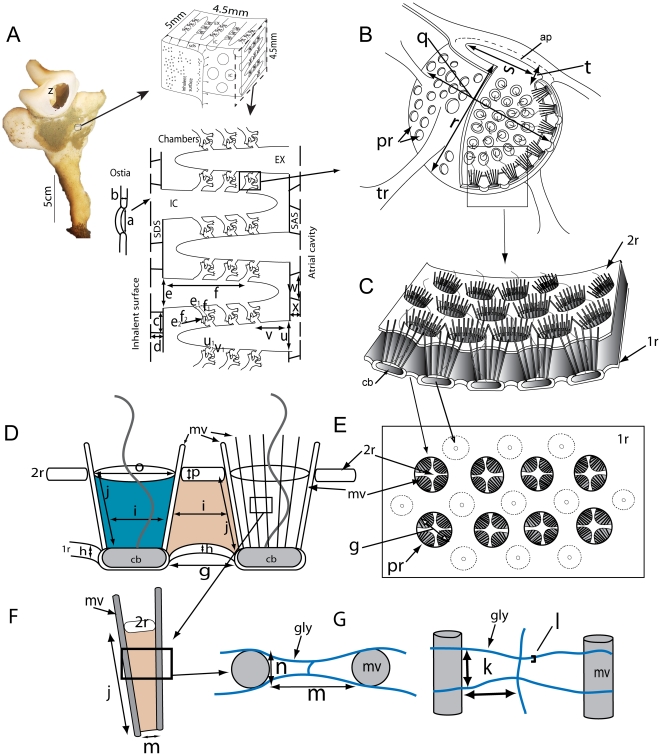
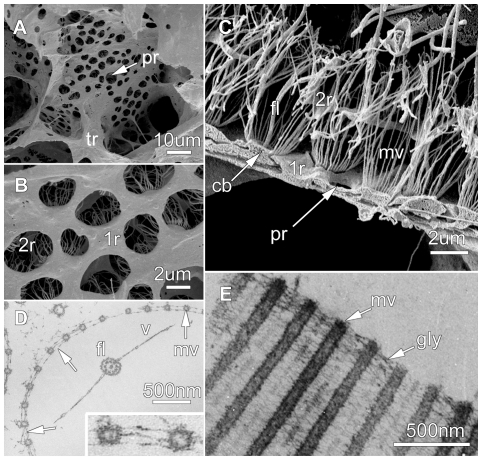
Sponges are suspension feeders that use flagellated collar-cells (choanocytes) to actively filter a volume of water equivalent to many times their body volume each hour. Flow through sponges is thought to be enhanced by ambient current, which induces a pressure gradient across the sponge wall, but the underlying mechanism is still unknown. Studies of sponge filtration have estimated the energetic cost of pumping to be <1% of its total metabolism implying there is little adaptive value to reducing the cost of pumping by using "passive" flow induced by the ambient current. We quantified the pumping activity and respiration of the glass sponge Aphrocallistes vastus at a 150 m deep reef in situ and in a flow flume; we also modeled the glass sponge filtration system from measurements of the aquiferous system. Excurrent flow from the sponge osculum measured in situ and in the flume were positively correlated (r>0.75) with the ambient current velocity. During short bursts of high ambient current the sponges filtered two-thirds of the total volume of water they processed daily. Our model indicates that the head loss across the sponge collar filter is 10 times higher than previously estimated. The difference is due to the resistance created by a fine protein mesh that lines the collar, which demosponges also have, but was so far overlooked. Applying our model to the in situ measurements indicates that even modest pumping rates require an energetic expenditure of at least 28% of the total in situ respiration. We suggest that due to the high cost of pumping, current-induced flow is highly beneficial but may occur only in thin walled sponges living in high flow environments. Our results call for a new look at the mechanisms underlying current-induced flow and for reevaluation of the cost of biological pumping and its evolutionary role, especially in sponges.
海绵是悬浮生物,它们使用鞭毛状的领细胞(领细胞)来主动过滤相当于其身体体积数倍的水量。每小时。据认为,环境流增强了海绵的流动,环境流在海绵壁上产生了压力梯度,但潜在的机制仍不清楚。对海绵过滤的研究估计,泵送的能量成本<其总代谢的 1%,这意味着通过环境流引起的“被动”流来降低泵送成本的适应性价值很小。我们在原位和流动水槽中定量测量了 150 米深珊瑚礁上的玻璃海绵 Aphrocallistes vastus 的泵送活动和呼吸作用;我们还根据含水系统的测量结果对玻璃海绵过滤系统进行了建模。在原位和水槽中测量的从海绵口喷出的流出物与环境流速呈正相关(r>0.75)。在环境电流短暂激增期间,海绵过滤了它们每天处理的总水量的三分之二。我们的模型表明,穿过海绵领滤器的水头损失比以前估计的高 10 倍。差异是由于领线上的精细蛋白质网格产生的阻力所致,该阻力也存在于弥散海绵中,但迄今为止被忽视了。将我们的模型应用于现场测量表明,即使是适度的泵送速率也需要至少 28%的总现场呼吸能量支出。我们认为,由于泵送的高成本,环境流的产生非常有益,但可能仅发生在生活在高流量环境中的薄壁海绵中。我们的研究结果要求重新审视环境流产生的潜在机制,并重新评估生物泵送的成本及其进化作用,特别是在海绵中。