Crit Care. 2011;15(6):1020. doi: 10.1186/cc10577. Epub 2011 Dec 15.
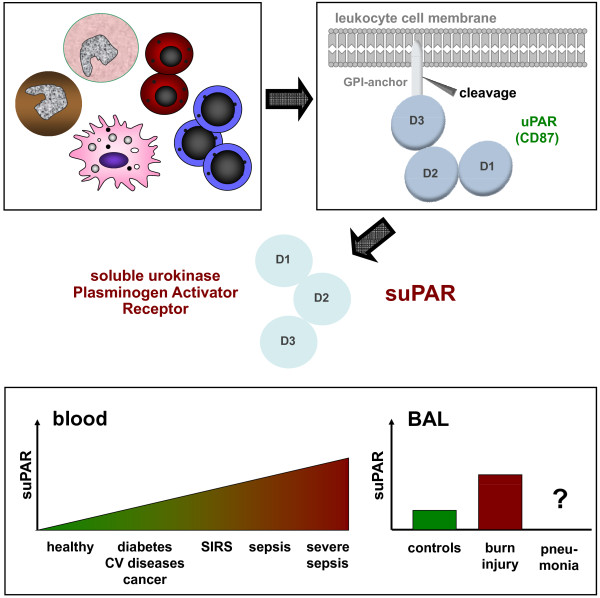
The soluble urokinase plasminogen activator receptor (suPAR) has been suggested as a biomarker that reflects immune cell activation. In critically ill patients, several independent investigations have reported elevated suPAR in conditions of systemic inflammatory response syndrome (SIRS), bacteriemia, sepsis, and septic shock, in which high circulating suPAR levels indicated an unfavorable prognosis. In a prospective cohort study in this issue of Critical Care, suPAR levels were detected in bronchoalveolar lavage (BAL) and identified inhalation injury. High systemic levels indicated an adverse prognosis. This study expands our knowledge of the diagnostic power of suPAR, confirms its prognostic value, and raises the demand for future studies investigating the pathogenic involvement of suPAR.
可溶性尿激酶型纤溶酶原激活物受体(suPAR)被认为是反映免疫细胞激活的生物标志物。在危重病患者中,几项独立的研究报告了全身性炎症反应综合征(SIRS)、菌血症、败血症和感染性休克等情况下 suPAR 的升高,其中高循环 suPAR 水平表明预后不良。在本期《重症监护》的一项前瞻性队列研究中,检测了支气管肺泡灌洗液(BAL)中的 suPAR 水平,并确定了吸入性损伤。全身性高 suPAR 水平预示着不良预后。这项研究扩展了我们对 suPAR 诊断能力的认识,证实了其预后价值,并提出了对未来研究调查 suPAR 发病机制的需求。