Department of Internal Medicine, Diabetology and Clinical Pharmacology, Medical University of Lodz, Parzeczewska 35, Zgierz, 95-100, Lodz, Poland.
Mol Biol Rep. 2012 May;39(5):5253-67. doi: 10.1007/s11033-011-1323-z. Epub 2011 Dec 20.
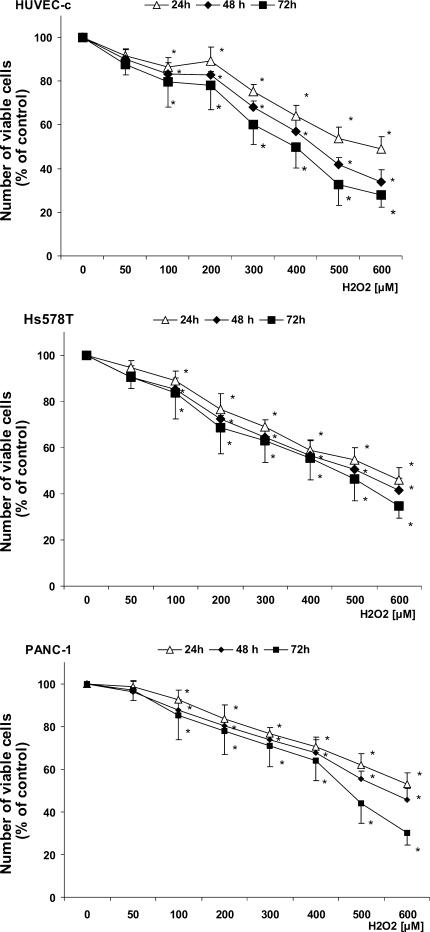
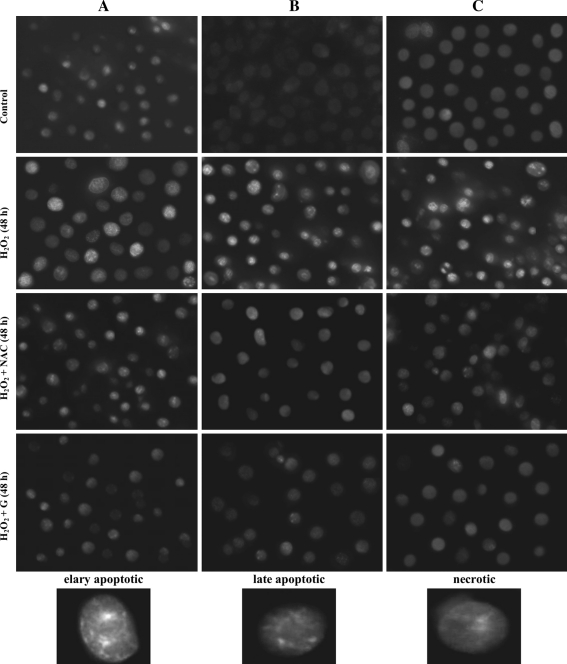
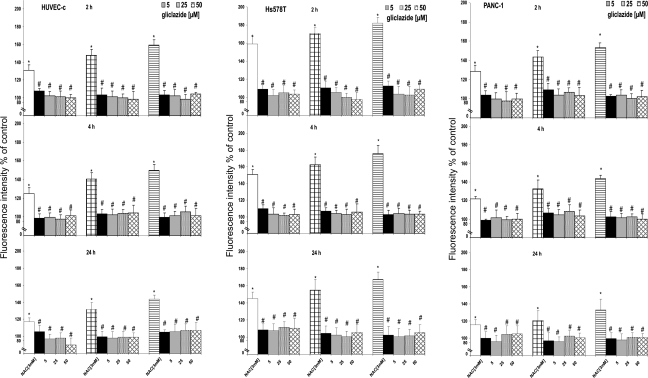
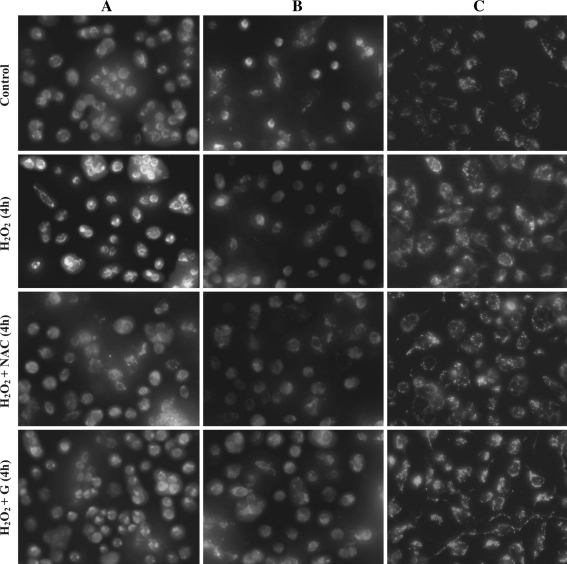
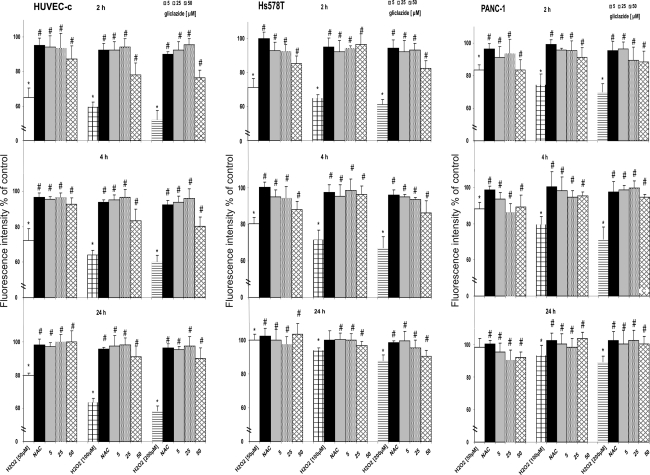
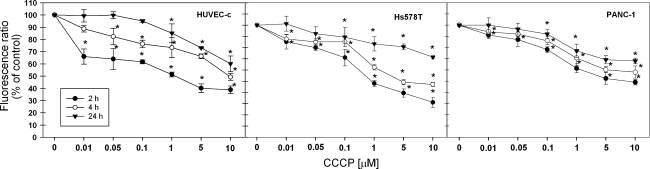
Experimental and clinical studies suggest that gliclazide may protect pancreatic β-cells from apoptosis induced by an oxidative stress. However, the precise mechanism(s) of this action are not fully understood and requires further clarification. Therefore, using human normal and cancer cells we examined whether the anti-apoptotic effects of this sulfonylurea is due to its free radical scavenger properties. Hydrogen peroxide (H(2)O(2)) as a model trigger of oxidative stress was used to induce cell death. Our experiments were performed on human normal cell line (human umbilical vein endothelial cell line, HUVEC-c) and human cancer cell lines (human mammary gland cell line, Hs578T; human pancreatic duct epithelioid carcinoma cell line, PANC-1). To assess the effect of gliclazide the cells were pre-treated with the drug. The 3-[4,5-dimethylthiazol-2-yl]-2,5-diphenyltetrazolium bromide assay was employed to measure the impact of gliclazide on cell viability. Generation of reactive oxygen species, mitochondrial membrane potential (∆Ψ(m)), and intracellular Ca(2+) concentration [Ca(2+)] were monitored. Furthermore, the morphological changes associated with apoptosis were determined using double staining with Hoechst 33258-propidium iodide (PI). Gliclazide protects the tested cells from H(2)O(2)-induced cell death most likely throughout the inhibition of ROS production. Moreover, the drug restored loss of ΔΨ(m) and diminished intracellular [Ca(2+)] evoked by H(2)O(2). Double staining with Hoechst 33258-PI revealed that pre-treatment with gliclazide diminished the number of apoptotic cells. Our findings indicate that gliclazide may protect both normal and cancer human cells against apoptosis induced by H(2)O(2). It appears that the anti-apoptotic effect of the drug is most likely associated with reduction of oxidative stress.
实验和临床研究表明,格列齐特可能通过抗氧化应激来保护胰岛β细胞免于凋亡。然而,其确切机制尚不完全清楚,需要进一步阐明。因此,我们使用人正常和癌细胞来检查这种磺酰脲类药物的抗凋亡作用是否归因于其自由基清除特性。过氧化氢 (H₂O₂) 作为氧化应激的模型触发物用于诱导细胞死亡。我们的实验在人正常细胞系(人脐静脉内皮细胞系,HUVEC-c)和人癌细胞系(人乳腺细胞系,Hs578T;人胰腺导管上皮样癌细胞系,PANC-1)上进行。为了评估格列齐特的作用,细胞先用药物预处理。采用 3-[4,5-二甲基噻唑-2-基]-2,5-二苯基四氮唑溴盐法测定格列齐特对细胞活力的影响。监测活性氧 (ROS) 的产生、线粒体膜电位 (∆Ψ(m)) 和细胞内 Ca²⁺浓度 [Ca²⁺]。此外,通过使用 Hoechst 33258-碘化丙啶 (PI) 双重染色来确定与凋亡相关的形态变化。格列齐特通过抑制 ROS 产生来保护测试细胞免受 H₂O₂诱导的细胞死亡。此外,该药物还恢复了 H₂O₂引起的 ∆Ψ(m) 丧失和细胞内 [Ca²⁺] 减少。Hoechst 33258-PI 双重染色显示,格列齐特预处理可减少凋亡细胞的数量。我们的研究结果表明,格列齐特可能保护人正常和癌细胞免受 H₂O₂诱导的凋亡。药物的抗凋亡作用似乎很可能与减轻氧化应激有关。