Department of Anatomy and Neurobiology, Zhongshan School of Medicine, Sun Yat-sen University, Guangzhou, China.
BMC Neurosci. 2011 Dec 20;12:129. doi: 10.1186/1471-2202-12-129.
Nestin-immunoreactive (nestin-ir) neurons have been identified in the medial septal/diagonal band complex (MS/DBB) of adult rat and human, but the significance of nestin expression in functional neurons is not clear. This study investigated electrophysiological properties and neurochemical phenotypes of nestin-expressing (nestin+) neurons using whole-cell recording combined with single-cell RT-PCR to explore the significance of nestin expression in functional MS/DBB neurons. The retrograde labelling and immunofluorescence were used to investigate the nestin+ neuron related circuit in the septo-hippocampal pathway.
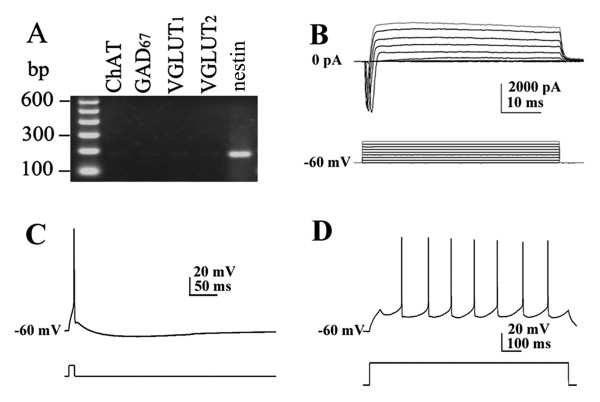
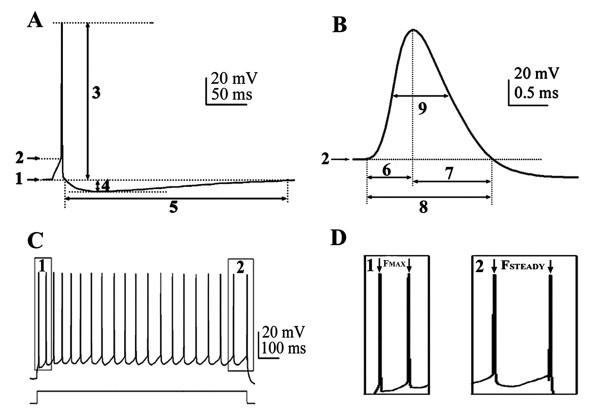
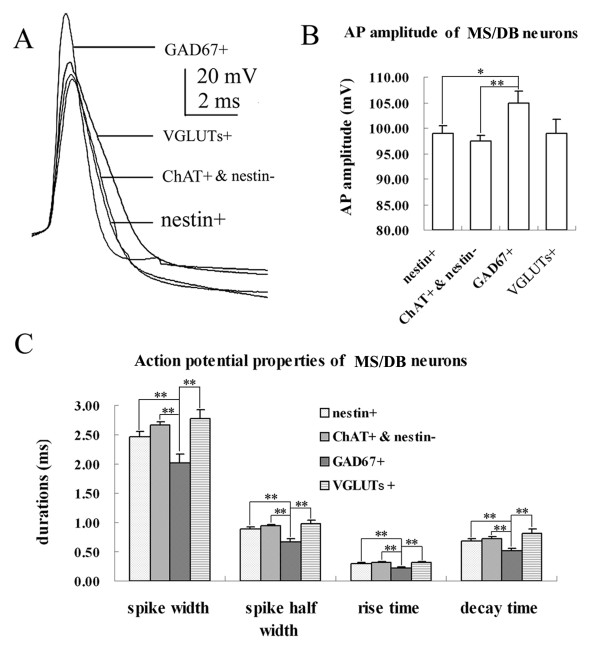
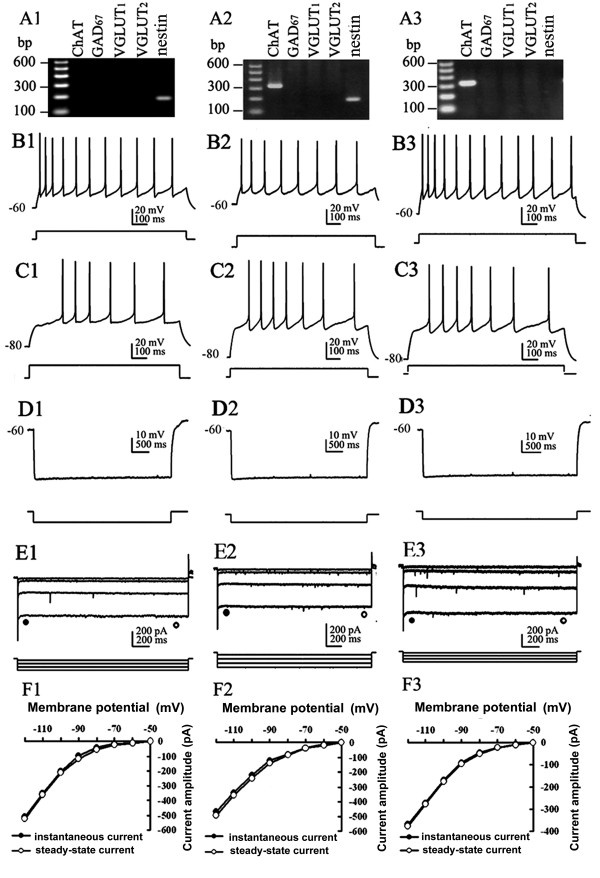
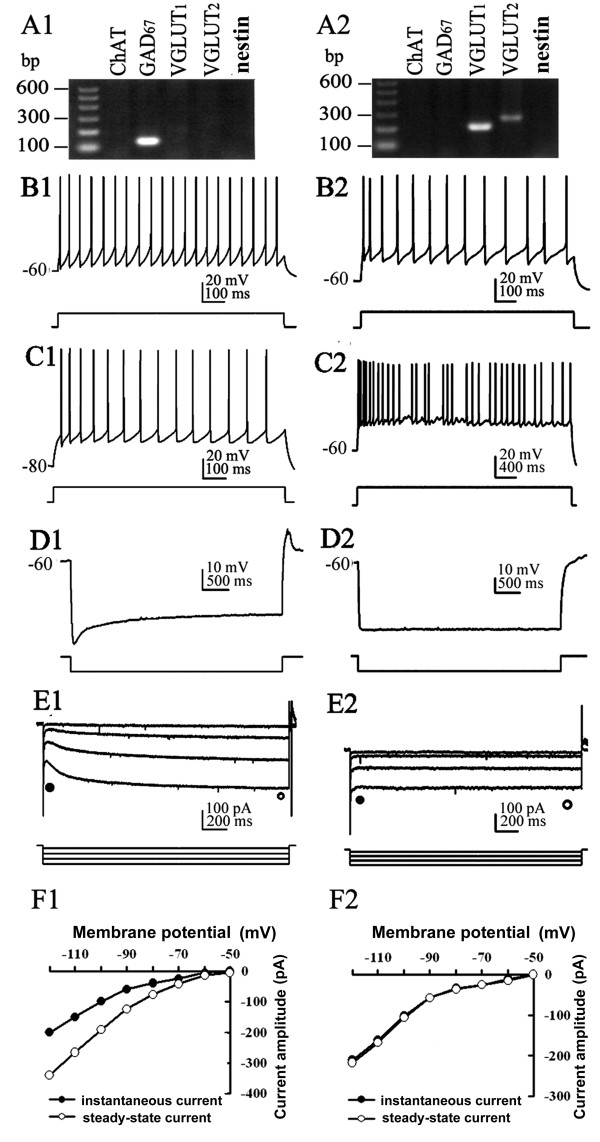
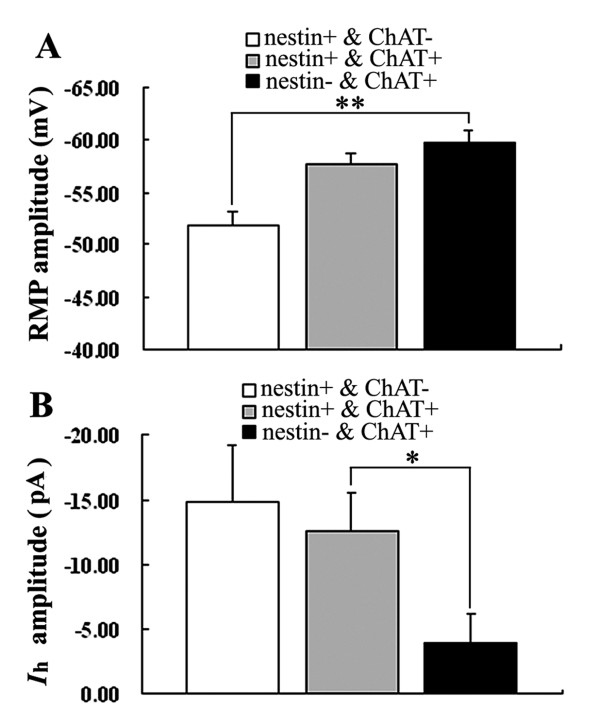
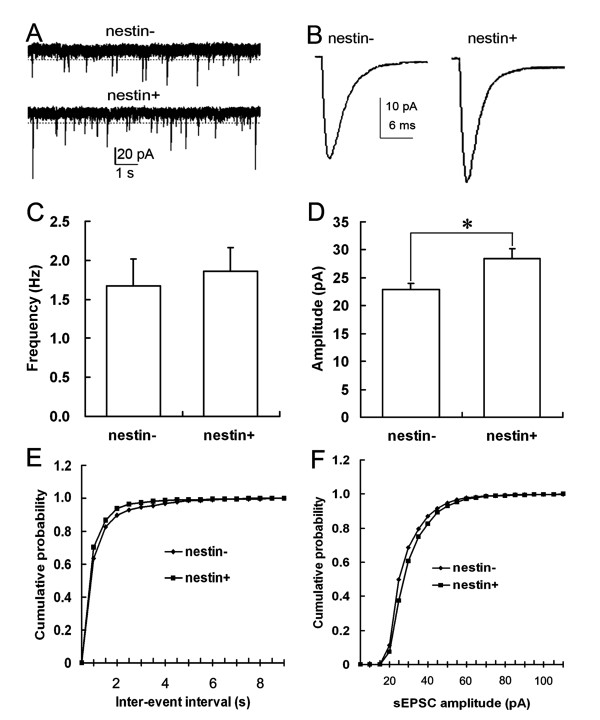
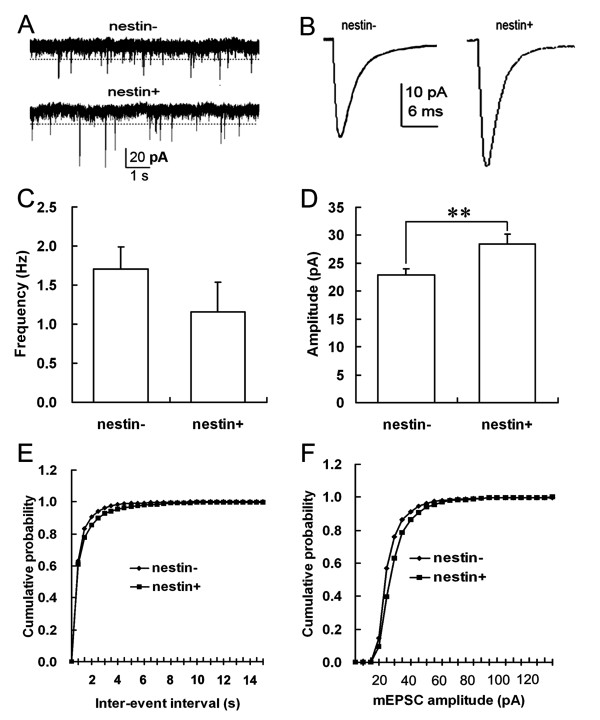
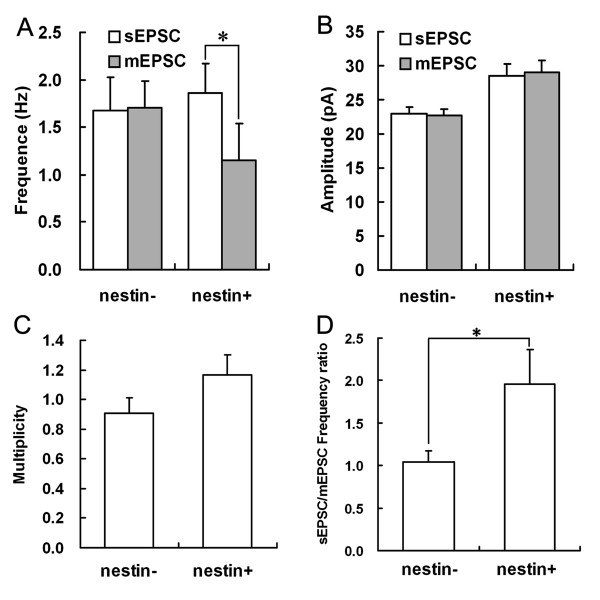
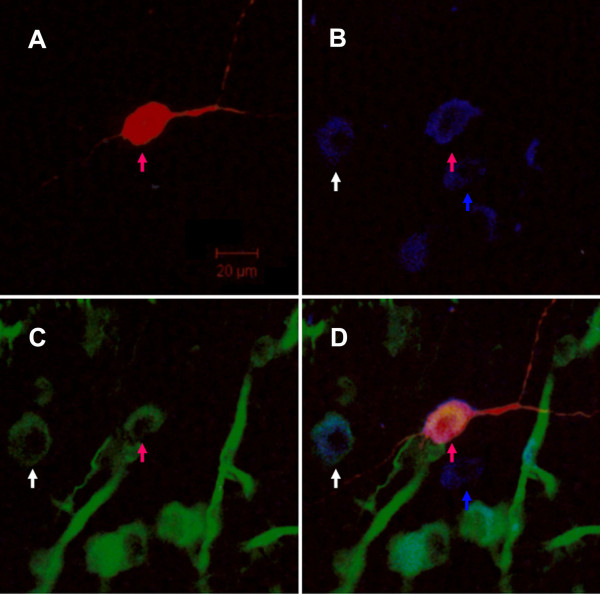
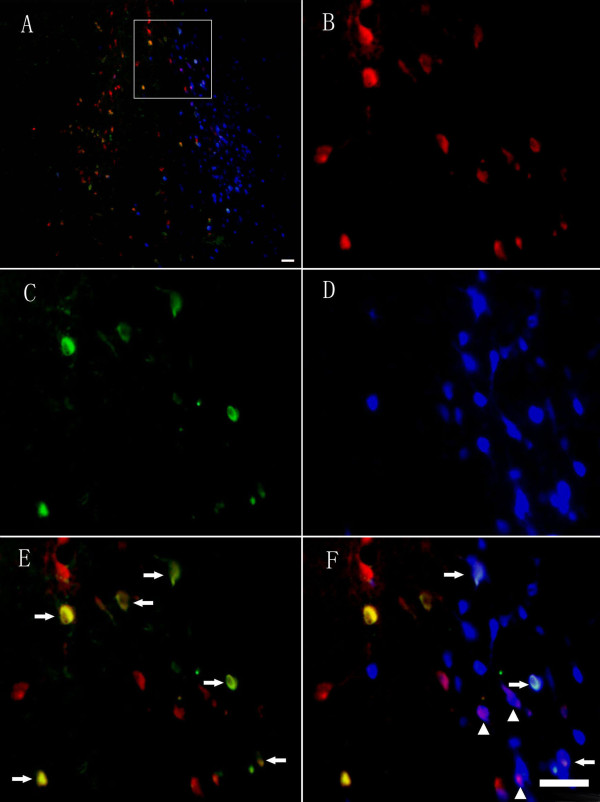
The results of single-cell RT-PCR showed that 87.5% (35/40) of nestin+ cells expressed choline acetyltransferase mRNA (ChAT+), only 44.3% (35/79) of ChAT+ cells expressed nestin mRNA. Furthermore, none of the nestin+ cells expressed glutamic acid decarboxylases 67 (GAD(67)) or vesicular glutamate transporters (VGLUT) mRNA. All of the recorded nestin+ cells were excitable and demonstrated slow-firing properties, which were distinctive from those of GAD(67) or VGLUT mRNA-positive neurons. These results show that the MS/DBB cholinergic neurons could be divided into nestin-expressing cholinergic neurons (NEChs) and nestin non-expressing cholinergic neurons (NNChs). Interestingly, NEChs had higher excitability and received stronger spontaneous excitatory synaptic inputs than NNChs. Retrograde labelling combined with choline acetyltransferase and nestin immunofluorescence showed that both of the NEChs and NNChs projected to hippocampus.
These results suggest that there are two parallel cholinergic septo-hippocampal pathways that may have different functions. The significance of nestin expressing in functional neurons has been discussed.
巢蛋白免疫反应性(nestin-ir)神经元已在成年大鼠和人类的中隔/斜角带复合区(MS/DBB)中被鉴定,但巢蛋白在功能性神经元中的表达意义尚不清楚。本研究通过全细胞记录结合单细胞 RT-PCR 研究了巢蛋白表达(nestin+)神经元的电生理特性和神经化学表型,以探索 MS/DBB 功能性神经元中巢蛋白表达的意义。逆行标记和免疫荧光用于研究隔海马通路上与巢蛋白+神经元相关的回路。
单细胞 RT-PCR 的结果表明,87.5%(35/40)的 nestin+细胞表达胆碱乙酰转移酶 mRNA(ChAT+),而只有 44.3%(35/79)的 ChAT+细胞表达 nestin mRNA。此外,没有一个 nestin+细胞表达谷氨酸脱羧酶 67(GAD(67))或囊泡谷氨酸转运体(VGLUT)mRNA。所有记录的 nestin+细胞都是可兴奋的,并表现出慢放电特性,这与 GAD(67)或 VGLUT mRNA 阳性神经元不同。这些结果表明,MS/DBB 胆碱能神经元可分为巢蛋白表达的胆碱能神经元(NEChs)和巢蛋白非表达的胆碱能神经元(NNChs)。有趣的是,NEChs 的兴奋性更高,接受的自发性兴奋性突触传入更强。逆行标记结合胆碱乙酰转移酶和巢蛋白免疫荧光显示,NEChs 和 NNChs 均投射到海马。
这些结果表明存在两条平行的隔海马胆碱能通路,它们可能具有不同的功能。探讨了巢蛋白在功能性神经元中的表达意义。