Institute of Inorganic Chemistry, University of Vienna, Austria.
J Biol Inorg Chem. 2012 Mar;17(3):409-23. doi: 10.1007/s00775-011-0864-x. Epub 2011 Dec 22.
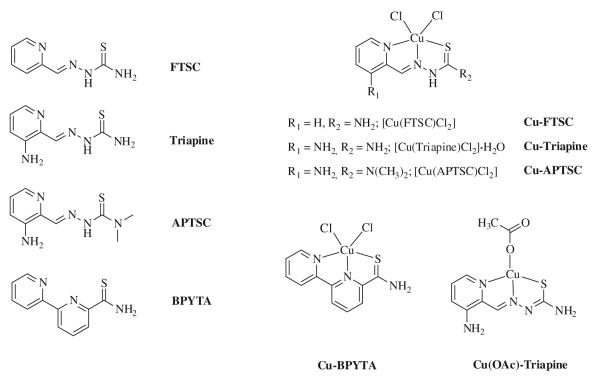
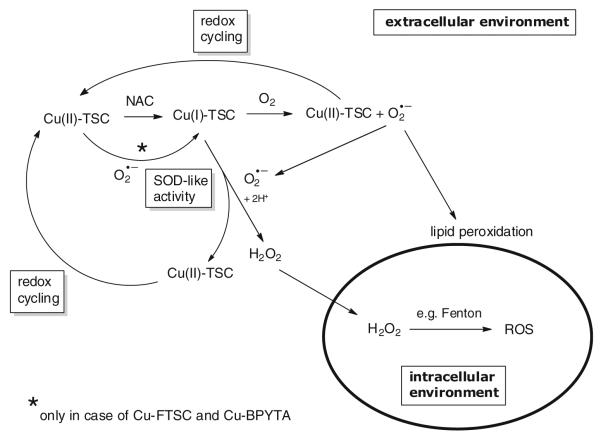
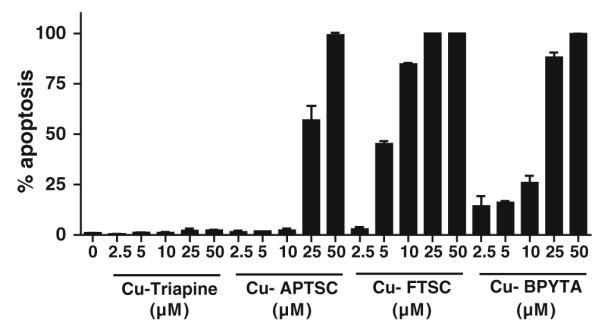
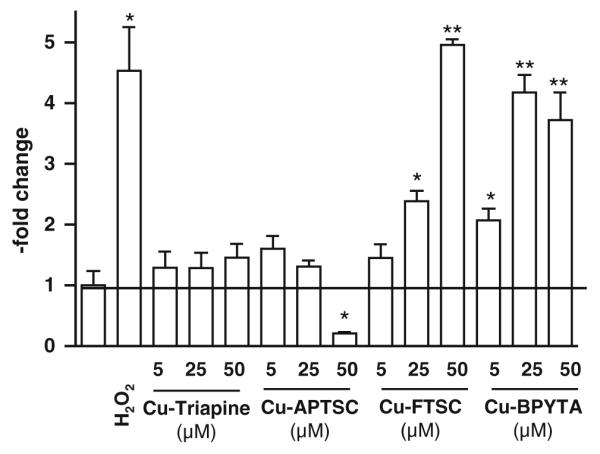
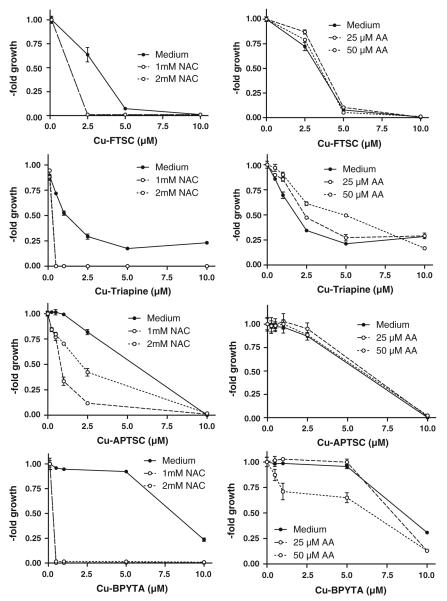
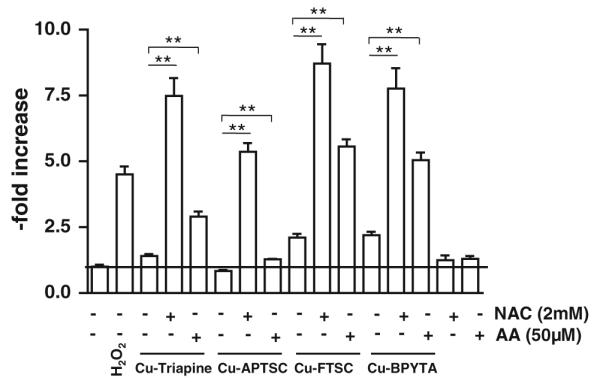
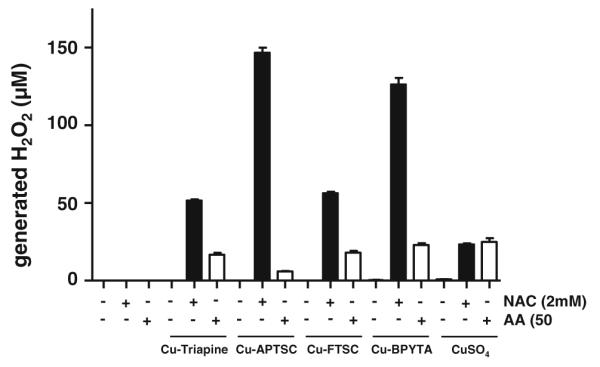
Intracellular generation of reactive oxygen species (ROS) via thiol-mediated reduction of copper(II) to copper(I) has been assumed as the major mechanism underlying the anticancer activity of copper(II) complexes. The aim of this study was to compare the anticancer potential of copper(II) complexes of Triapine (3-aminopyridine-2-carboxaldehyde thiosemicarbazone; currently in phase II clinical trials) and its terminally dimethylated derivative with that of 2-formylpyridine thiosemicarbazone and that of 2,2'-bipyridyl-6-carbothioamide. Experiments on generation of oxidative stress and the influence of biologically relevant reductants (glutathione, ascorbic acid) on the anticancer activity of the copper complexes revealed that reductant-dependent redox cycling occurred mainly outside the cells, leading to generation and dismutation of superoxide radicals resulting in cytotoxic amounts of H(2)O(2). However, without extracellular reductants only weak intracellular ROS generation was observed at IC(50) levels, suggesting that cellular thiols are not involved in copper-complex-induced oxidative stress. Taken together, thiol-induced intracellular ROS generation might contribute to the anticancer activity of copper thiosemicarbazone complexes but is not the determining factor.
细胞内通过巯基介导的将铜(II)还原为铜(I)来生成活性氧(ROS),这被认为是铜(II)配合物抗癌活性的主要机制。本研究的目的是比较三嗪(3-氨基吡啶-2-甲醛缩氨硫脲;目前处于 II 期临床试验阶段)及其末端二甲基化衍生物的铜(II)配合物与 2-甲酰基吡啶缩氨硫脲和 2,2'-联吡啶-6-碳酰二硫代酰胺的抗癌潜力。关于氧化应激生成的实验以及生物相关还原剂(谷胱甘肽、抗坏血酸)对铜配合物抗癌活性的影响表明,还原剂依赖性的氧化还原循环主要发生在细胞外,导致超氧自由基的生成和歧化,从而产生细胞毒性的 H(2)O(2)。然而,在没有细胞外还原剂的情况下,仅在 IC(50)水平观察到弱的细胞内 ROS 生成,表明细胞内巯基不参与铜配合物诱导的氧化应激。总之,巯基诱导的细胞内 ROS 生成可能有助于铜硫代氨基甲酸盐配合物的抗癌活性,但不是决定因素。