• 文献检索
  • 文档翻译
  • 深度研究
  • 学术资讯
  • Suppr Zotero 插件Zotero 插件
  • 邀请有礼
  • 套餐&价格
  • 历史记录
应用&插件
Suppr Zotero 插件Zotero 插件浏览器插件Mac 客户端Windows 客户端微信小程序
定价
高级版会员购买积分包购买API积分包
服务
文献检索文档翻译深度研究API 文档MCP 服务
关于我们
关于 Suppr公司介绍联系我们用户协议隐私条款
关注我们

Suppr 超能文献

核心技术专利:CN118964589B侵权必究
粤ICP备2023148730 号-1Suppr @ 2026

文献检索

告别复杂PubMed语法,用中文像聊天一样搜索,搜遍4000万医学文献。AI智能推荐,让科研检索更轻松。

立即免费搜索

文件翻译

保留排版,准确专业,支持PDF/Word/PPT等文件格式,支持 12+语言互译。

免费翻译文档

深度研究

AI帮你快速写综述,25分钟生成高质量综述,智能提取关键信息,辅助科研写作。

立即免费体验

将单词学习与空间联系起来。

Grounding word learning in space.

机构信息

Department of Psychology and Delta Center, University of Iowa, Iowa City, Iowa, United States of America.

出版信息

PLoS One. 2011;6(12):e28095. doi: 10.1371/journal.pone.0028095. Epub 2011 Dec 14.

DOI:10.1371/journal.pone.0028095
PMID:22194807
原文链接:https://pmc.ncbi.nlm.nih.gov/articles/PMC3237424/
Abstract

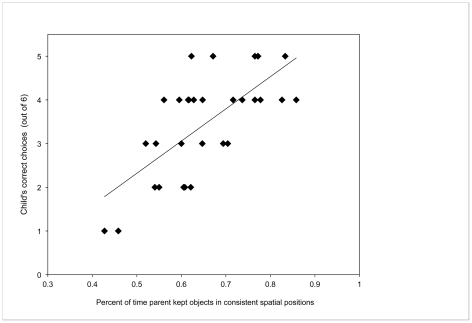
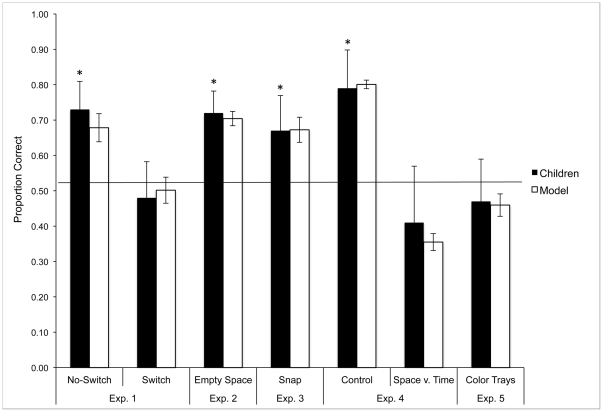
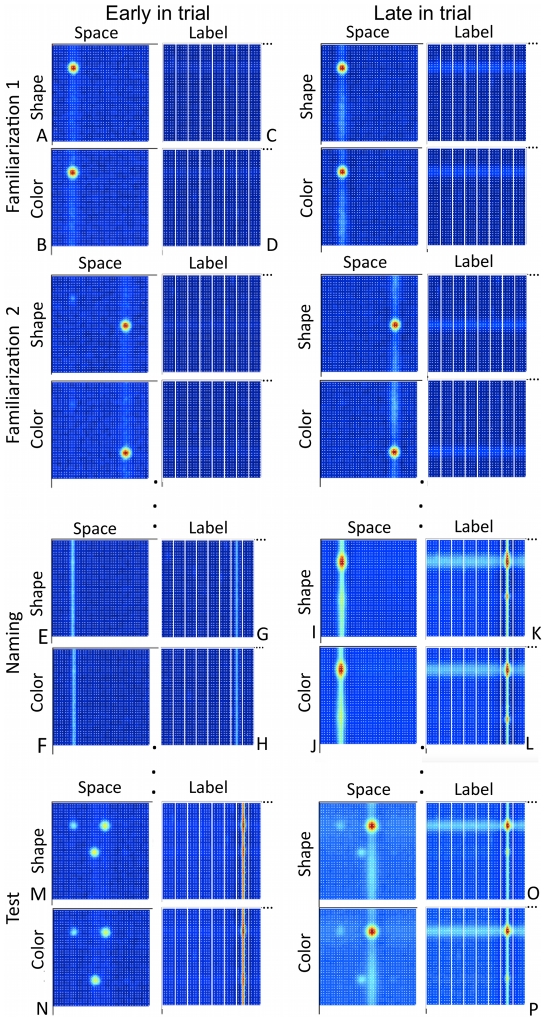
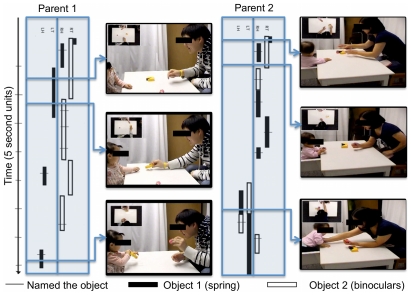
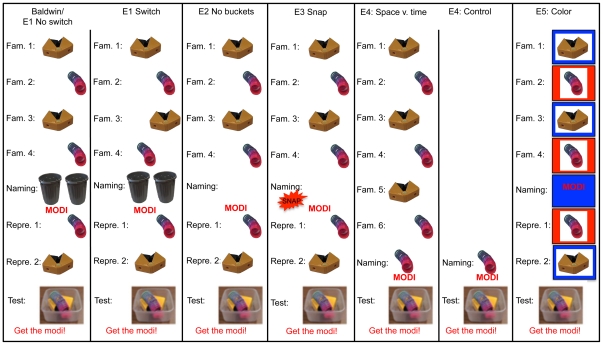
Humans and objects, and thus social interactions about objects, exist within space. Words direct listeners' attention to specific regions of space. Thus, a strong correspondence exists between where one looks, one's bodily orientation, and what one sees. This leads to further correspondence with what one remembers. Here, we present data suggesting that children use associations between space and objects and space and words to link words and objects--space binds labels to their referents. We tested this claim in four experiments, showing that the spatial consistency of where objects are presented affects children's word learning. Next, we demonstrate that a process model that grounds word learning in the known neural dynamics of spatial attention, spatial memory, and associative learning can capture the suite of results reported here. This model also predicts that space is special, a prediction supported in a fifth experiment that shows children do not use color as a cue to bind words and objects. In a final experiment, we ask whether spatial consistency affects word learning in naturalistic word learning contexts. Children of parents who spontaneously keep objects in a consistent spatial location during naming interactions learn words more effectively. Together, the model and data show that space is a powerful tool that can effectively ground word learning in social contexts.

摘要

人和物体,以及关于物体的社会互动,都存在于空间中。词语引导听众将注意力集中到空间的特定区域。因此,一个人的目光、身体方向和所见之间存在很强的对应关系。这进一步导致了与记忆内容的对应。在这里,我们提供的数据表明,儿童利用空间与物体以及空间与词语之间的联系来将词语和物体联系起来——空间将标签与它们的指涉物联系起来。我们在四个实验中检验了这一说法,表明物体呈现位置的空间一致性会影响儿童的词汇学习。接下来,我们展示了一个将词汇学习建立在已知的空间注意、空间记忆和联想学习的神经动力学基础上的过程模型,可以捕捉到这里报告的一系列结果。该模型还预测了空间的特殊性,在第五个实验中支持了这一预测,该实验表明儿童不会使用颜色作为线索将词语和物体联系起来。在最后的实验中,我们询问空间一致性是否会影响自然词汇学习环境中的词汇学习。在命名互动中,父母自发地将物体保持在一致空间位置的孩子,学习单词的效果更好。模型和数据共同表明,空间是一种强大的工具,可以有效地将词汇学习建立在社会环境中。
https://cdn.ncbi.nlm.nih.gov/pmc/blobs/7e89/3237424/ca398a4d1042/pone.0028095.g005.jpg
https://cdn.ncbi.nlm.nih.gov/pmc/blobs/7e89/3237424/19bbe8db0a04/pone.0028095.g001.jpg
https://cdn.ncbi.nlm.nih.gov/pmc/blobs/7e89/3237424/cced86256ccd/pone.0028095.g002.jpg
https://cdn.ncbi.nlm.nih.gov/pmc/blobs/7e89/3237424/e88baad645f0/pone.0028095.g003.jpg
https://cdn.ncbi.nlm.nih.gov/pmc/blobs/7e89/3237424/b87f2c6562fb/pone.0028095.g004.jpg
https://cdn.ncbi.nlm.nih.gov/pmc/blobs/7e89/3237424/ca398a4d1042/pone.0028095.g005.jpg
https://cdn.ncbi.nlm.nih.gov/pmc/blobs/7e89/3237424/19bbe8db0a04/pone.0028095.g001.jpg
https://cdn.ncbi.nlm.nih.gov/pmc/blobs/7e89/3237424/cced86256ccd/pone.0028095.g002.jpg
https://cdn.ncbi.nlm.nih.gov/pmc/blobs/7e89/3237424/e88baad645f0/pone.0028095.g003.jpg
https://cdn.ncbi.nlm.nih.gov/pmc/blobs/7e89/3237424/b87f2c6562fb/pone.0028095.g004.jpg
https://cdn.ncbi.nlm.nih.gov/pmc/blobs/7e89/3237424/ca398a4d1042/pone.0028095.g005.jpg

相似文献

1
Grounding word learning in space.将单词学习与空间联系起来。
PLoS One. 2011;6(12):e28095. doi: 10.1371/journal.pone.0028095. Epub 2011 Dec 14.
2
Near or far: The effect of spatial distance and vocabulary knowledge on word learning.近或远:空间距离和词汇知识对词汇学习的影响。
Acta Psychol (Amst). 2016 Jan;163:81-7. doi: 10.1016/j.actpsy.2015.11.006. Epub 2015 Nov 26.
3
Not all is forgotten: Children's associative matrices for features of a word learning episode.并非一切皆被遗忘:儿童的联想矩阵对单词学习事件的特征。
Dev Sci. 2023 Mar;26(2):e13291. doi: 10.1111/desc.13291. Epub 2022 Jun 3.
4
Consistency of co-occurring actions influences young children's word learning.同时发生的动作的一致性会影响幼儿的词汇学习。
R Soc Open Sci. 2019 Aug 7;6(8):190097. doi: 10.1098/rsos.190097. eCollection 2019 Aug.
5
Twelve-month-olds disambiguate new words using mutual-exclusivity inferences.12 个月大的婴儿通过互斥推理来区分新单词。
Cognition. 2021 Aug;213:104691. doi: 10.1016/j.cognition.2021.104691. Epub 2021 Apr 30.
6
Learning words' sounds before learning how words sound: 9-month-olds use distinct objects as cues to categorize speech information.在学习单词发音之前先学习单词的语音:9个月大的婴儿将不同的物体用作对语音信息进行分类的线索。
Cognition. 2009 Nov;113(2):234-43. doi: 10.1016/j.cognition.2009.08.010. Epub 2009 Sep 17.
7
Early word learning is influenced by physical environments.早期的词汇学习受物理环境的影响。
Child Dev. 2024 May-Jun;95(3):962-971. doi: 10.1111/cdev.14046. Epub 2023 Nov 29.
8
Affordance Compatibility Effect for Word Learning in Virtual Reality.虚拟现实中词汇学习的可供性兼容性效应。
Cogn Sci. 2019 Jun;43(6):e12742. doi: 10.1111/cogs.12742.
9
Testing a word is not a test of word learning.对一个单词进行测试并非是对单词学习的测试。
Acta Psychol (Amst). 2013 Oct;144(2):264-8. doi: 10.1016/j.actpsy.2013.07.002. Epub 2013 Aug 7.
10
The company objects keep: Linking referents together during cross-situational word learning.该公司的目标是:在跨情境单词学习过程中将所指对象联系起来。
J Mem Lang. 2018 Apr;99:62-73. doi: 10.1016/j.jml.2017.11.001. Epub 2017 Nov 20.

引用本文的文献

1
Neural signatures of word learning during adult-child interactions.成人与儿童互动过程中词汇学习的神经特征。
Imaging Neurosci (Camb). 2025 Jan 2;3. doi: 10.1162/imag_a_00407. eCollection 2025.
2
A library for innovative category exemplars (ALICE) database: Streamlining research with printable 3D novel objects.创新类别范例库(ALICE)数据库:使用可打印的 3D 新对象简化研究。
Behav Res Methods. 2024 Oct;56(7):7849-7871. doi: 10.3758/s13428-024-02458-5. Epub 2024 Aug 2.
3
Neural dynamic foundations of a theory of higher cognition: the case of grounding nested phrases.

本文引用的文献

1
Mirror Neuron Forum.镜像神经元论坛
Perspect Psychol Sci. 2011 Jul;6(4):369-407. doi: 10.1177/1745691611413392.
2
Guided Search 2.0 A revised model of visual search.引导搜索 2.0:一种改进的视觉搜索模型。
Psychon Bull Rev. 1994 Jun;1(2):202-38. doi: 10.3758/BF03200774.
3
The emergence of words: attentional learning in form and meaning.词语的出现:形式和意义上的注意学习。
高等认知理论的神经动力学基础:以嵌套短语的基础为例。
Cogn Neurodyn. 2024 Apr;18(2):557-579. doi: 10.1007/s11571-023-10007-7. Epub 2023 Oct 4.
4
Formal theories clarify the complex: Generalizing a neural process account of the interaction of visual exploration and word learning in infancy.正式理论阐明了复杂性:将婴儿期视觉探索和词汇学习的神经过程解释推广。
Child Dev. 2023 Nov-Dec;94(6):1491-1510. doi: 10.1111/cdev.14023. Epub 2023 Oct 30.
5
Touch to learn: Multisensory input supports word learning and processing.触摸学习:多感官输入支持词汇学习和处理。
Dev Sci. 2024 Jan;27(1):e13419. doi: 10.1111/desc.13419. Epub 2023 Jun 8.
6
Nonverbal Action Interpretation Guides Novel Word Disambiguation in 12-Month-Olds.非言语动作解读引导12个月大婴儿对新单词的歧义消除。
Open Mind (Camb). 2022 Jul 1;6:51-76. doi: 10.1162/opmi_a_00055. eCollection 2022.
7
Coordination of Caregiver Naming and Children's Exploration of Solid Objects and Nonsolid Substances.照顾者命名与儿童对固体物体和非固体物质的探索之间的协调。
Front Psychol. 2022 Jul 5;13:945664. doi: 10.3389/fpsyg.2022.945664. eCollection 2022.
8
System alignment supports cross-domain learning and zero-shot generalisation.系统对齐支持跨域学习和零样本泛化。
Cognition. 2022 Oct;227:105200. doi: 10.1016/j.cognition.2022.105200. Epub 2022 Jun 16.
9
Testing predictions of a neural process model of visual attention in infancy across competitive and non-competitive contexts.在竞争和非竞争环境下测试婴儿视觉注意的神经过程模型的预测。
Infancy. 2022 Mar;27(2):389-411. doi: 10.1111/infa.12457. Epub 2022 Feb 17.
10
Toddler Word Learning is Robust to Changes in Emotional Context.幼儿词汇学习对情感背景的变化具有较强的适应性。
Infant Child Dev. 2021 Nov-Dec;30(6). doi: 10.1002/icd.2270. Epub 2021 Sep 7.
Cogn Sci. 2005 Nov 12;29(6):819-65. doi: 10.1207/s15516709cog0000_31.
4
A neurobehavioral model of flexible spatial language behaviors.灵活空间语言行为的神经行为模型。
J Exp Psychol Learn Mem Cogn. 2012 Nov;38(6):1490-511. doi: 10.1037/a0022643. Epub 2011 Apr 25.
5
Attentional capture of objects referred to by spoken language.言语所指物体的注意捕获。
J Exp Psychol Hum Percept Perform. 2011 Aug;37(4):1122-33. doi: 10.1037/a0023101.
6
Mirror neurons and the simulation theory of mind-reading.镜像神经元与心理解读的模拟理论。
Trends Cogn Sci. 1998 Dec 1;2(12):493-501. doi: 10.1016/s1364-6613(98)01262-5.
7
Social coordination in toddler's word learning: interacting systems of perception and action.幼儿词汇学习中的社会协调:感知与行动的交互系统。
Conn Sci. 2008 Jun 1;20(2-3):73-89. doi: 10.1080/09540090802091891.
8
Biased feedback in spatial recall yields a violation of delta rule learning.空间回忆中的偏差反馈导致违背了 delta 规则学习。
Psychon Bull Rev. 2010 Aug;17(4):581-8. doi: 10.3758/PBR.17.4.581.
9
Temporal dynamics of unimodal and multimodal feature binding.单峰和多峰特征绑定的时间动态
Atten Percept Psychophys. 2010 Jan;72(1):142-52. doi: 10.3758/APP.72.1.142.
10
Tests of the dynamic field theory and the spatial precision hypothesis: capturing a qualitative developmental transition in spatial working memory.动态场理论和空间精度假设的检验:捕捉空间工作记忆中定性发展转变。
J Exp Psychol Hum Percept Perform. 2009 Dec;35(6):1698-725. doi: 10.1037/a0015794.