Laboratory of Integrative Biosciences, College of Life Sciences, Sun Yat-Sen University, Guangzhou 510275, China.
Genomics Proteomics Bioinformatics. 2011 Oct;9(4-5):119-27. doi: 10.1016/S1672-0229(11)60015-6.
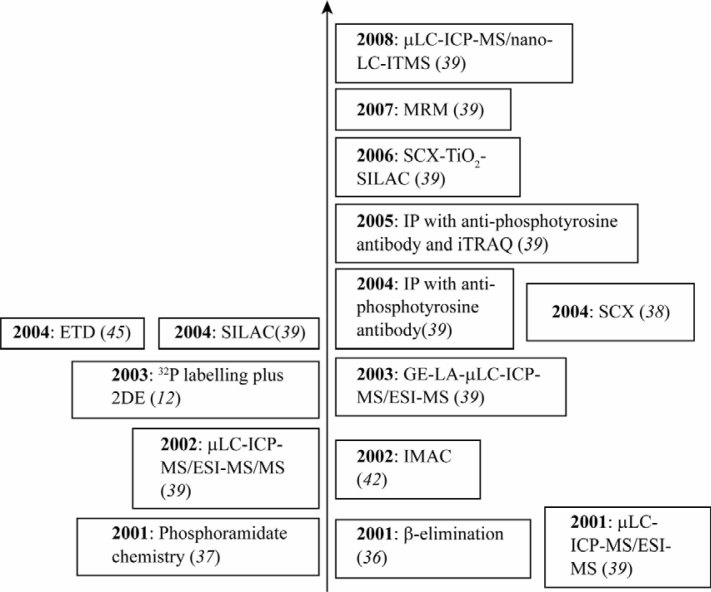
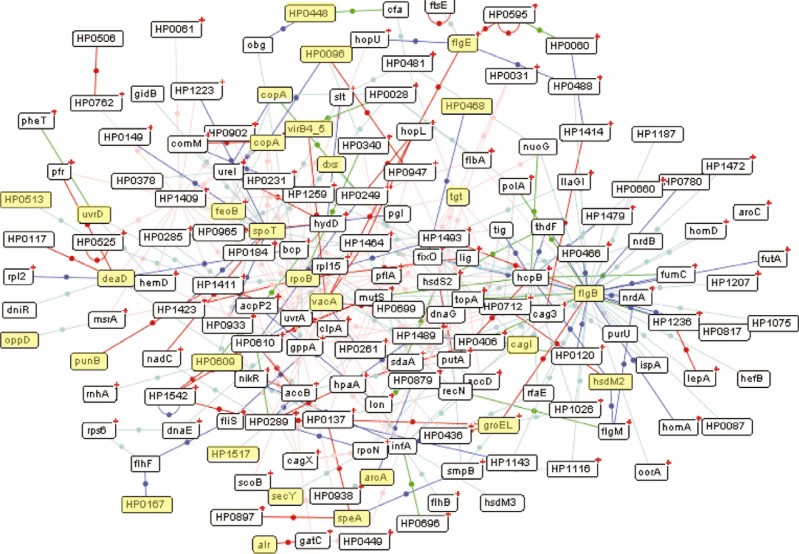
Increasing evidence shows that protein phosphorylation on serine, threonine and tyrosine residues is a major regulatory post-translational modification in the bacteria. This review focuses on the implications of bacterial phosphoproteome in bacterial pathogenicity and highlights recent development of methods in phosphoproteomics and the connectivity of the phosphorylation networks. Recent technical developments in the high accuracy mass spectrometry have dramatically transformed proteomics and made it possible the characterization of a few exhaustive site-specific bacterial phosphoproteomes. The high abundance of tyrosine phosphorylations in a few bacterial phosphoproteomes suggests their roles in the pathogenicity, especially in the case of pathogen-host interactions; the high abundance of multi-phosphorylation sites in bacterial phosphoprotein is a compensation of the relatively small phosphorylation size and an indicator of the delicate regulation of protein functions.
越来越多的证据表明,丝氨酸、苏氨酸和酪氨酸残基的蛋白质磷酸化是细菌中主要的调节性翻译后修饰。本综述重点介绍了细菌磷酸蛋白质组在细菌致病性中的意义,并强调了磷酸蛋白质组学方法的最新进展和磷酸化网络的连通性。高精度质谱技术的最新技术发展极大地改变了蛋白质组学,使得全面描述少数几个细菌磷酸蛋白质组成为可能。少数细菌磷酸蛋白质组中酪氨酸磷酸化的高丰度表明其在致病性中的作用,特别是在病原体与宿主相互作用的情况下;细菌磷酸蛋白中多磷酸化位点的高丰度是对磷酸化大小相对较小的补偿,也是蛋白质功能精细调节的指标。