Institut Municipal d'Investigació Mèdica-Hospital del Mar, Barcelona, Spain.
Nat Immunol. 2011 Dec 25;13(2):170-80. doi: 10.1038/ni.2194.
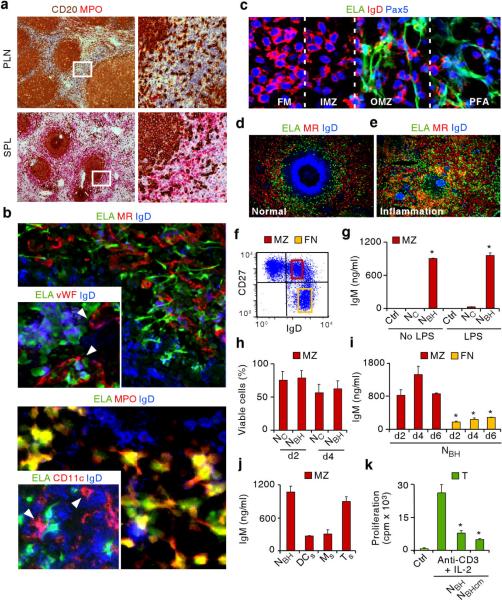
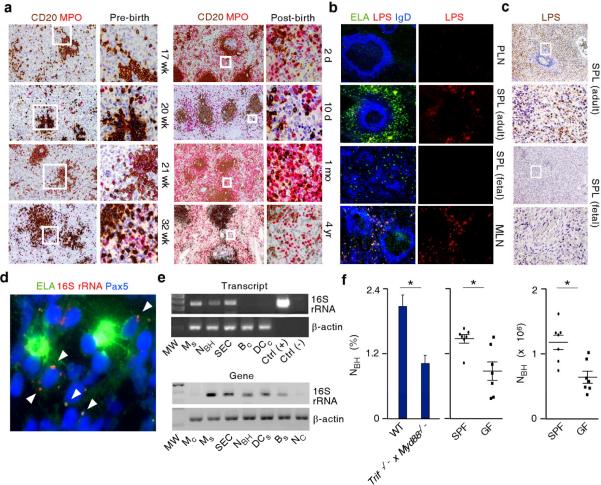
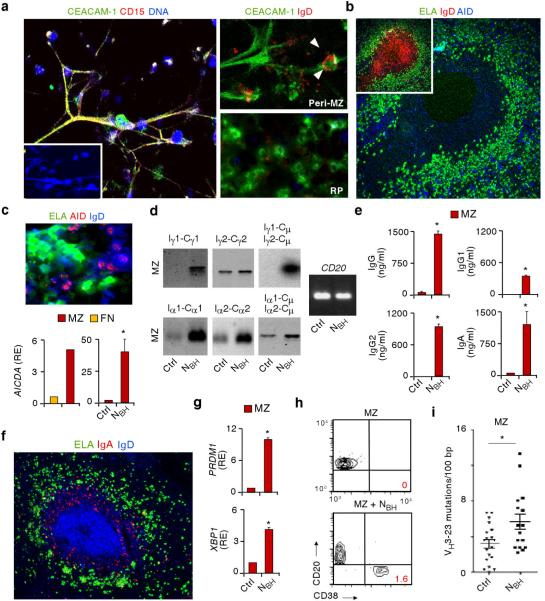
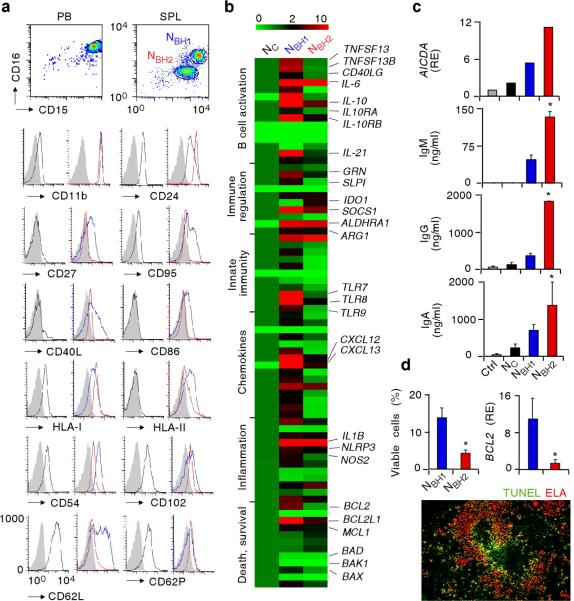
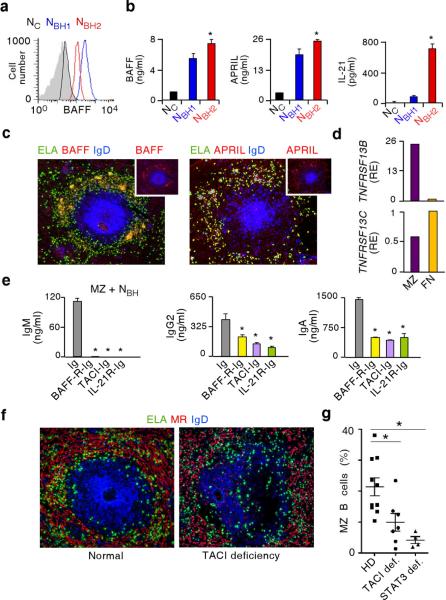
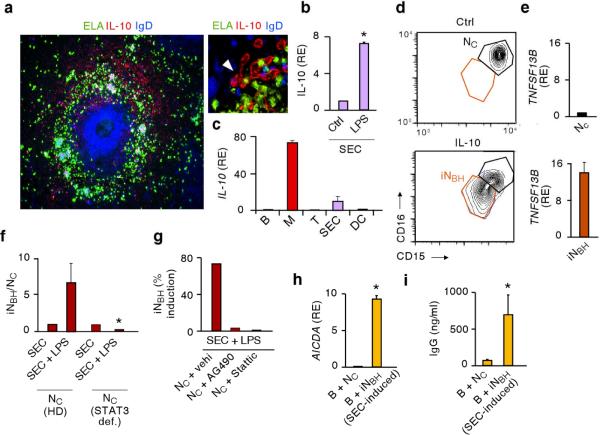
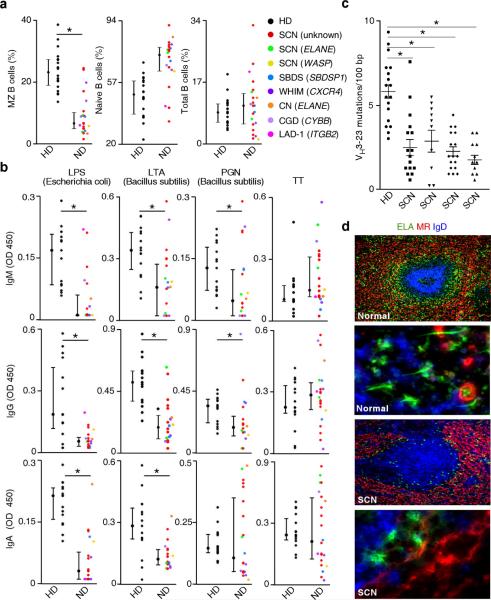
Neutrophils use immunoglobulins to clear antigen, but their role in immunoglobulin production is unknown. Here we identified neutrophils around the marginal zone (MZ) of the spleen, a B cell area specialized in T cell-independent immunoglobulin responses to circulating antigen. Neutrophils colonized peri-MZ areas after postnatal mucosal colonization by microbes and enhanced their B cell-helper function after receiving reprogramming signals, including interleukin 10 (IL-10), from splenic sinusoidal endothelial cells. Splenic neutrophils induced immunoglobulin class switching, somatic hypermutation and antibody production by activating MZ B cells through a mechanism that involved the cytokines BAFF, APRIL and IL-21. Neutropenic patients had fewer and hypomutated MZ B cells and a lower abundance of preimmune immunoglobulins to T cell-independent antigens, which indicates that neutrophils generate an innate layer of antimicrobial immunoglobulin defense by interacting with MZ B cells.
中性粒细胞利用免疫球蛋白清除抗原,但它们在免疫球蛋白产生中的作用尚不清楚。在这里,我们鉴定了脾脏边缘区(MZ)周围的中性粒细胞,MZ 是一个 B 细胞区域,专门负责对循环抗原进行 T 细胞非依赖性免疫球蛋白应答。中性粒细胞在出生后通过微生物的黏膜定植而殖民化于peri-MZ 区域,并在接收来自脾窦内皮细胞的重编程信号(包括白细胞介素 10(IL-10))后增强其 B 细胞辅助功能。脾中性粒细胞通过一种涉及细胞因子 BAFF、APRIL 和 IL-21 的机制,通过激活 MZ B 细胞来诱导免疫球蛋白类别转换、体细胞超突变和抗体产生。中性粒细胞缺乏症患者的 MZ B 细胞数量较少且突变较少,对 T 细胞非依赖性抗原的预存免疫球蛋白含量也较低,这表明中性粒细胞通过与 MZ B 细胞相互作用产生先天的抗微生物免疫球蛋白防御。