Institute of Biomedicine Alberto Sols (CSIC/UAM), Madrid, Spain.
Aging Cell. 2012 Apr;11(2):284-96. doi: 10.1111/j.1474-9726.2011.00786.x. Epub 2012 Feb 1.
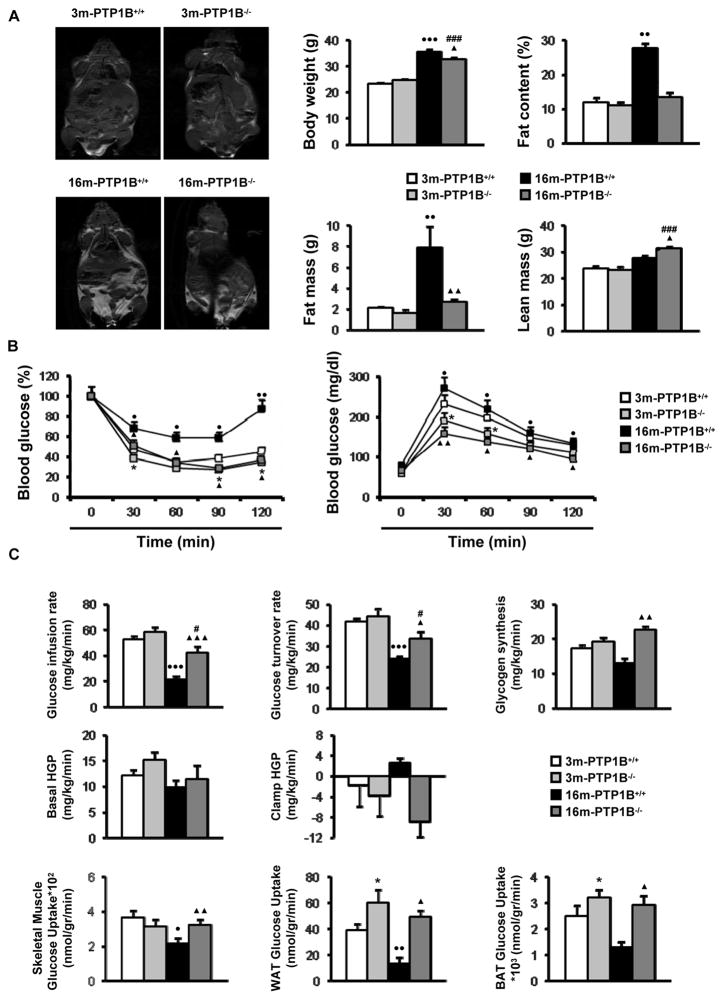
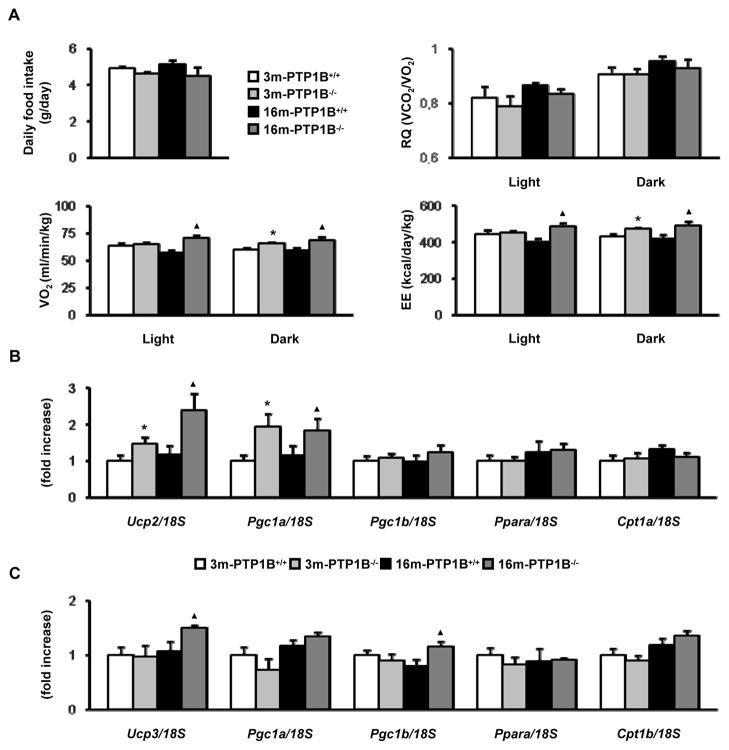
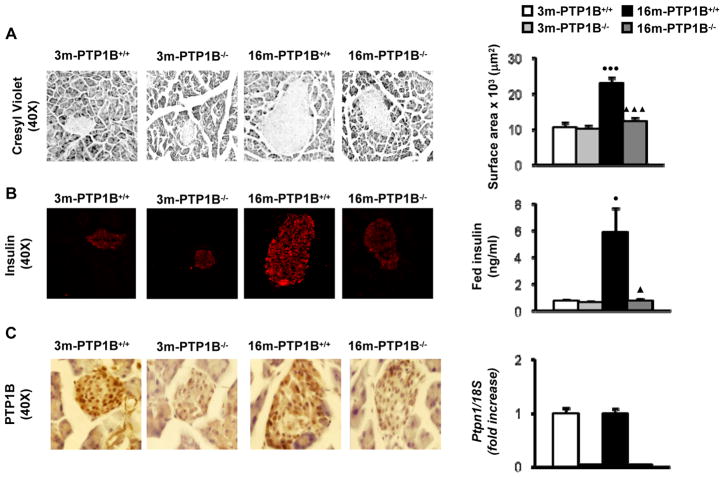
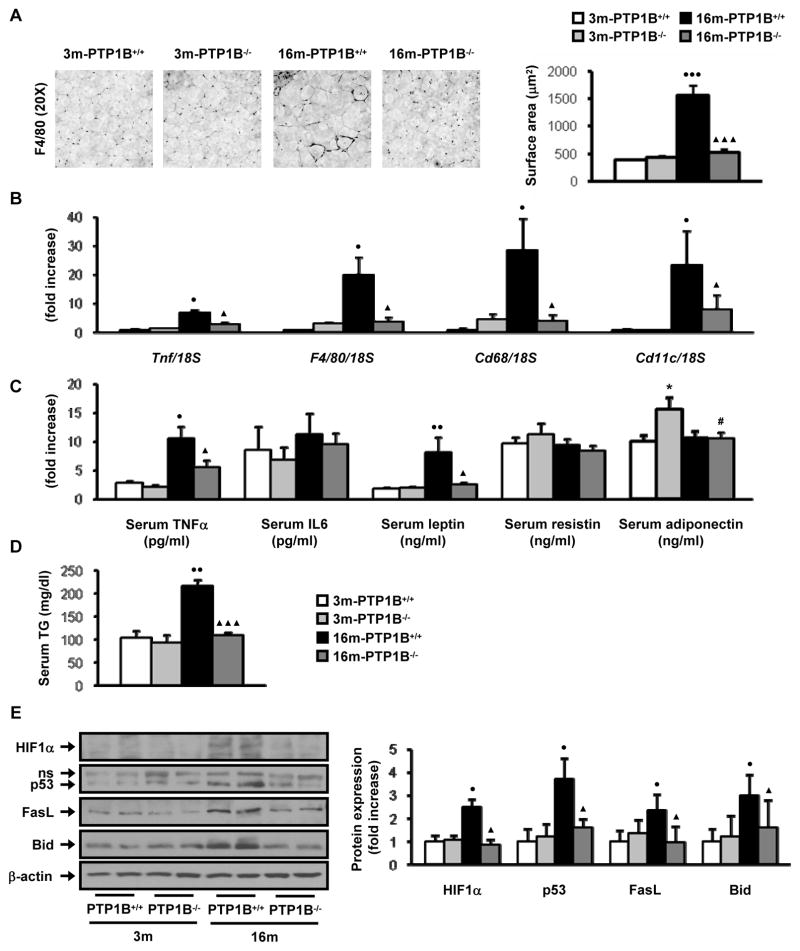
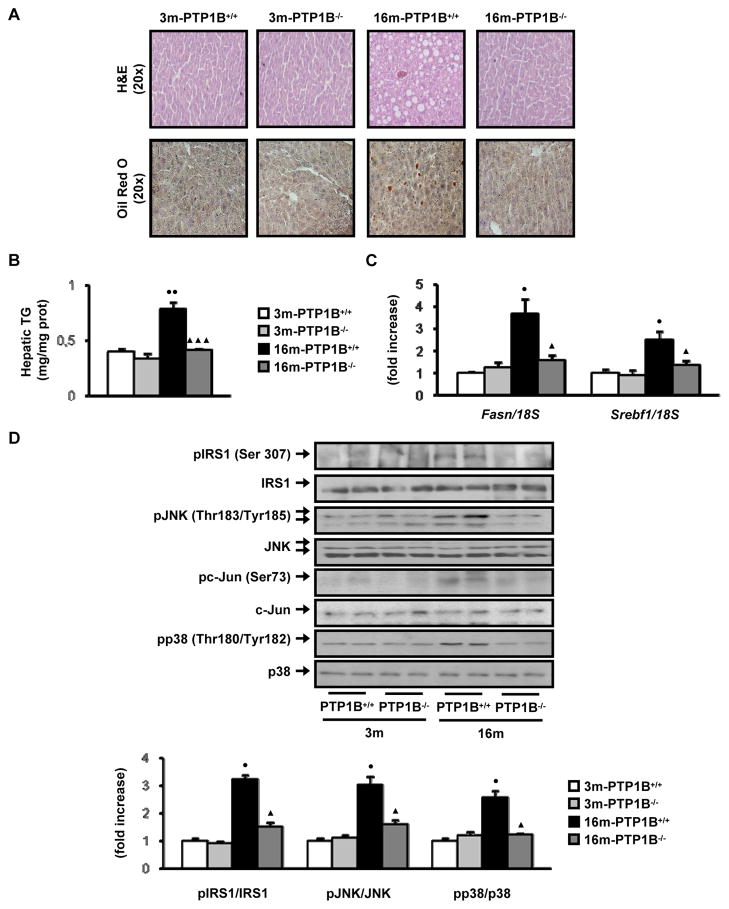
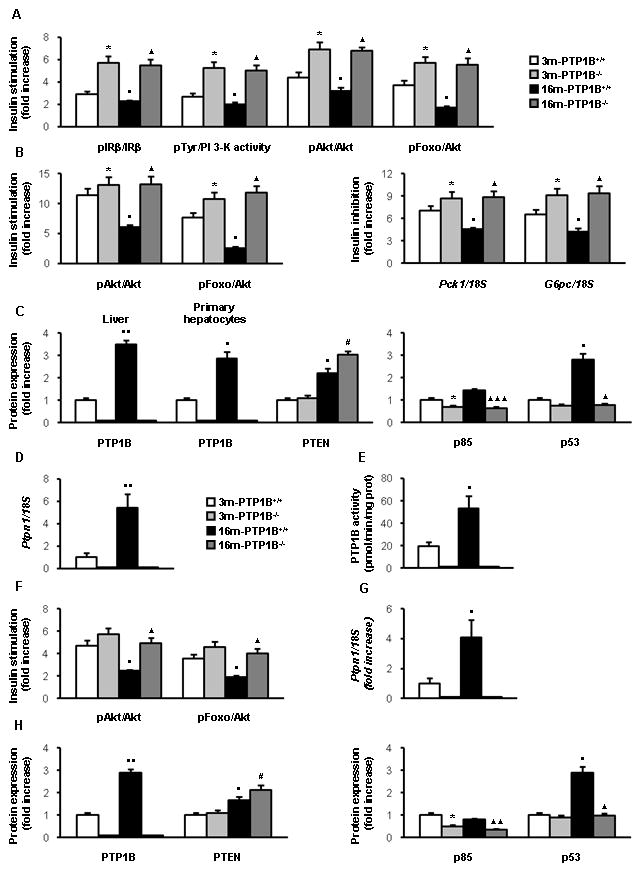
Protein tyrosine phosphatase 1B (PTP1B) is a negative regulator of insulin signaling and a therapeutic target for type 2 diabetes (T2DM). In this study, we have evaluated the role of PTP1B in the development of aging-associated obesity, inflammation, and peripheral insulin resistance by assessing metabolic parameters at 3 and 16 months in PTP1B(-/-) mice maintained on mixed genetic background (C57Bl/6J × 129Sv/J). Whereas fat mass and adipocyte size were increased in wild-type control mice at 16 months, these parameters did not change with aging in PTP1B(-/-) mice. Increased levels of pro-inflammatory cytokines, crown-like structures, and hypoxia-inducible factor (HIF)-1α were observed only in adipose tissue from 16-month-old wild-type mice. Similarly, islet hyperplasia and hyperinsulinemia were observed in wild-type mice with aging-associated obesity, but not in PTP1B(-/-) animals. Leanness in 16-month-old PTP1B(-/-) mice was associated with increased energy expenditure. Whole-body insulin sensitivity decreased in 16-month-old control mice; however, studies with the hyperinsulinemic-euglycemic clamp revealed that PTP1B deficiency prevented this obesity-related decreased peripheral insulin sensitivity. At a molecular level, PTP1B expression and enzymatic activity were up-regulated in liver and muscle of 16-month-old wild-type mice as were the activation of stress kinases and the expression of p53. Conversely, insulin receptor-mediated Akt/Foxo1 signaling was attenuated in these aged control mice. Collectively, these data implicate PTP1B in the development of inflammation and insulin resistance associated with obesity during aging and suggest that inhibition of this phosphatase by therapeutic strategies might protect against age-dependent T2DM.
蛋白酪氨酸磷酸酶 1B(PTP1B)是胰岛素信号的负调节剂,也是 2 型糖尿病(T2DM)的治疗靶点。在这项研究中,我们通过评估 3 个月和 16 个月时 PTP1B(-/-)小鼠维持在混合遗传背景(C57Bl/6J×129Sv/J)下的代谢参数,评估了 PTP1B 在与衰老相关的肥胖、炎症和外周胰岛素抵抗发展中的作用。虽然野生型对照小鼠的脂肪量和脂肪细胞大小在 16 个月时增加,但这些参数在 PTP1B(-/-)小鼠中并未随年龄增长而变化。只有在 16 个月大的野生型小鼠的脂肪组织中观察到促炎细胞因子、冠状结构和缺氧诱导因子(HIF)-1α水平升高。同样,与衰老相关的肥胖症中观察到胰岛增生和高胰岛素血症,但在 PTP1B(-/-)动物中没有观察到。16 个月大的 PTP1B(-/-)小鼠的瘦素与能量消耗增加有关。16 个月大的对照小鼠的全身胰岛素敏感性降低;然而,用高胰岛素-正常血糖钳夹研究表明,PTP1B 缺乏可防止这种与肥胖相关的外周胰岛素敏感性降低。在分子水平上,16 个月大的野生型小鼠的肝脏和肌肉中 PTP1B 表达和酶活性上调,应激激酶的激活和 p53 的表达上调。相反,这些老年对照小鼠的胰岛素受体介导的 Akt/Foxo1 信号转导减弱。总之,这些数据表明 PTP1B 参与了与衰老相关的肥胖相关的炎症和胰岛素抵抗的发展,并表明通过治疗策略抑制这种磷酸酶可能有助于预防与年龄相关的 T2DM。