Fernandez-Ruiz Rebeca, Vieira Elaine, Garcia-Roves Pablo M, Gomis Ramon
Diabetes and Obesity Research Laboratory, Institut d'Investigacions Biomediques August Pi i Sunyer (IDIBAPS), Barcelona, Spain ; Centro de Investigación Biomédica en Red de Diabetes y Enfermedades Metabólicas Asociadas (CIBERDEM), Barcelona, Spain.
Diabetes and Obesity Research Laboratory, Institut d'Investigacions Biomediques August Pi i Sunyer (IDIBAPS), Barcelona, Spain ; Centro de Investigación Biomédica en Red de Diabetes y Enfermedades Metabólicas Asociadas (CIBERDEM), Barcelona, Spain ; Universitat de Barcelona, Barcelona, Spain ; Hospital Clinic de Barcelona, Barcelona, Spain.
PLoS One. 2014 Feb 28;9(2):e90344. doi: 10.1371/journal.pone.0090344. eCollection 2014.
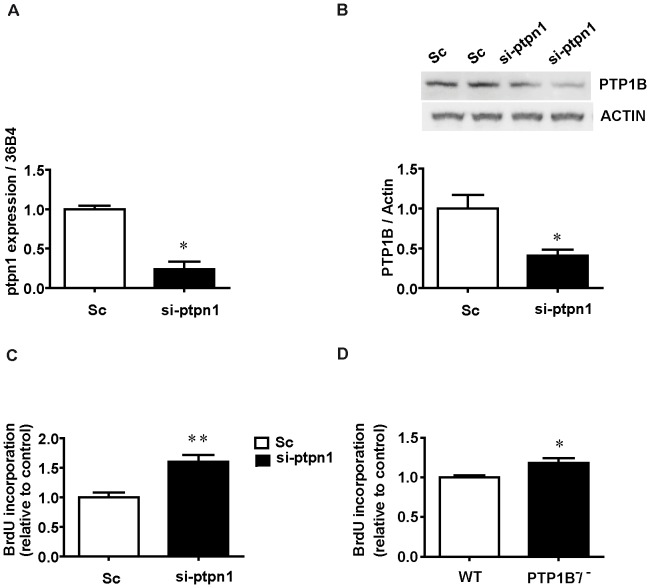
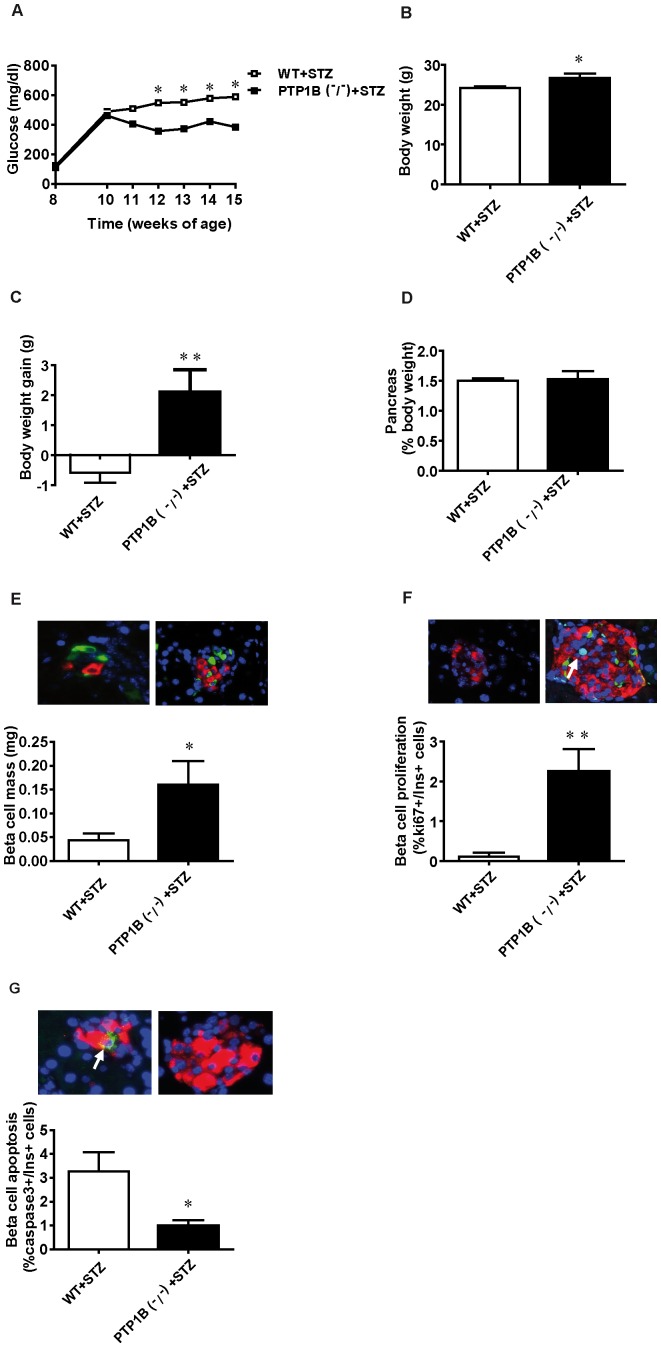
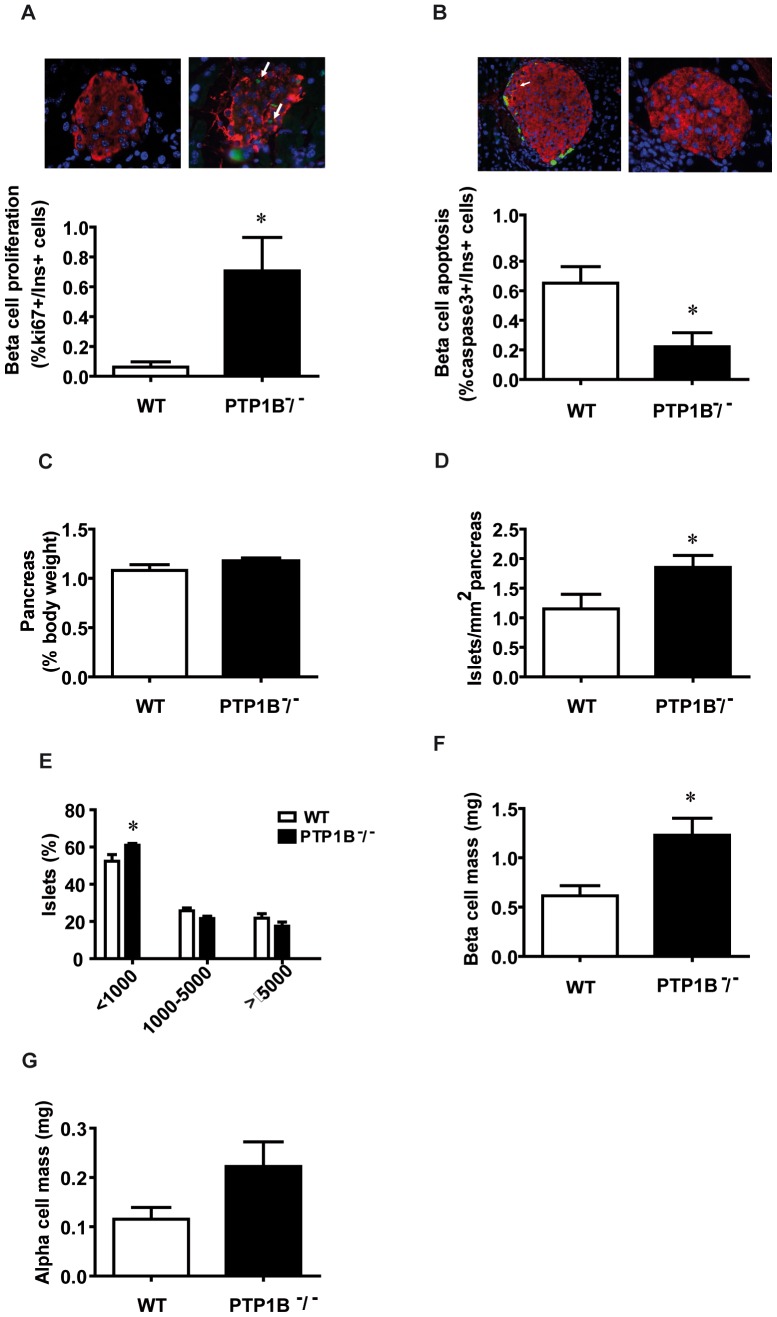
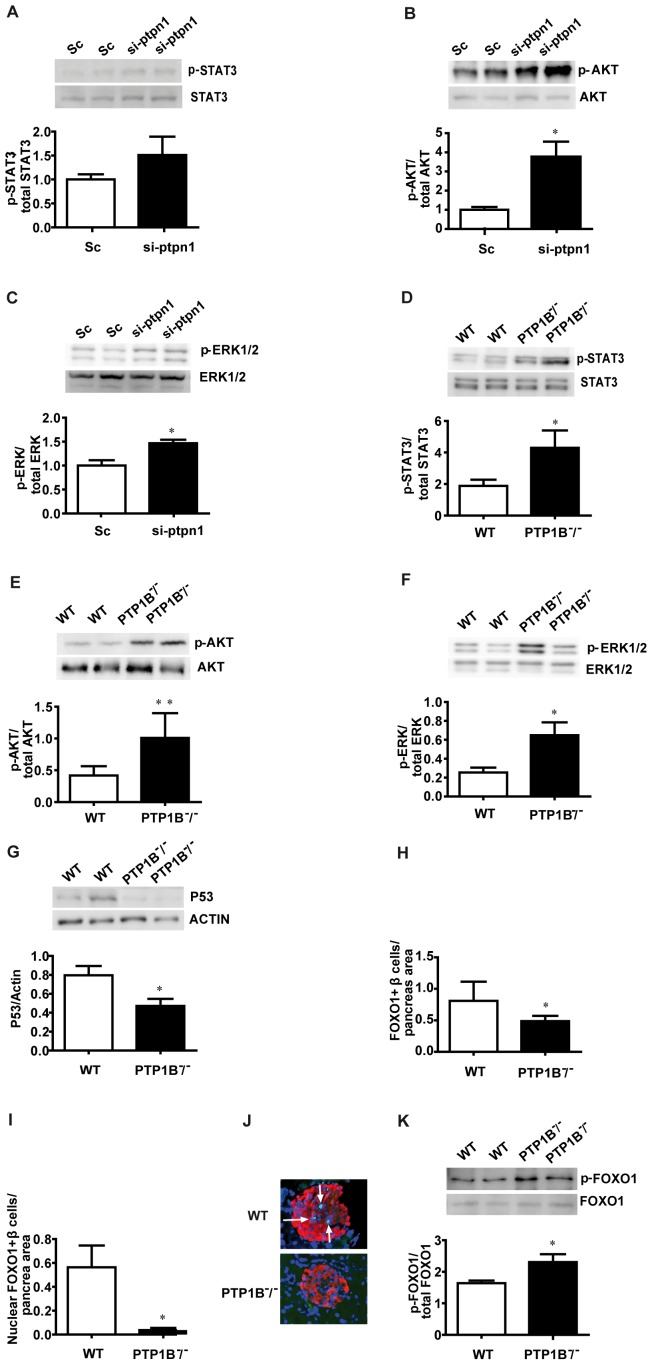
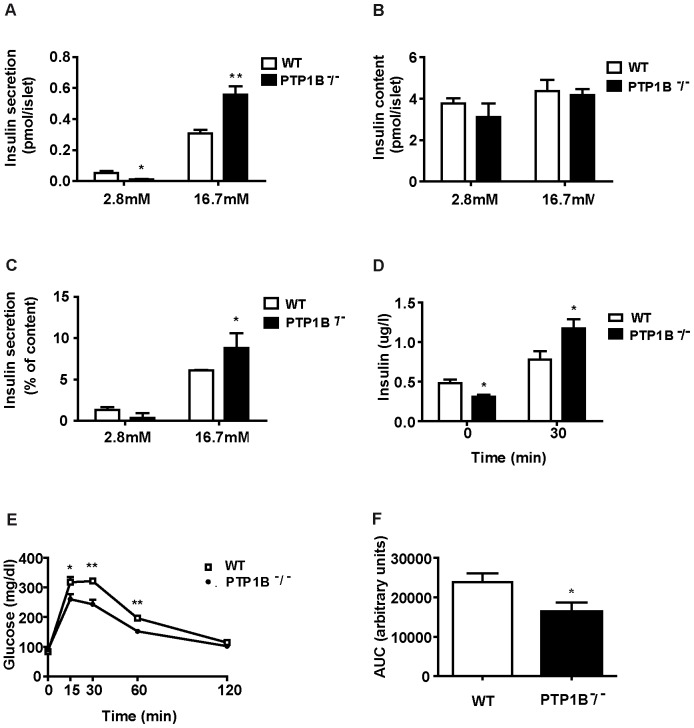
Protein tyrosine phosphatase 1B (PTP1B) is a negative regulator of the insulin signalling pathway. It has been demonstrated that PTP1B deletion protects against the development of obesity and Type 2 Diabetes, mainly through its action on peripheral tissues. However, little attention has been paid to the role of PTP1B in β-cells. Therefore, our aim was to study the role of PTP1B in pancreatic β-cells. Silencing of PTP1B expression in a pancreatic β-cell line (MIN6 cells) reveals the significance of this endoplasmic reticulum bound phosphatase in the regulation of cell proliferation and apoptosis. Furthermore, the ablation of PTP1B is able to regulate key proteins involved in the proliferation and/or apoptosis pathways, such as STAT3, AKT, ERK1/2 and p53 in isolated islets from PTP1B knockout (PTP1B (-)/(-)) mice. Morphometric analysis of pancreatic islets from PTP1B (-)/(-) mice showed a higher β-cell area, concomitantly with higher β-cell proliferation and a lower β-cell apoptosis when compared to islets from their respective wild type (WT) littermates. At a functional level, isolated islets from 8 weeks old PTP1B (-)/(-) mice exhibit enhanced glucose-stimulated insulin secretion. Moreover, PTP1B (-)/(-) mice were able to partially reverse streptozotocin-induced β-cell loss. Together, our data highlight for the first time the involvement of PTP1B in β-cell physiology, reinforcing the potential of this phosphatase as a therapeutical target for the treatment of β-cell failure, a central aspect in the pathogenesis of Type 2 Diabetes.
蛋白酪氨酸磷酸酶1B(PTP1B)是胰岛素信号通路的负调节因子。已证明,PTP1B缺失可预防肥胖症和2型糖尿病的发生,主要是通过其对周围组织的作用。然而,PTP1B在β细胞中的作用鲜受关注。因此,我们的目的是研究PTP1B在胰腺β细胞中的作用。在胰腺β细胞系(MIN6细胞)中沉默PTP1B表达,揭示了这种内质网结合磷酸酶在调节细胞增殖和凋亡中的重要性。此外,在来自PTP1B基因敲除(PTP1B(-)/(-))小鼠的分离胰岛中,PTP1B的缺失能够调节参与增殖和/或凋亡途径的关键蛋白,如STAT3、AKT、ERK1/2和p53。与各自野生型(WT)同窝小鼠的胰岛相比,对PTP1B(-)/(-)小鼠的胰岛进行形态计量分析显示,β细胞面积更大,同时β细胞增殖更高,β细胞凋亡更低。在功能水平上,来自8周龄PTP1B(-)/(-)小鼠的分离胰岛表现出增强的葡萄糖刺激的胰岛素分泌。此外,PTP1B(-)/(-)小鼠能够部分逆转链脲佐菌素诱导的β细胞损失。总之,我们的数据首次突出了PTP1B参与β细胞生理功能,强化了这种磷酸酶作为治疗β细胞功能衰竭(2型糖尿病发病机制的核心方面)治疗靶点的潜力。