Department of Pathobiology, University of Illinois at Urbana-Champaign, Urbana, IL 61802, USA.
Virology. 2012 Mar 1;424(1):18-32. doi: 10.1016/j.virol.2011.12.009. Epub 2012 Jan 4.
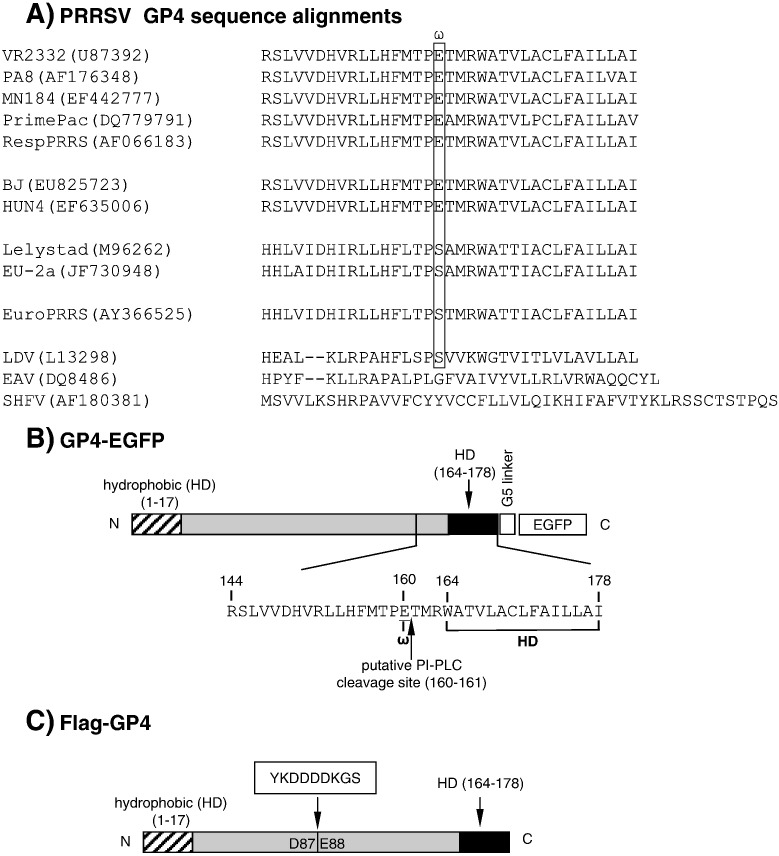
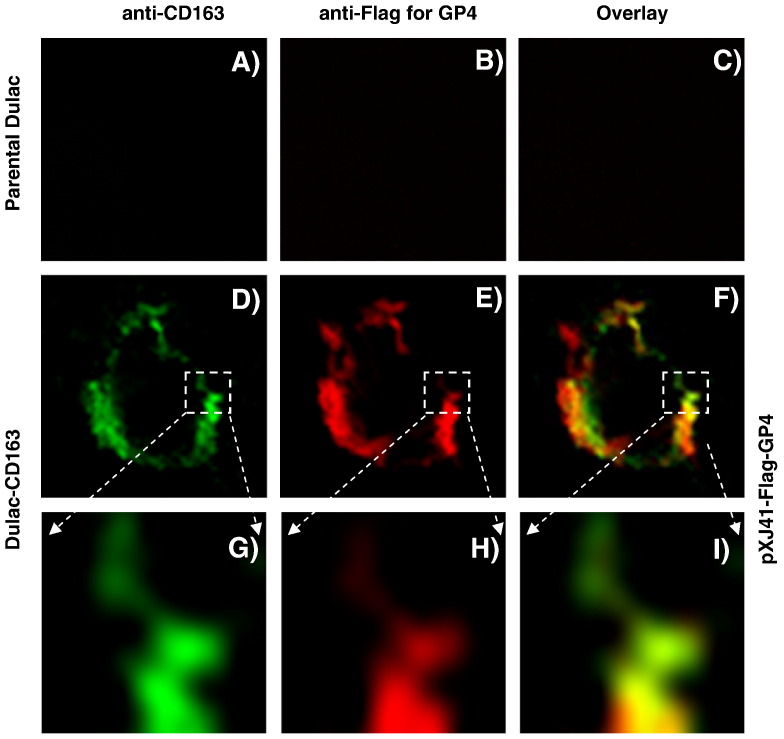
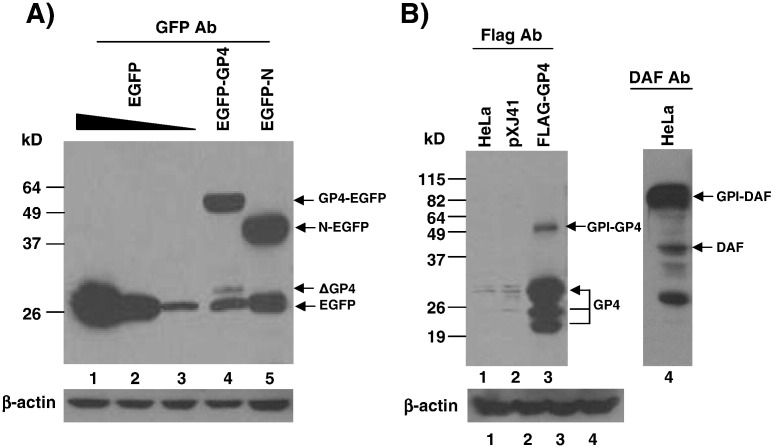
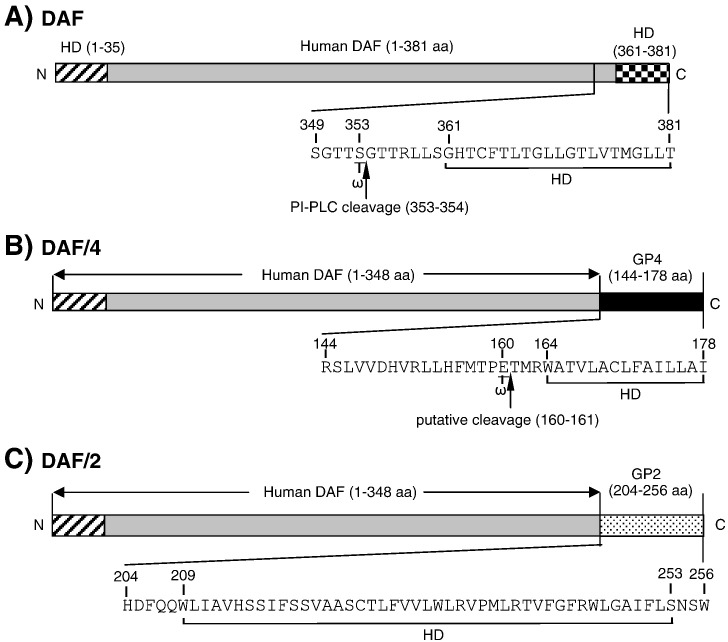
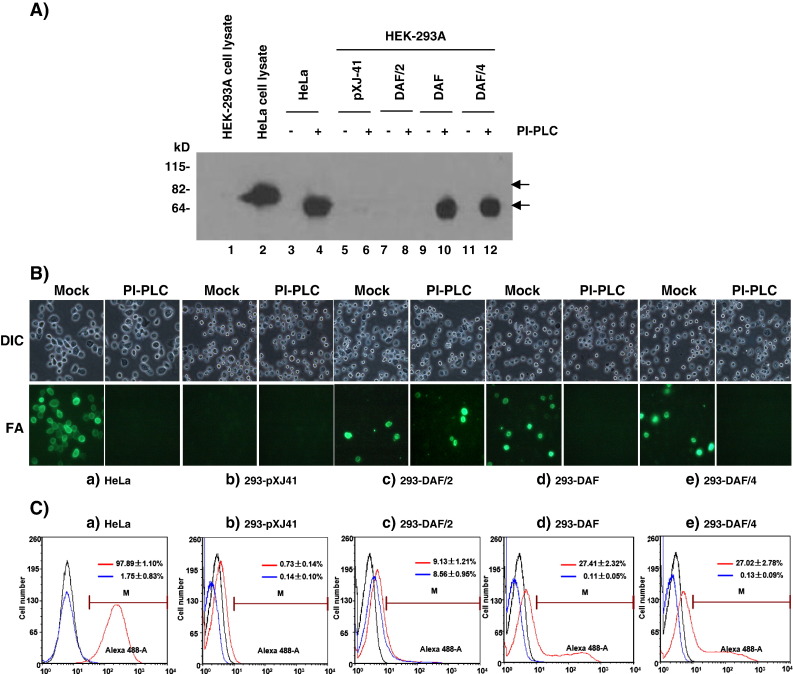
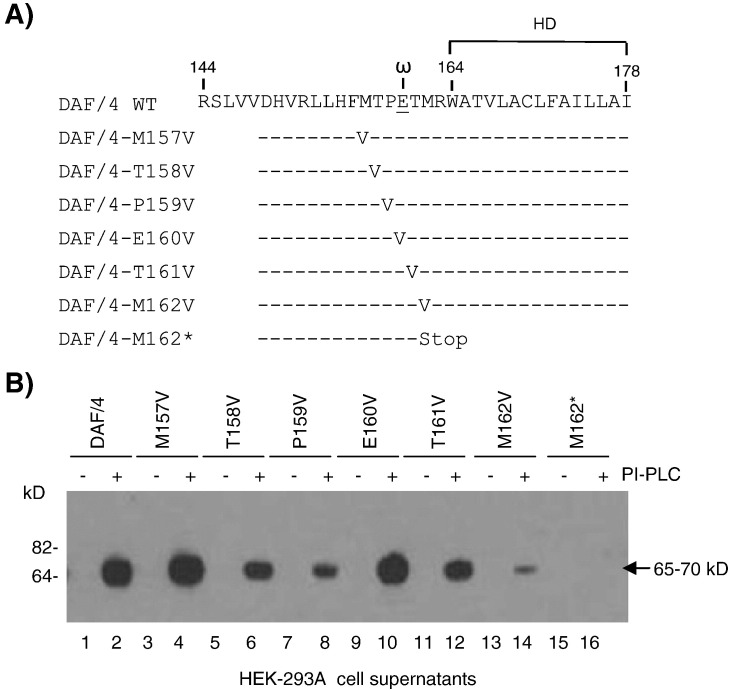
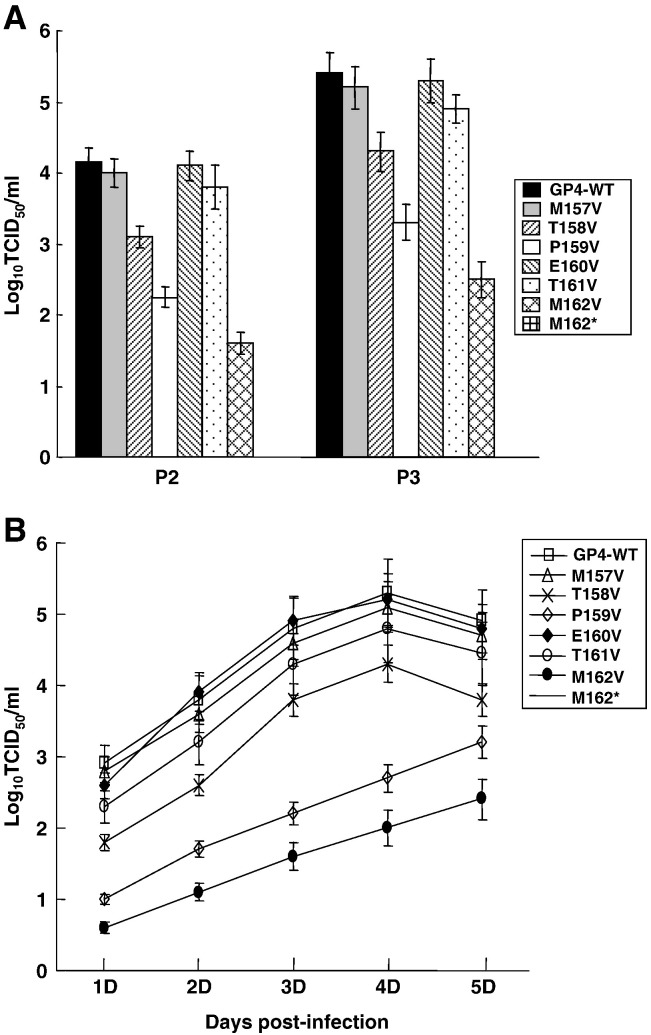
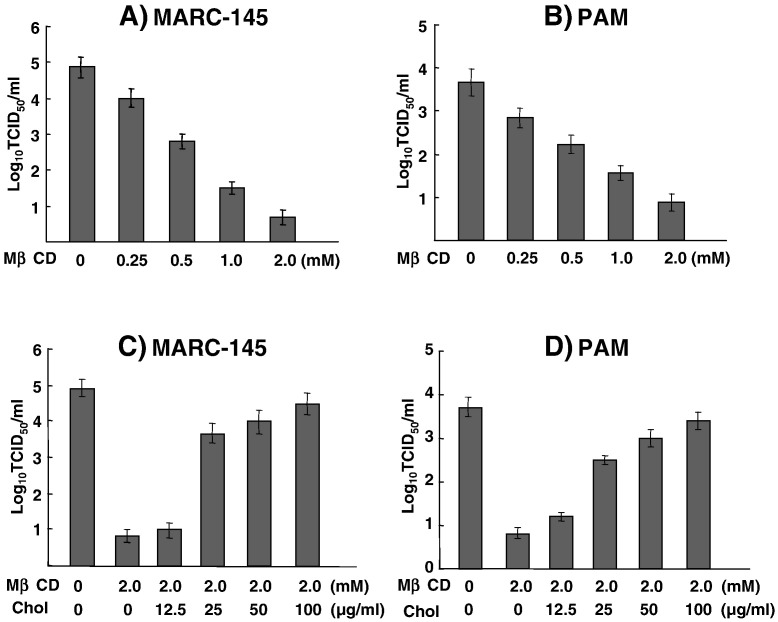
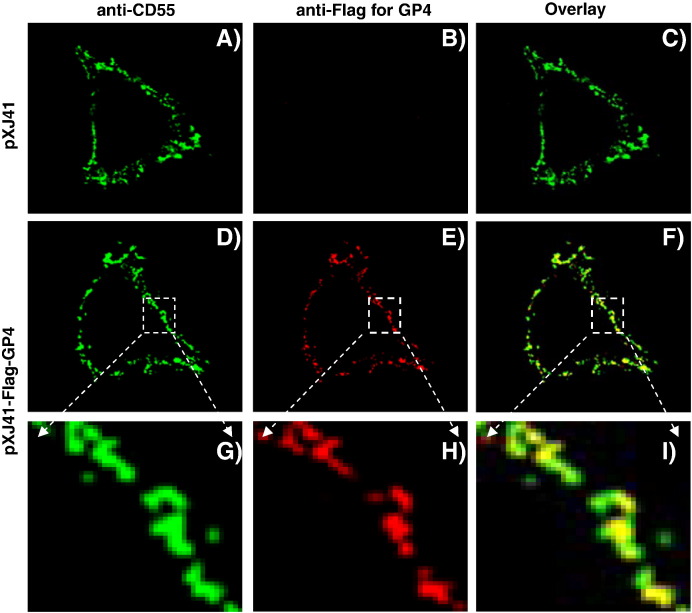
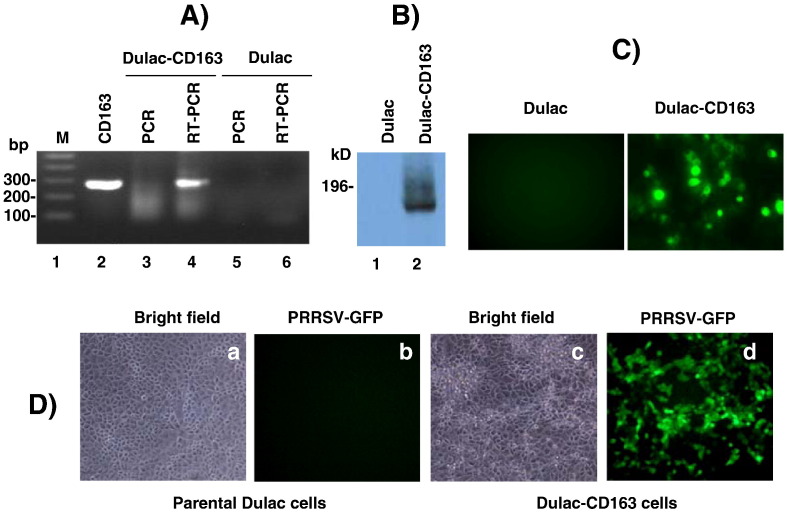
The porcine reproductive and respiratory syndrome virus (PRRSV) glycoprotein 4 (GP4) resembles a typical type I membrane protein in its structure but lacks a hydrophilic tail at the C-terminus, suggesting that GP4 may be a lipid-anchored membrane protein. Using the human decay-accelerating factor (DAF; CD55), a known glycosyl-phosphatidylinositol (GPI) lipid-anchored protein, chimeric constructs were made to substitute the GPI-anchor domain of DAF with the putative lipid-anchor domain of GP4, and their membrane association and lipase cleavage were determined in cells. The DAF-GP4 fusion protein was transported to the plasma membrane and was cleaved by phosphatidylinositol-specific phospholipase C (PI-PLC), indicating that the C-terminal domain of GP4 functions as a GPI anchor. Mutational studies for residues adjacent to the GPI modification site and characterization of respective mutant viruses generated from infectious cDNA clones show that the ability of GP4 for membrane association corresponded to virus viability and growth characteristics. The residues T158 (ω-2, where ω is the GPI moiety at E160), P159 (ω-1), and M162 (ω+2) of GP4 were determined to be important for virus replication, with M162 being of particular importance for virus infectivity. The complete removal of the peptide-anchor domain in GP4 resulted in a complete loss of virus infectivity. The depletion of cholesterol from the plasma membrane of cells reduced the virus production, suggesting a role of lipid rafts in PRRSV infection. Remarkably, GP4 was found to co-localize with CD163 in the lipid rafts on the plasma membrane. Since CD163 has been reported as a cellular receptor for PRRSV and GP4 has been shown to interact with this receptor, our data implicates an important role of lipid rafts during entry of the virus.
猪繁殖与呼吸综合征病毒 (PRRSV) 糖蛋白 4 (GP4) 在结构上类似于典型的 I 型膜蛋白,但在 C 末端缺乏亲水尾巴,这表明 GP4 可能是一种脂质锚定的膜蛋白。使用已知的糖基磷脂酰肌醇 (GPI) 脂质锚定蛋白人衰变加速因子 (DAF; CD55),构建了嵌合构建体,用 GP4 的推定脂质锚定结构域取代 DAF 的 GPI 锚定结构域,并在细胞中确定其膜结合和脂酶切割。DAF-GP4 融合蛋白被转运到质膜,并被磷脂酰肌醇特异性磷脂酶 C (PI-PLC) 切割,表明 GP4 的 C 末端结构域作为 GPI 锚定。对 GPI 修饰位点附近残基的突变研究以及从感染性 cDNA 克隆生成的相应突变病毒的特征表明,GP4 的膜结合能力与病毒的生存能力和生长特性相对应。GP4 的 T158 (ω-2,其中 ω 是 E160 处的 GPI 部分)、P159 (ω-1) 和 M162 (ω+2) 残基对于病毒复制很重要,其中 M162 对于病毒感染力特别重要。GP4 中肽锚定结构域的完全缺失导致病毒感染力完全丧失。从细胞膜中耗尽胆固醇会降低病毒产量,表明脂筏在 PRRSV 感染中起作用。值得注意的是,GP4 被发现在质膜的脂筏中与 CD163 共定位。由于 CD163 已被报道为 PRRSV 的细胞受体,并且 GP4 已被证明与该受体相互作用,因此我们的数据表明脂筏在病毒进入过程中起重要作用。