Department of Entomology and Wildlife, University of Cape Coast, Cape Coast, Ghana.
J Insect Sci. 2011;11:142. doi: 10.1673/031.011.14201.
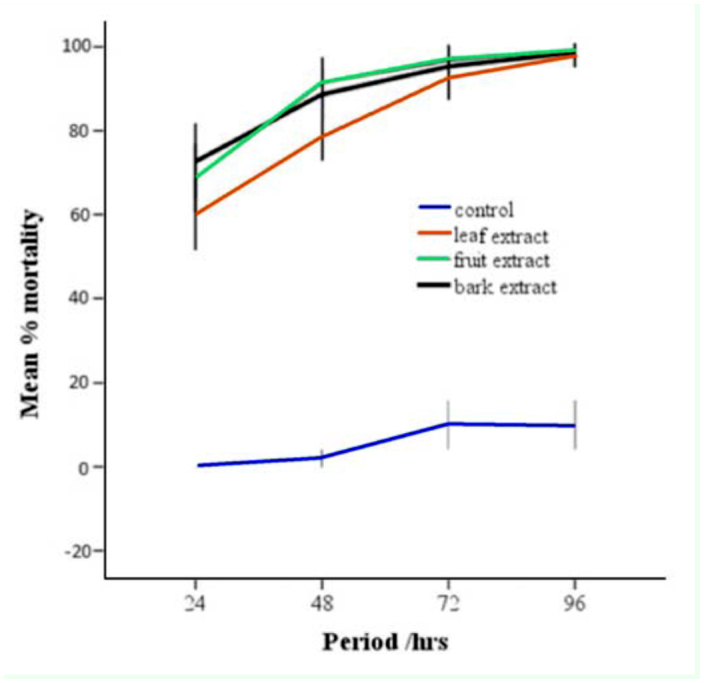
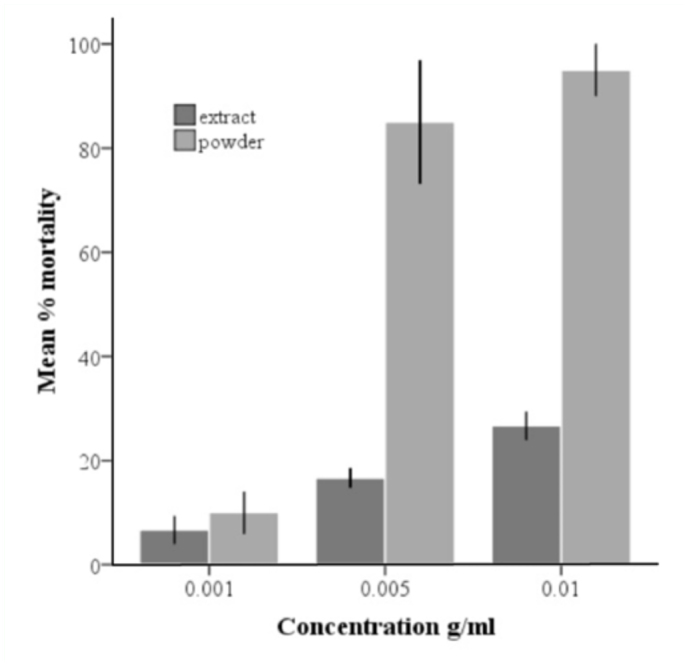
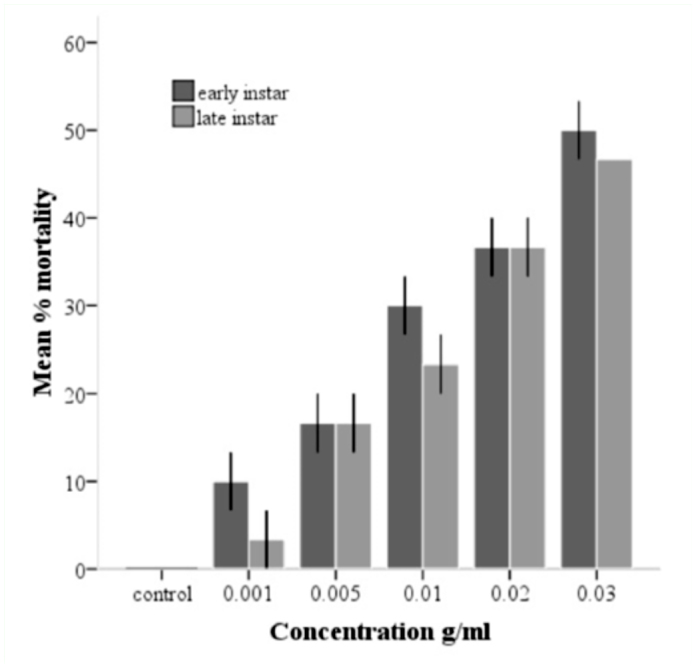
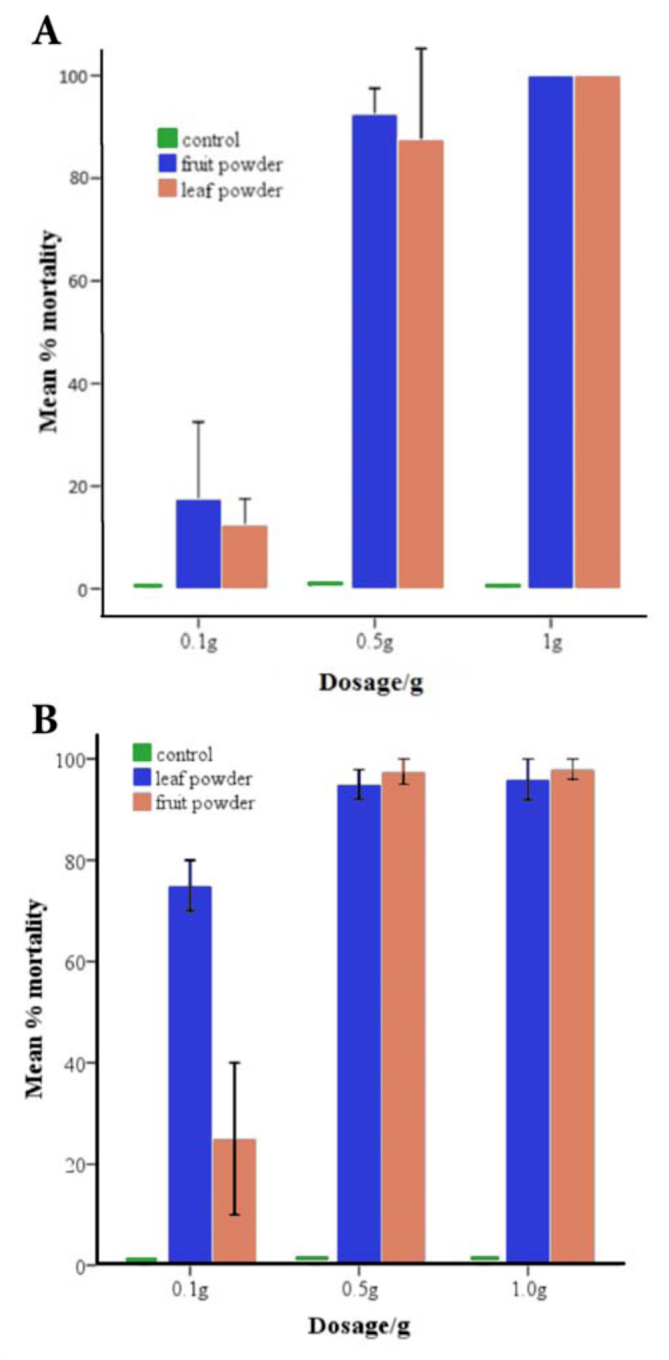
Control programs using conventional insecticides to target anthropogenic mosquito habitats are very expensive because these habitats are widespread, particularly in cities of most African countries. Additionally, there are serious environmental concerns regarding large-scale application of most conventional insecticides. Clearly there is a need for alternative methods that are more effective, less expensive, and environmentally friendly. One such method would be the application of preparations made from parts of the neem tree, Azadirachta indica A. Jussieu (Sapindales: Meliaceae). In this study, aqueous crude extracts and crude powder were prepared from different parts of neem, and the efficacies of the preparations on juvenile stages of Culex quinquefasciatus Say (Diptera: Culicidae) were evaluated in the laboratory. When larvae were exposed to a concentration of 0.1 g/mL extract for 24 hours, percent mean mortality (± SE) was 72.7 plusmn; 1.8 for the bark, 68.7 ± 1.6 for fruits and 60 ± 1.6 for leaves. These means were not significantly different (χ(2) = 4.12; df = 2; p = 0.127). At a concentration of 0.01 g/mL, > 95% of the larvae died within 24 hours of exposure to powdered neem leaf, but it took 120 hours to reach the same level of larval mortality in aqueous leaf extract. The crude extract slowly inhibited the growth and development of mosquitoes while the crude powder acted more as a barrier; the mosquitoes probably died from suffocation. However, both types of preparations can be made and used by local people to control mosquito breeding in anthropogenic habitats, especially in urbanized areas.
利用常规杀虫剂控制人为蚊媒栖息地的方案非常昂贵,因为这些栖息地分布广泛,尤其是在大多数非洲国家的城市中。此外,大规模应用大多数常规杀虫剂还存在严重的环境问题。显然,需要寻找更有效、更廉价且对环境更友好的替代方法。一种这样的方法是使用印楝树(Azadirachta indica A. Jussieu)的部分制成的制剂,印楝树属于楝科(Sapindales:Meliaceae)。在这项研究中,从印楝的不同部位制备了水提粗提物和粗粉,并在实验室中评估了这些制剂对库蚊(Culex quinquefasciatus Say)幼虫期的效果。当幼虫暴露于 0.1 g/mL 提取物中 24 小时时,树皮提取物的平均致死率(± SE)为 72.7 ± 1.8%,果实提取物为 68.7 ± 1.6%,叶提取物为 60 ± 1.6%。这些平均值没有显著差异(χ(2) = 4.12;df = 2;p = 0.127)。在 0.01 g/mL 的浓度下,接触粉状印楝叶的幼虫在 24 小时内有超过 95%死亡,但水提印楝叶提取物需要 120 小时才能达到相同的幼虫死亡率。粗提物缓慢抑制蚊子的生长和发育,而粗粉则更像是一种障碍;蚊子可能因窒息而死亡。然而,这两种制剂都可以由当地人制备和使用,以控制人为蚊媒栖息地的蚊子滋生,尤其是在城市化地区。