Department of Medicine, University of Western Ontario, London ON, Canada.
BMC Med Res Methodol. 2012 Jan 10;12:3. doi: 10.1186/1471-2288-12-3.
To demonstrate the use of risk-benefit analysis for comparing multiple competing interventions in the absence of randomized trials, we applied this approach to the evaluation of five anticoagulants to prevent thrombosis in patients undergoing orthopedic surgery.
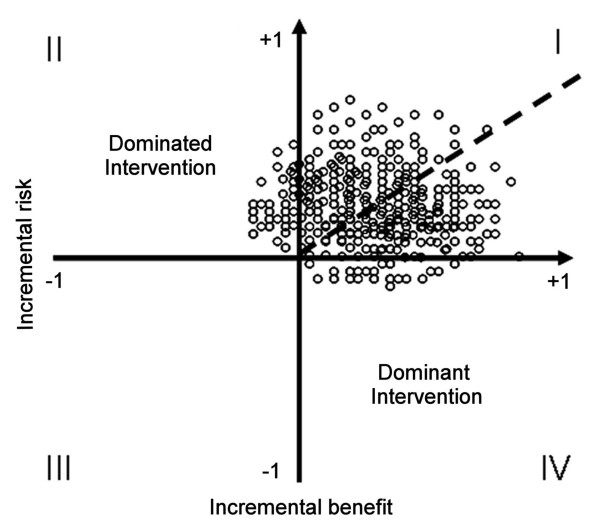
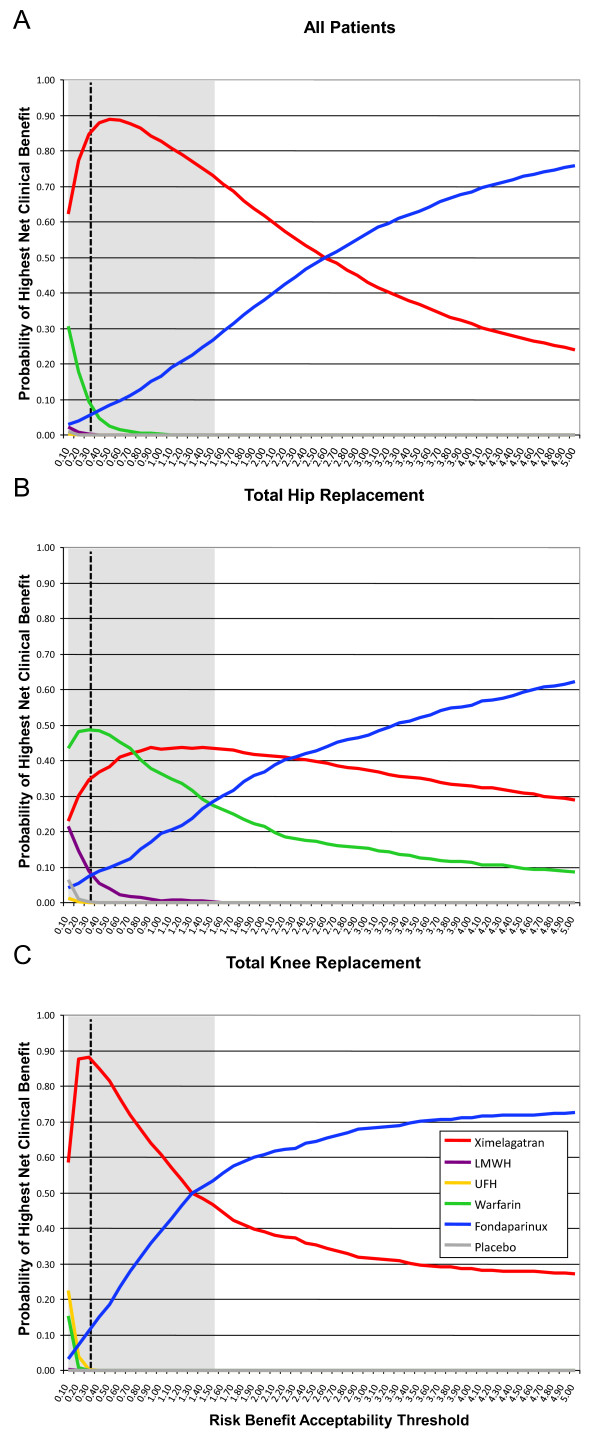
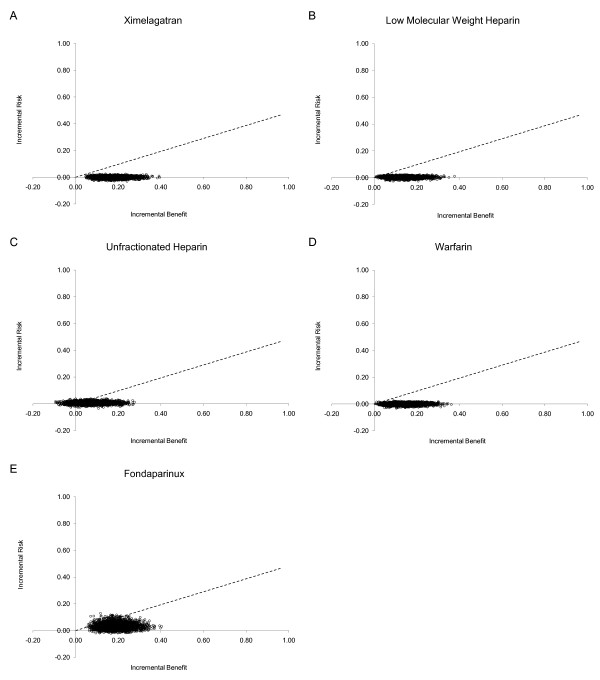
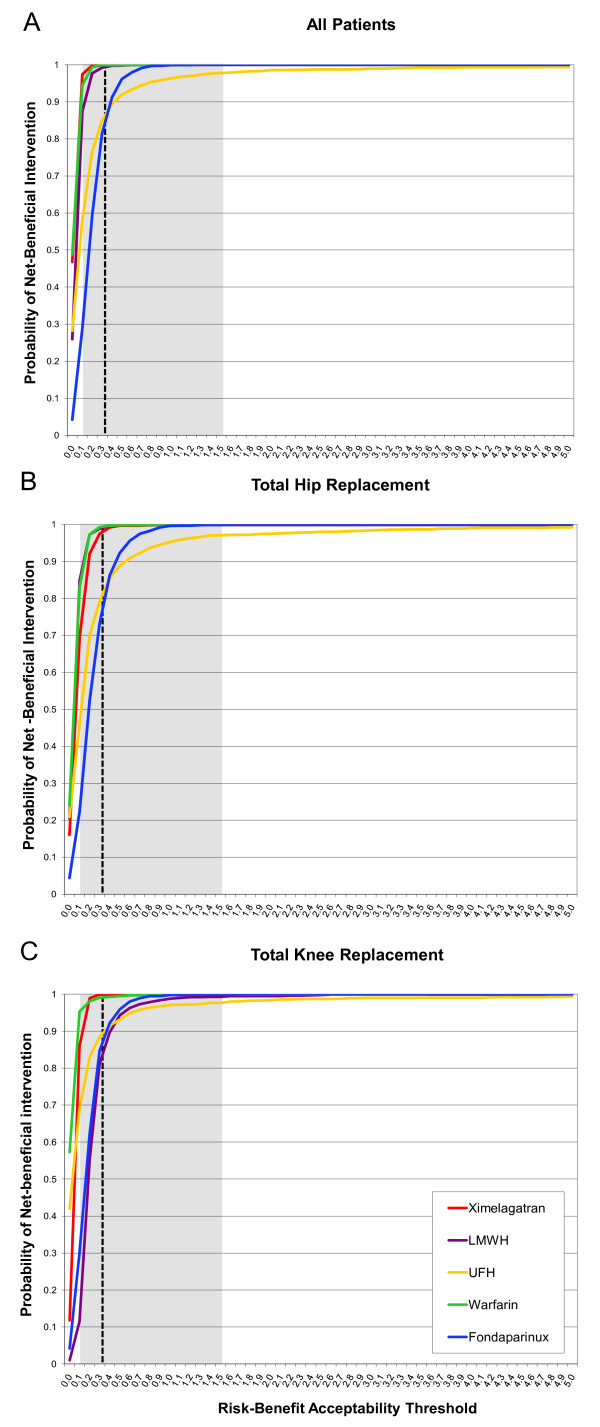
Using a cost-effectiveness approach from a clinical perspective (i.e. risk benefit analysis) we compared thromboprophylaxis with warfarin, low molecular weight heparin, unfractionated heparin, fondaparinux or ximelagatran in patients undergoing major orthopedic surgery, with sub-analyses according to surgery type. Proportions and variances of events defining risk (major bleeding) and benefit (thrombosis averted) were obtained through a meta-analysis and used to define beta distributions. Monte Carlo simulations were conducted and used to calculate incremental risks, benefits, and risk-benefit ratios. Finally, net clinical benefit was calculated for all replications across a range of risk-benefit acceptability thresholds, with a reference range obtained by estimating the case fatality rate - ratio of thrombosis to bleeding.
The analysis showed that compared to placebo ximelagatran was superior to other options but final results were influenced by type of surgery, since ximelagatran was superior in total knee replacement but not in total hip replacement.
Using simulation and economic techniques we demonstrate a method that allows comparing multiple competing interventions in the absence of randomized trials with multiple arms by determining the option with the best risk-benefit profile. It can be helpful in clinical decision making since it incorporates risk, benefit, and personal risk acceptance.
为了展示在缺乏随机试验的情况下,如何使用风险效益分析比较多种相互竞争的干预措施,我们将这种方法应用于评估五种抗凝剂在接受骨科手术的患者中预防血栓形成的效果。
我们采用了一种从临床角度出发的成本效益方法(即风险效益分析),比较了华法林、低分子肝素、普通肝素、磺达肝素或西米拉坦在接受大型骨科手术的患者中的血栓预防效果,并根据手术类型进行了亚组分析。通过荟萃分析获得了定义风险(大出血)和获益(预防血栓形成)的事件的比例和方差,并将其用于定义β分布。进行了蒙特卡罗模拟,并用于计算增量风险、获益和风险效益比。最后,在一系列风险效益可接受性阈值范围内,对所有重复计算进行了净临床获益的计算,并通过估计血栓形成与出血的病死率比来获得参考范围。
分析表明,与安慰剂相比,西美拉坦在其他选择中更为优越,但最终结果受到手术类型的影响,因为西美拉坦在全膝关节置换术中有优势,但在全髋关节置换术中则不然。
我们使用模拟和经济技术展示了一种方法,该方法可以在没有随机试验和多臂试验的情况下,通过确定具有最佳风险效益特征的选项,来比较多种相互竞争的干预措施。由于它结合了风险、获益和个人风险接受程度,因此在临床决策中可能会有所帮助。