Faculdade de Ceilândia, Universidade de Brasília, Brasília, Brasil.
PLoS Negl Trop Dis. 2012 Jan;6(1):e1459. doi: 10.1371/journal.pntd.0001459. Epub 2012 Jan 3.
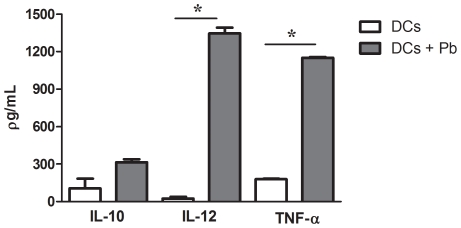
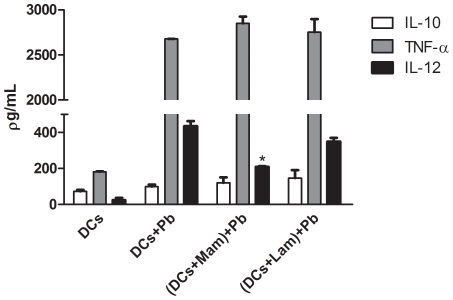
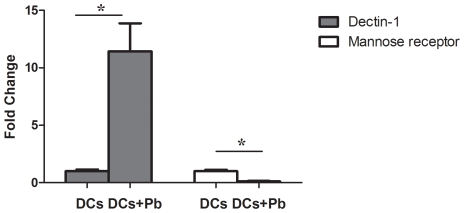
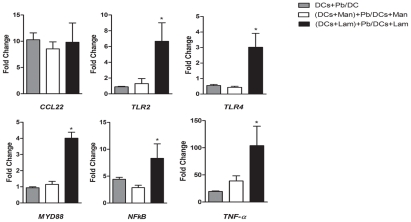
Limited information is available regarding the modulation of genes involved in the innate host response to Paracoccidioides brasiliensis, the etiologic agent of paracoccidioidomycosis. Therefore, we sought to characterize, for the first time, the transcriptional profile of murine bone marrow-derived dendritic cells (DCs) at an early stage following their initial interaction with P. brasiliensis. DCs connect innate and adaptive immunity by recognizing invading pathogens and determining the type of effector T-cell that mediates an immune response. Gene expression profiles were analyzed using microarray and validated using real-time RT-PCR and protein secretion studies. A total of 299 genes were differentially expressed, many of which are involved in immunity, signal transduction, transcription and apoptosis. Genes encoding the cytokines IL-12 and TNF-α, along with the chemokines CCL22, CCL27 and CXCL10, were up-regulated, suggesting that P. brasiliensis induces a potent proinflammatory response in DCs. In contrast, pattern recognition receptor (PRR)-encoding genes, particularly those related to Toll-like receptors, were down-regulated or unchanged. This result prompted us to evaluate the expression profiles of dectin-1 and mannose receptor, two other important fungal PRRs that were not included in the microarray target cDNA sequences. Unlike the mannose receptor, the dectin-1 receptor gene was significantly induced, suggesting that this β-glucan receptor participates in the recognition of P. brasiliensis. We also used a receptor inhibition assay to evaluate the roles of these receptors in coordinating the expression of several immune-related genes in DCs upon fungal exposure. Altogether, our results provide an initial characterization of early host responses to P. brasiliensis and a basis for better understanding the infectious process of this important neglected pathogen.
有关固有宿主对巴西副球孢子菌(巴西副球孢子菌病的病原体)反应中涉及的基因调节的信息有限。因此,我们首次试图描述在与巴西副球孢子菌最初相互作用后早期的鼠骨髓来源树突状细胞(DC)的转录谱。DC 通过识别入侵病原体并确定介导免疫反应的效应 T 细胞的类型来连接先天和适应性免疫。使用微阵列分析基因表达谱,并使用实时 RT-PCR 和蛋白质分泌研究进行验证。共有 299 个基因差异表达,其中许多基因参与免疫、信号转导、转录和细胞凋亡。编码细胞因子 IL-12 和 TNF-α以及趋化因子 CCL22、CCL27 和 CXCL10 的基因上调,表明巴西副球孢子菌在 DC 中诱导强烈的促炎反应。相比之下,模式识别受体(PRR)编码基因,特别是与 Toll 样受体相关的基因,下调或不变。这一结果促使我们评估另外两个重要的真菌 PRR——dectin-1 和甘露糖受体的表达谱,它们未包含在微阵列靶 cDNA 序列中。与甘露糖受体不同,dectin-1 受体基因明显诱导,表明该β-葡聚糖受体参与了巴西副球孢子菌的识别。我们还使用受体抑制测定法来评估这些受体在真菌暴露时协调 DC 中几种免疫相关基因表达的作用。总之,我们的结果提供了巴西副球孢子菌宿主早期反应的初步特征,并为更好地理解这种重要的被忽视病原体的感染过程提供了基础。