Department of Biotechnology and Bioscience, University of Milano-Bicocca, Milan, Italy.
PLoS One. 2010 Feb 24;5(2):e9404. doi: 10.1371/journal.pone.0009404.
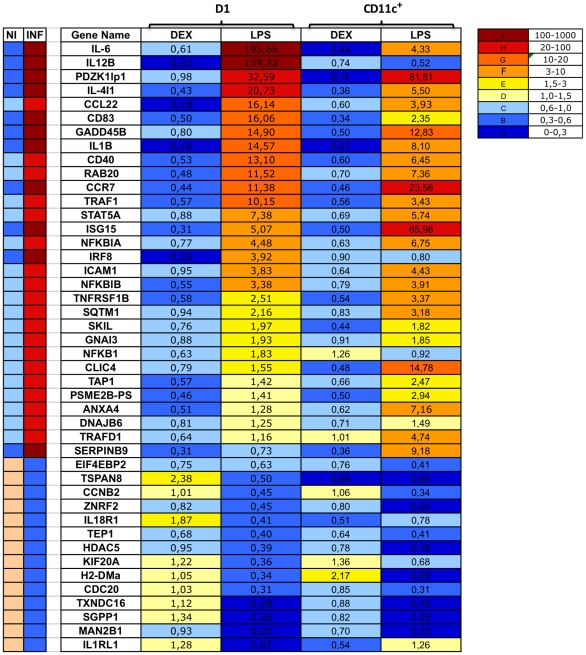
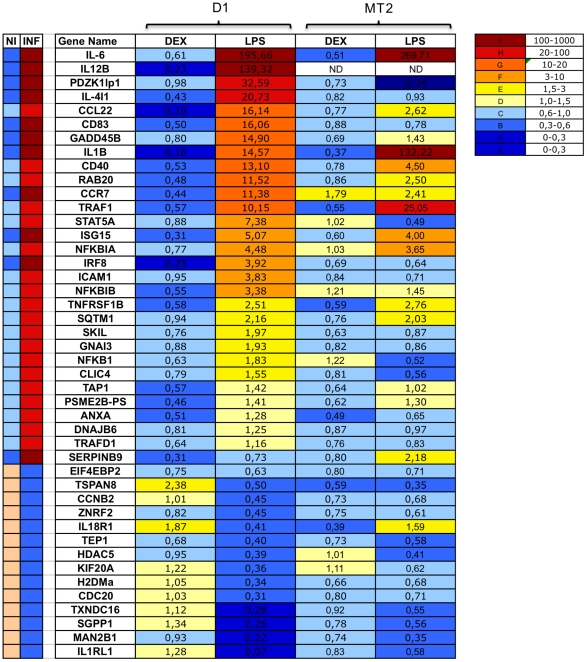
Dendritic cells (DCs) constitute a heterogeneous group of antigen-presenting leukocytes important in activation of both innate and adaptive immunity. We studied the gene expression patterns of DCs incubated with reagents inducing their activation or inhibition. Total RNA was isolated from DCs and gene expression profiling was performed with oligonucleotide microarrays. Using a supervised learning algorithm based on Random Forest, we generated a molecular signature of inflammation from a training set of 77 samples. We then validated this molecular signature in a testing set of 38 samples. Supervised analysis identified a set of 44 genes that distinguished very accurately between inflammatory and non inflammatory samples. The diagnostic performance of the signature genes was assessed against an independent set of samples, by qRT-PCR. Our findings suggest that the gene expression signature of DCs can provide a molecular classification for use in the selection of anti-inflammatory or adjuvant molecules with specific effects on DC activity.
树突状细胞(DCs)是一组重要的抗原呈递白细胞,在固有免疫和适应性免疫的激活中发挥作用。我们研究了与诱导其激活或抑制的试剂孵育的 DCs 的基因表达模式。从 DCs 中分离总 RNA,并使用寡核苷酸微阵列进行基因表达谱分析。使用基于随机森林的有监督学习算法,我们从一组 77 个样本的训练集中生成了炎症的分子特征。然后,我们在一组 38 个样本的测试集中验证了这个分子特征。有监督分析确定了一组 44 个基因,它们能够非常准确地区分炎症和非炎症样本。通过 qRT-PCR 对该特征基因的诊断性能进行了评估。我们的研究结果表明,DCs 的基因表达特征可以提供一种分子分类,用于选择具有特定 DC 活性作用的抗炎或佐剂分子。