Section of Neurogastroenterology, Division of Gastroenterology - Hepatology, Department of Internal Medicine, University of Iowa College of Medicine, IA, USA.
Neurogastroenterol Motil. 2012 Mar;24(3):e147-54. doi: 10.1111/j.1365-2982.2011.01857.x. Epub 2012 Jan 11.
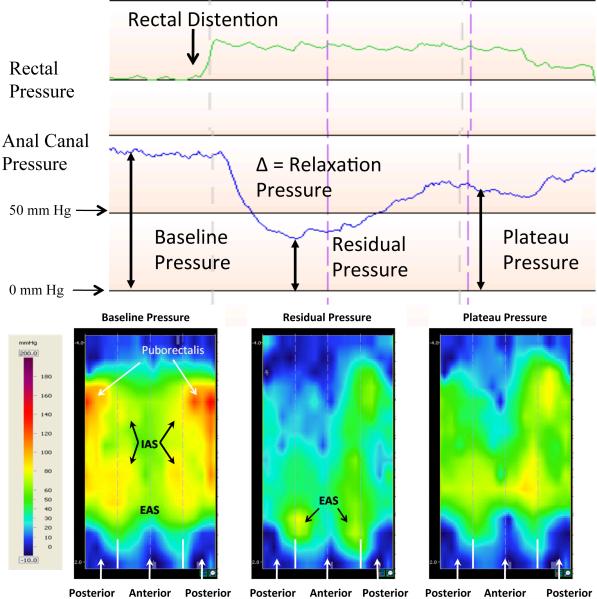
Recto-anal inhibitory reflex (RAIR) is an integral part of normal defecation. The physiologic characteristics of RAIR along anal length and anterior-posterior axis are unknown. The aim of this study was to perform topographic and vector-graphic evaluation of RAIR along anal canal using high definition manometry (HDM), and examine the role of various muscle components.
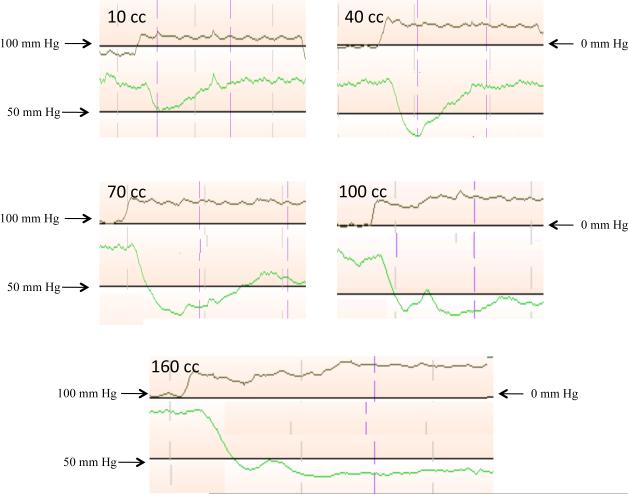
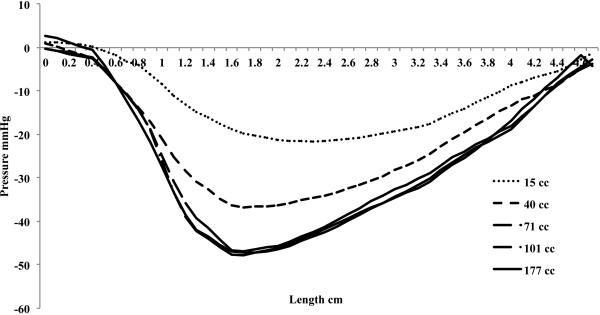
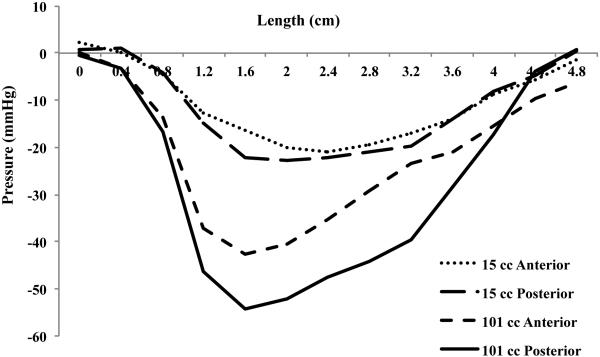
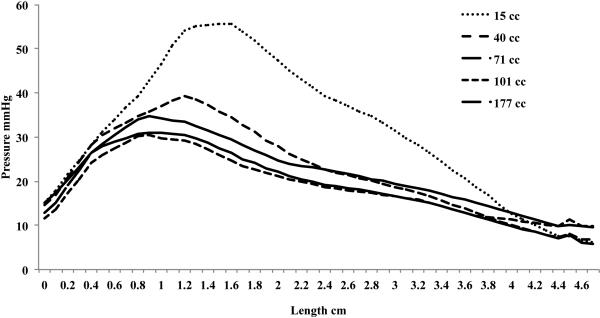
Anorectal topography was assessed in 10 healthy volunteers using HDM probe with 256 sensors. Recto-anal inhibitory reflex data were analyzed every mm along the length of anal canal for topographic, baseline, residual, and plateau pressures during five mean volumes of balloon inflation (15 cc, 40 cc, 71 cc, 101 cc, 177 cc), and in 3D by dividing anal canal into 4 × 2.1 mm grids.
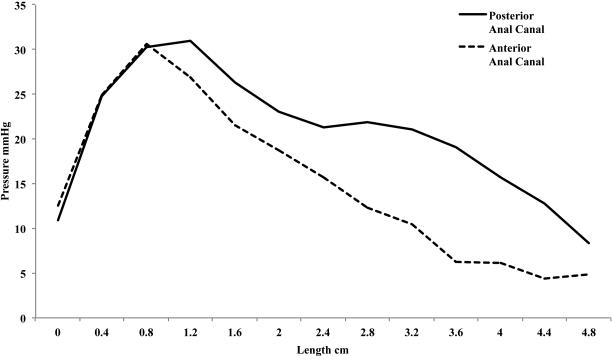
Relaxation pressure progressively increases along anal canal with increasing balloon volume up to 71 cc and thereafter plateaus. In 3D, RAIR is maximally seen at the middle and upper portions of anal canal (levels 1.2-3.2 cm) and posteriorly. Peak residual pressure was seen at proximal anal canal.
CONCLUSIONS & INFERENCES: Recto-anal inhibitory reflex is characterized by differential anal relaxation along anterior-posterior axis, longitudinally along the length of anal canal, and it depends on the rectal distention volume. It is maximally seen at internal anal sphincter pressure zone. Multidimensional analyses indicate that external anal sphincter provides bulk of anal residual pressure. Our findings emphasize importance of sensor location and orientation; as anterior and more distal location may miss RAIR.
直肠肛门抑制反射(RAIR)是正常排便的一个组成部分。RAIR 在肛门长度和前后轴上的生理特征尚不清楚。本研究的目的是使用高清晰度测压法(HDM)对直肠肛门抑制反射在整个肛门管进行地形学和向量图评估,并检查各种肌肉成分的作用。
使用带有 256 个传感器的肛门直肠测压法探头对 10 名健康志愿者进行肛门直肠测压。分析直肠肛门抑制反射数据,在每个 mm 处分析肛管长度上的基础线、残余压力和平台压力,在五个平均球囊充气量(15 cc、40 cc、71 cc、101 cc、177 cc)下进行,并且在 3D 中,将肛门管分为 4×2.1mm 的网格。
随着球囊体积的增加(最高至 71cc),肛管内的松弛压力逐渐增加,此后达到平台。在 3D 中,RAIR 主要见于肛门管的中部和上部(1.2-3.2cm 水平)和后部。近端肛门管可见最大的残余压力峰值。
直肠肛门抑制反射的特征是沿前后轴、沿肛门管的长度在不同部位出现肛门松弛,这取决于直肠扩张的体积。它主要出现在内括约肌压力区。多维分析表明,外括约肌提供了大部分的肛门残余压力。我们的研究结果强调了传感器位置和方向的重要性;因为前部和更远端的位置可能会错过 RAIR。