Department of Pharmacology, School of Medical Sciences, Universiti Sains Malaysia, 16150 Kubang Kerian, Kelantan, Malaysia.
Molecules. 2012 Jan 11;17(1):674-87. doi: 10.3390/molecules17010674.
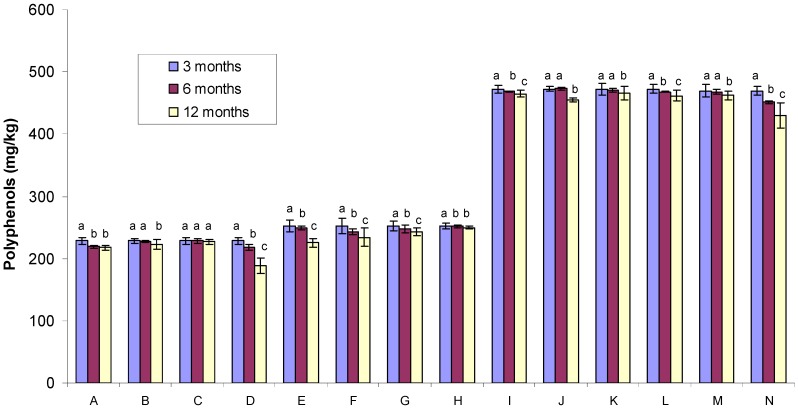
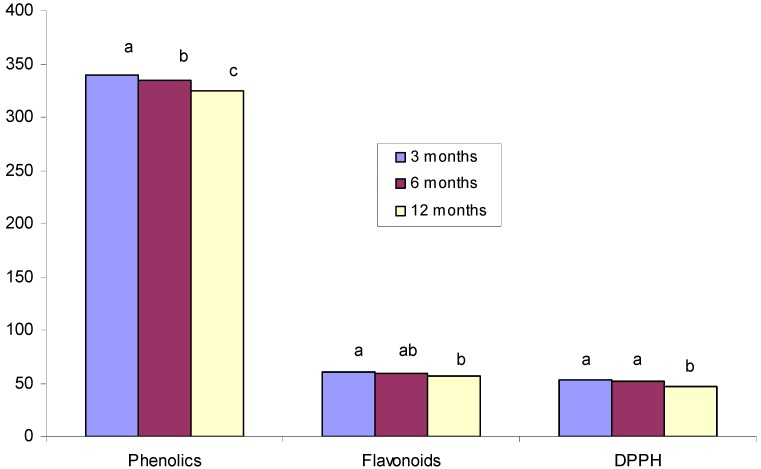
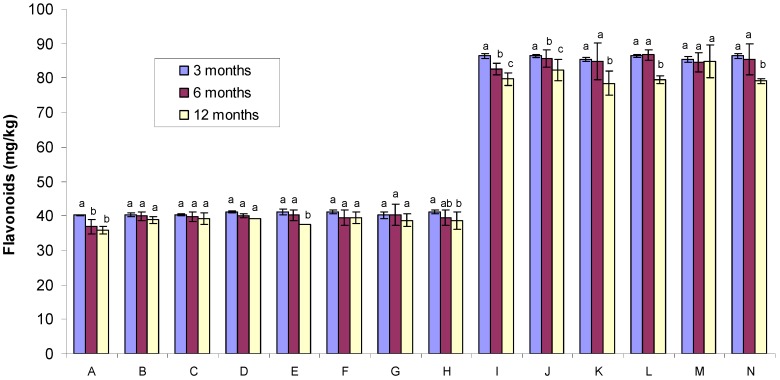
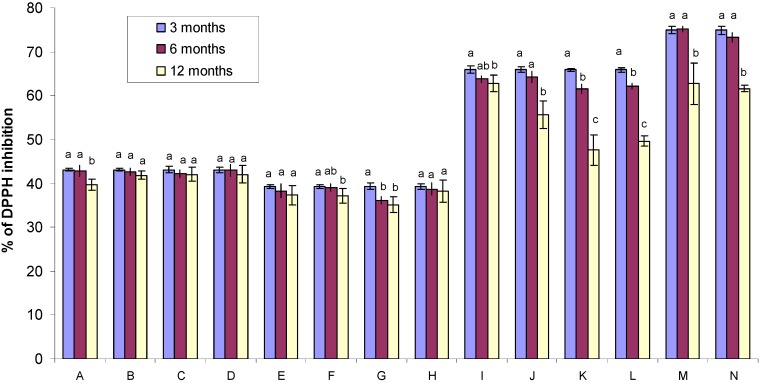
This study was conducted to evaluate the effects of evaporation, gamma irradiation and temperature on the total polyphenols, flavonoids and 1,1-diphenyl-2-picrylhydrazyl (DPPH) radical-scavenging activities of Tualang honey samples (n = 14) following storage over three, six or twelve months. The mean polyphenol concentrations of the six gamma irradiated honey samples at three, six and twelve months, respectively, were 96.13%, 98.01% and 102.03% higher than the corresponding values of the eight non-gamma irradiated samples. Similarly, the mean values for flavonoids at three, six and twelve months were 111.52%, 114.81% and 110.04% higher, respectively, for the gamma irradiated samples. The mean values for DPPH radical-scavenging activities at three, six and twelve months were also 67.09%, 65.26% and 44.65% higher, respectively, for the gamma irradiated samples. These data indicate that all gamma irradiated honey samples had higher antioxidant potential following gamma irradiation, while evaporation and temperature had minor effects on antioxidant potential.
本研究旨在评估蒸发、γ 辐照和温度对 14 个特兰蜂蜜样本总多酚、类黄酮和 1,1-二苯基-2-苦基肼(DPPH)自由基清除活性的影响,这些样本在储存三个月、六个月或十二个月后。在三个月、六个月和十二个月时,六份γ 辐照蜂蜜样本的平均多酚浓度分别比相应的未辐照样本高 96.13%、98.01%和 102.03%。同样,在三个月、六个月和十二个月时,γ 辐照样本的类黄酮平均值分别高 111.52%、114.81%和 110.04%。在三个月、六个月和十二个月时,γ 辐照样本的 DPPH 自由基清除活性的平均值也分别高 67.09%、65.26%和 44.65%。这些数据表明,所有γ 辐照蜂蜜样本在γ 辐照后均具有更高的抗氧化潜力,而蒸发和温度对抗氧化潜力的影响较小。