Department of Molecular Biology and Biotechnology, The Krebs Institute, The University of Sheffield, S10 2TN, UK.
Molecules. 2012 Jan 16;17(1):796-808. doi: 10.3390/molecules17010796.
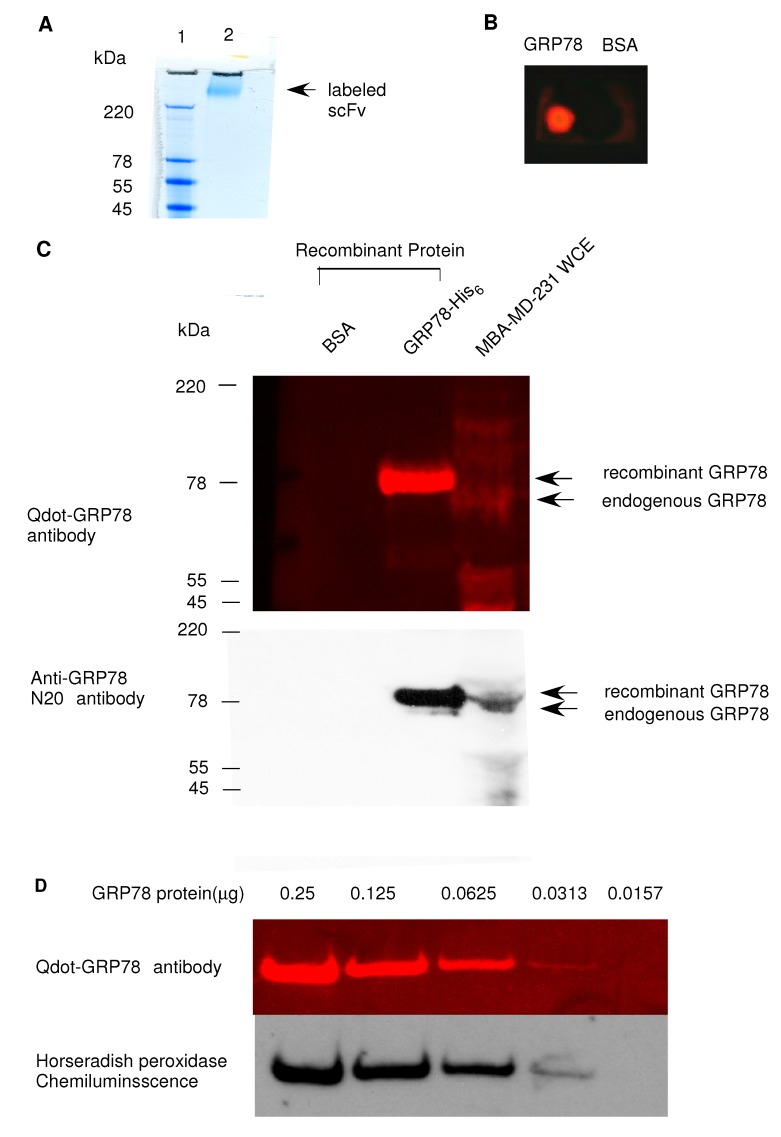
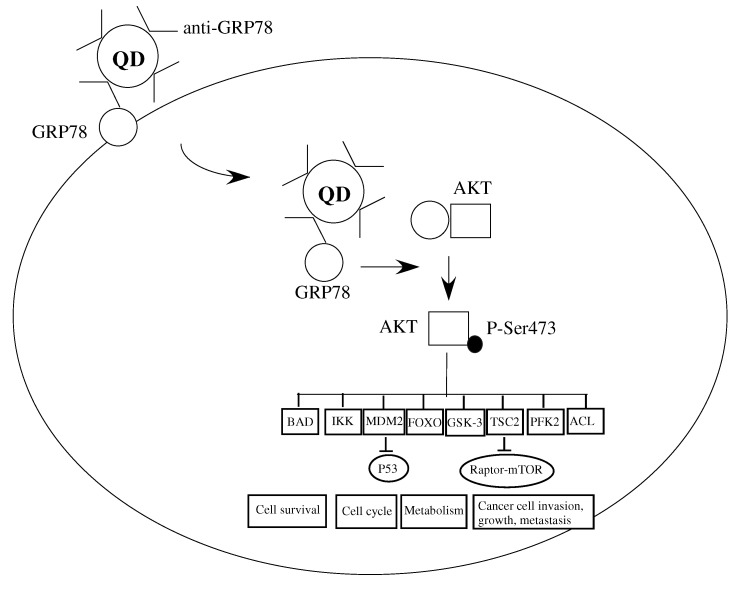
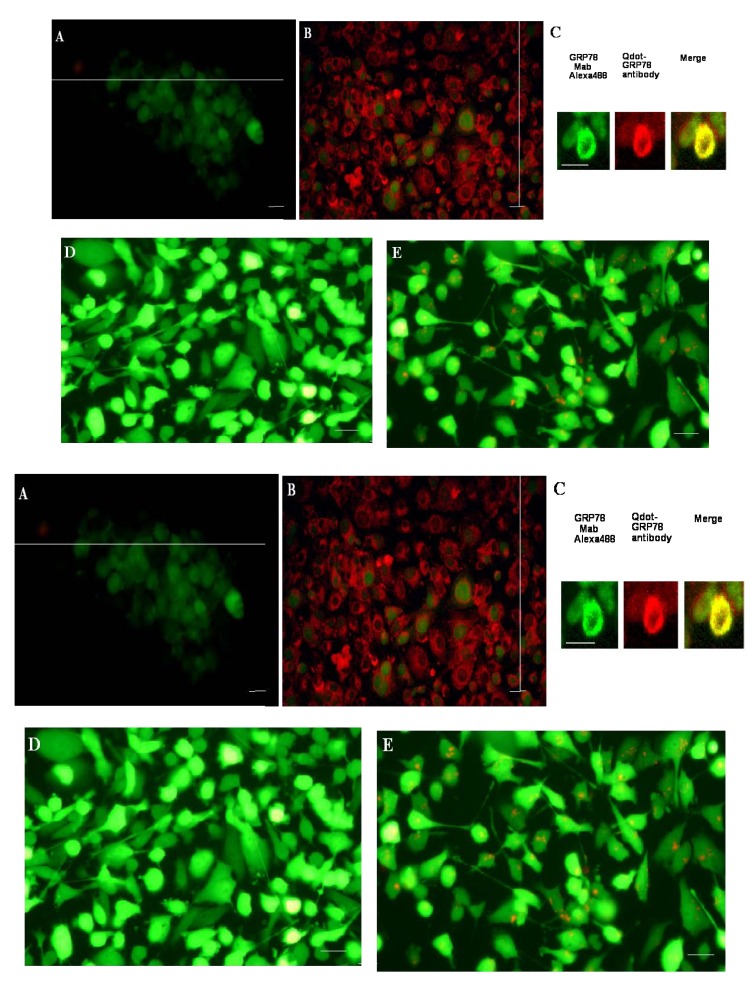
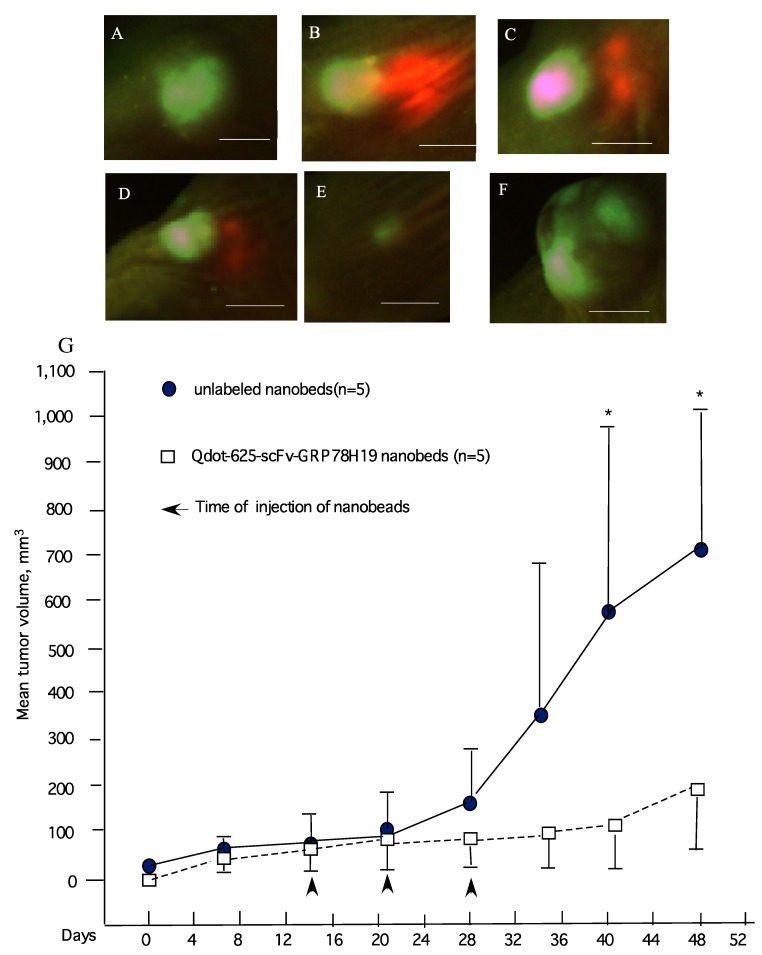
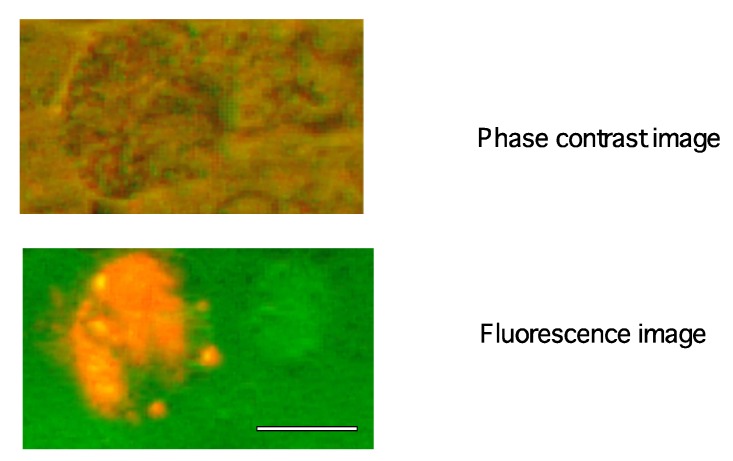
Semiconductor quantum dots (Qdots) have recently been shown to offer significant advantages over conventional fluorescent probes to image and study biological processes. The stability and low toxicity of QDs are well suited for biological applications. Despite this, the potential of Qdots remains limited owing to the inefficiency of existing delivery methods. By conjugating Qdots with small antibody fragments targeting membrane-bound proteins, such as GRP78, we demonstrate here that the Quantum dot- Anti-GRP78 scFv (Qdot-GRP78) retains its immunospecificity and its distribution can be monitored by visualization of multi-color fluorescence imaging both in vitro and in vivo. Moreover we demonstrate here for the first time that Qdot-GRP78 scFv bioconjugates can be efficiently internalized by cancer cells, thus upregulate phophosphate-AKT-ser473 and possess biological anti-tumour activity as shown by inhibition of breast cancer growth in a xenograft model. This suggests that nanocarrier-conjugated scFvs can be used as a therapeutic antibody for cancer treatment.
半导体量子点 (Qdots) 最近被证明在成像和研究生物过程方面比传统荧光探针具有显著优势。Qdots 的稳定性和低毒性非常适合生物应用。尽管如此,由于现有递送方法的效率低下,Qdots 的潜力仍然受到限制。通过将 Qdots 与针对膜结合蛋白(如 GRP78)的小抗体片段缀合,我们在这里证明 Quantum dot- Anti-GRP78 scFv(Qdot-GRP78)保留其免疫特异性,并且可以通过体外和体内的多色荧光成像观察到其分布进行监测。此外,我们在这里首次证明 Qdot-GRP78 scFv 生物缀合物可以被癌细胞有效内化,从而上调磷酸化-AKT-ser473,并具有生物抗肿瘤活性,如在异种移植模型中抑制乳腺癌生长所示。这表明纳米载体缀合的 scFv 可作为治疗癌症的治疗性抗体。