Department of Pharmaceutics, School of Pharmacy, Fourth Military Medical University, Xi'an, People's Republic of China.
PLoS One. 2012;7(1):e29647. doi: 10.1371/journal.pone.0029647. Epub 2012 Jan 13.
Polyphenols, a group of complex naturally occurring compounds, are widely distributed throughout the plant kingdom and are therefore readily consumed by humans. The relationship between their chemical structure and intestinal absorption, transport, and first-pass metabolism remains unresolved, however.
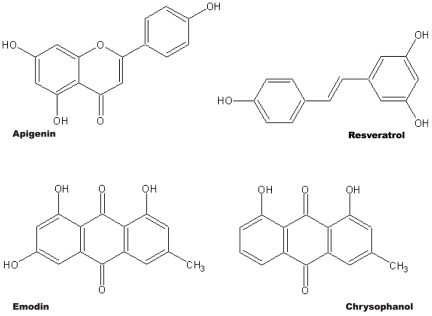
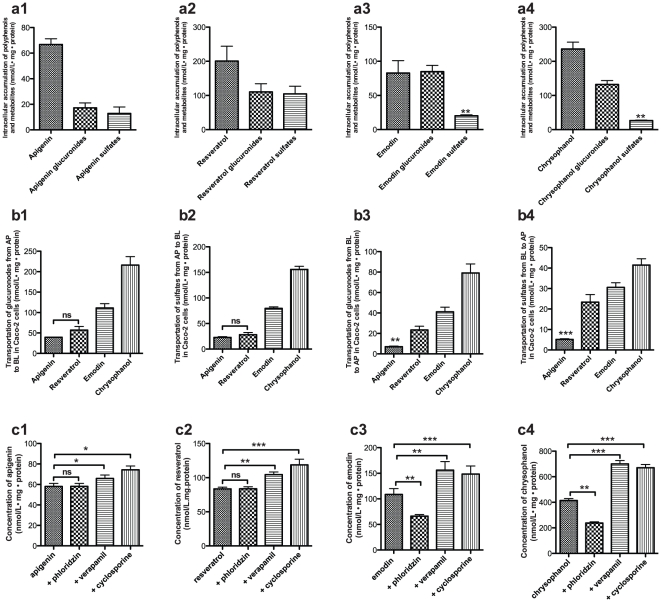
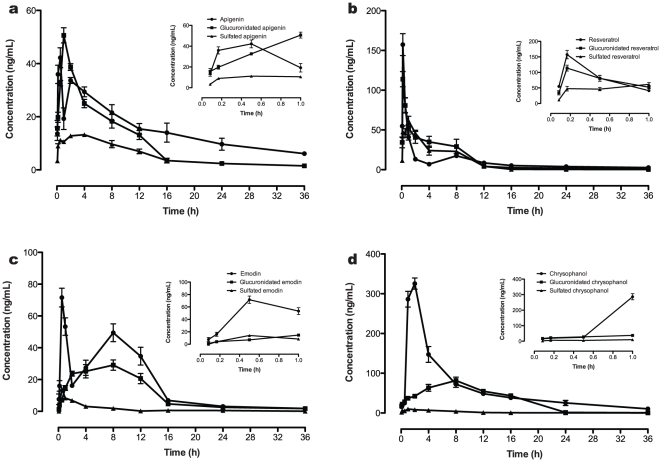
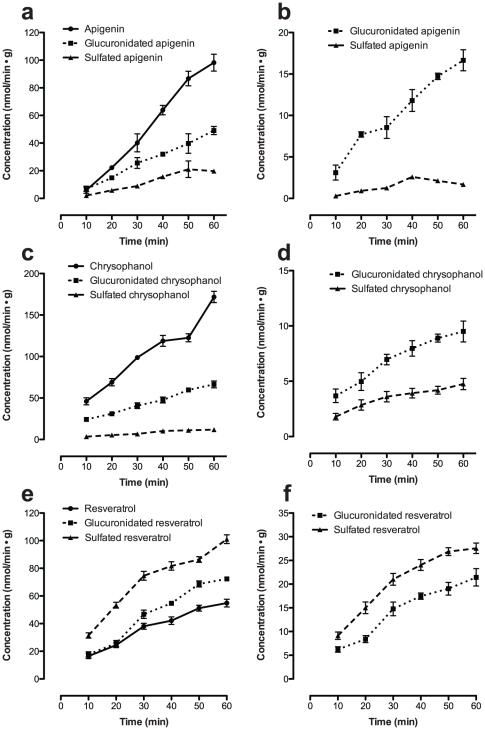
Here, we investigated the intestinal absorption and first-pass metabolism of four polyphenol compounds, apigenin, resveratrol, emodin and chrysophanol, using the in vitro Caco-2 cell monolayer model system and in situ intestinal perfusion and in vivo pharmacokinetic studies in rats, so as to better understand the relationship between the chemical structure and biological fate of the dietary polyphenols.
After oral administration, emodin and chrysophanol exhibited different absorptive and metabolic behaviours compared to apigenin and resveratrol. The differences in their chemical structures presumably resulted in differing affinities for drug-metabolizing enzymes, such as glucuronidase and sulphatase, and transporters, such as MRP2, SGLT1, and P-glycoprotein, which are found in intestinal epithelial cells.
多酚是一组复杂的天然存在的化合物,广泛分布于植物界,因此很容易被人类摄入。然而,它们的化学结构与肠道吸收、转运和首过代谢之间的关系仍未得到解决。
本研究采用体外 Caco-2 细胞单层模型系统、原位肠灌流和大鼠体内药代动力学研究,考察了 4 种多酚化合物(芹菜素、白藜芦醇、大黄素和大黄酚)的肠道吸收和首过代谢,以期更好地理解膳食多酚的化学结构与生物学命运之间的关系。
口服给药后,大黄素和大黄酚的吸收和代谢行为与芹菜素和白藜芦醇不同。它们的化学结构差异可能导致对肠道上皮细胞中存在的药物代谢酶(如葡萄糖醛酸酶和硫酸酯酶)和转运体(如 MRP2、SGLT1 和 P-糖蛋白)的亲和力不同。