Laboratory for Accelerated Vascular Research, Division of Vascular Surgery, Department of Surgery, University of California, San Francisco, San Francisco, CA 94143, USA.
Sci Transl Med. 2012 Jan 18;4(117):117ra8. doi: 10.1126/scitranslmed.3002670.
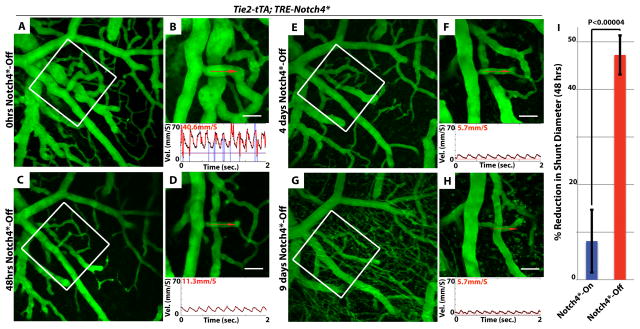
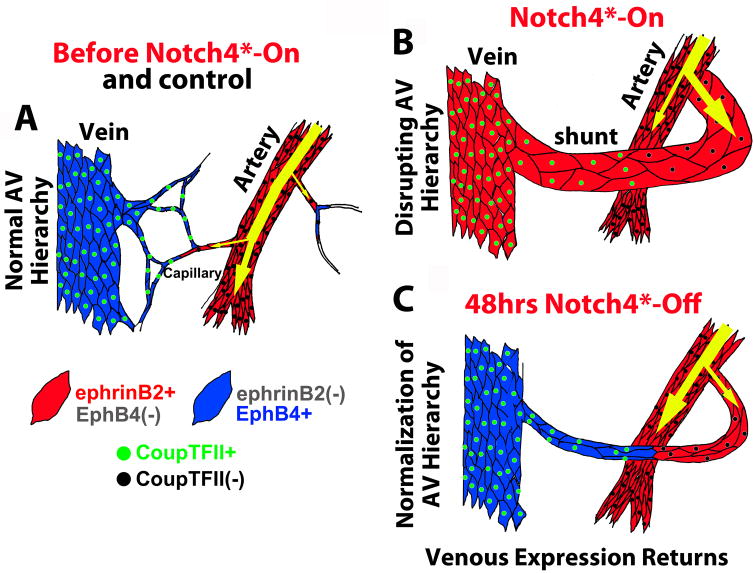
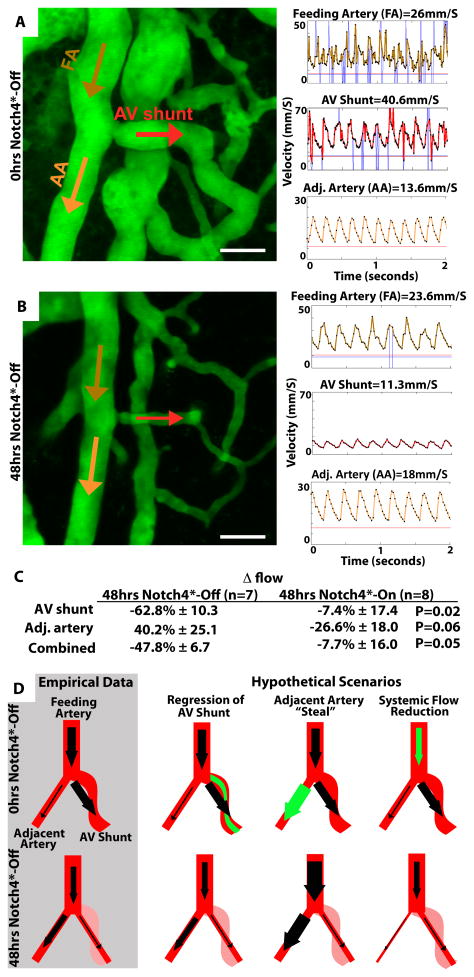
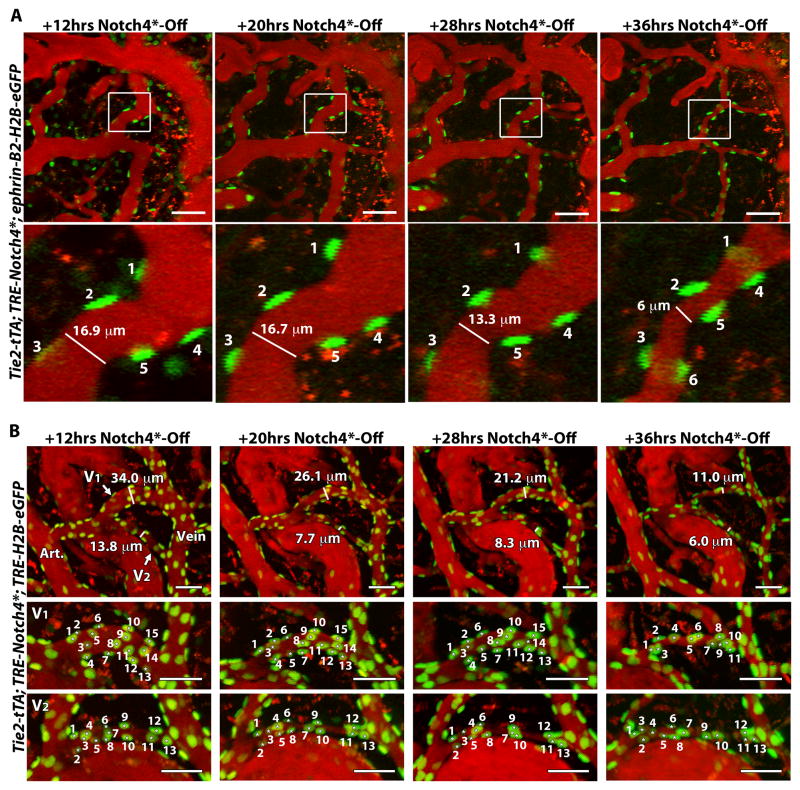
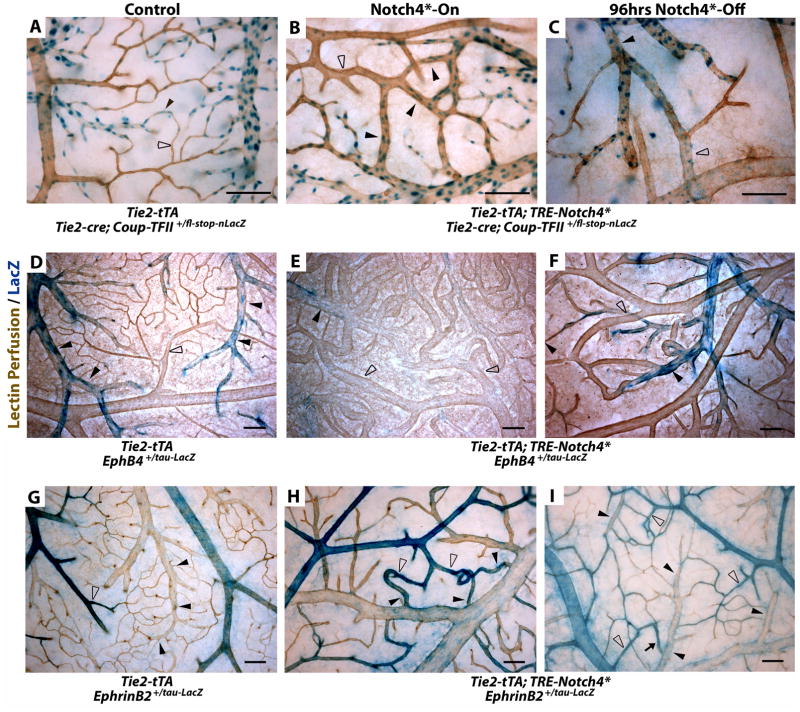
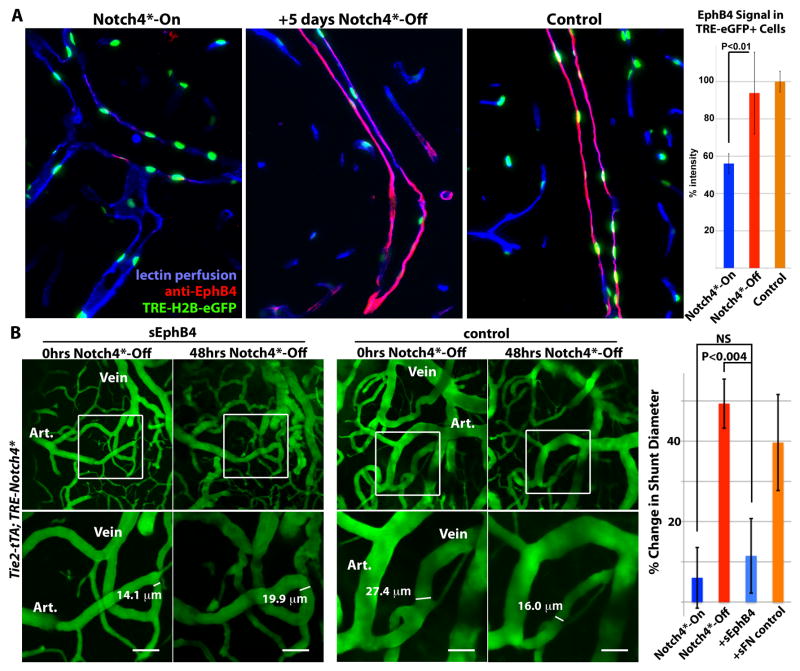
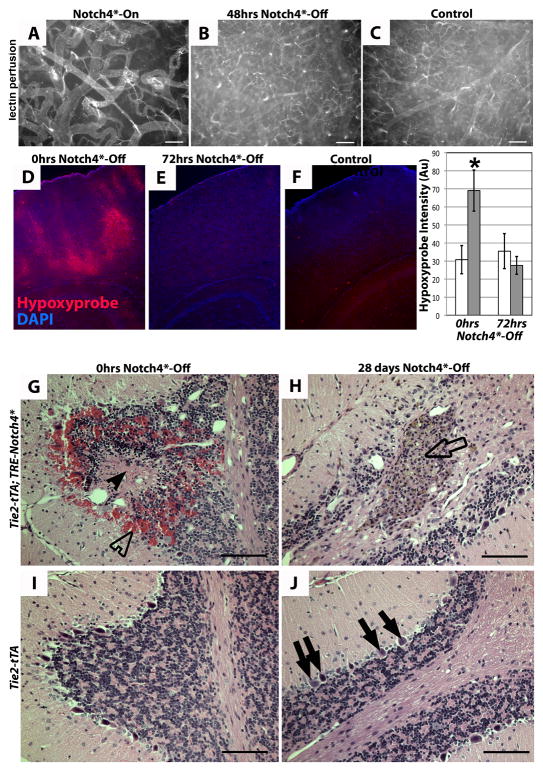
Abnormally enlarged blood vessels underlie many life-threatening disorders including arteriovenous (AV) malformations (AVMs). The core defect in AVMs is high-flow AV shunts, which connect arteries directly to veins, "stealing" blood from capillaries. Here, we studied mouse brain AV shunts caused by up-regulation of Notch signaling in endothelial cells (ECs) through transgenic expression of constitutively active Notch4 (Notch4*). Using four-dimensional two-photon imaging through a cranial window, we found that normalizing Notch signaling by repressing Notch4* expression converted large-caliber, high-flow AV shunts to capillary-like vessels. The structural regression of the high-flow AV shunts returned blood to capillaries, thus reversing tissue hypoxia. This regression was initiated by vessel narrowing without the loss of ECs and required restoration of EphB4 receptor expression by venous ECs. Normalization of Notch signaling resulting in regression of high-flow AV shunts, and a return to normal blood flow suggests that targeting the Notch pathway may be useful therapeutically for treating diseases such as AVMs.
异常增大的血管是许多危及生命的疾病的基础,包括动静脉畸形 (AVM)。AVM 的核心缺陷是高流量动静脉分流,它将动脉直接连接到静脉,从毛细血管“窃取”血液。在这里,我们通过过表达组成型激活的 Notch4 (Notch4*)来研究内皮细胞 (EC) 中 Notch 信号转导上调引起的小鼠脑动静脉分流。通过颅窗进行四维双光子成像,我们发现通过抑制 Notch4*表达来规范 Notch 信号将大口径、高流量动静脉分流转化为类似毛细血管的血管。高流量动静脉分流的结构消退将血液回流到毛细血管,从而逆转组织缺氧。这种消退是由血管变窄而没有 EC 丢失引发的,并且需要静脉 EC 中 EphB4 受体表达的恢复。Notch 信号的正常化导致高流量动静脉分流的消退和恢复正常血流,这表明靶向 Notch 通路可能在治疗 AVM 等疾病方面具有治疗价值。