Division of Maternal Fetal Medicine, Department of Obstetrics and Gynecology, Beth Israel Deaconess Medical Center, 330 Brookline Ave, Kirstein 382, Boston, MA 02215, USA.
Circulation. 2012 Feb 21;125(7):911-9. doi: 10.1161/CIRCULATIONAHA.111.054361. Epub 2012 Jan 18.
An imbalance in circulating angiogenic factors plays a central role in the pathogenesis of preeclampsia.
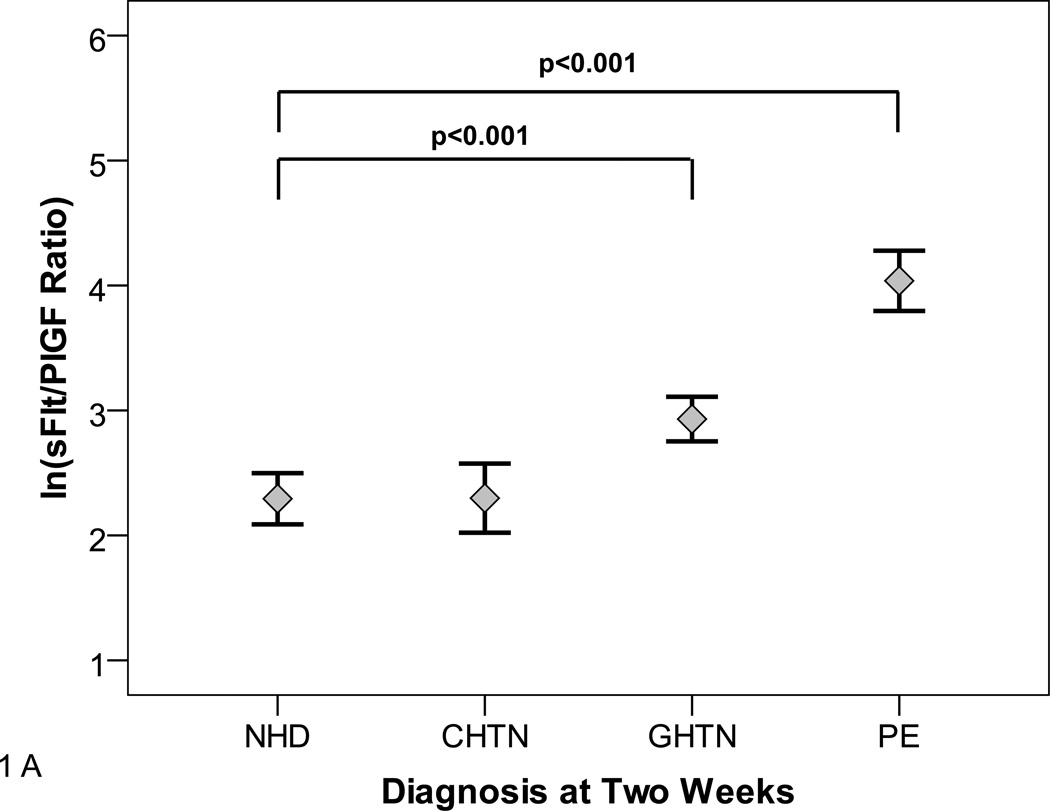
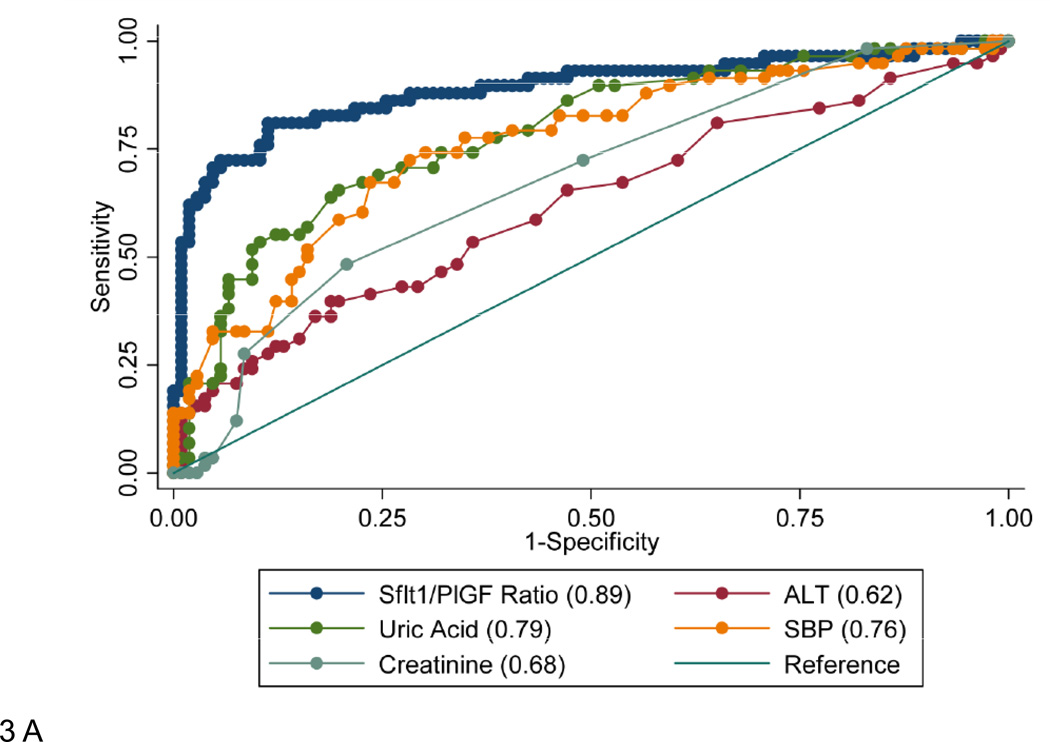
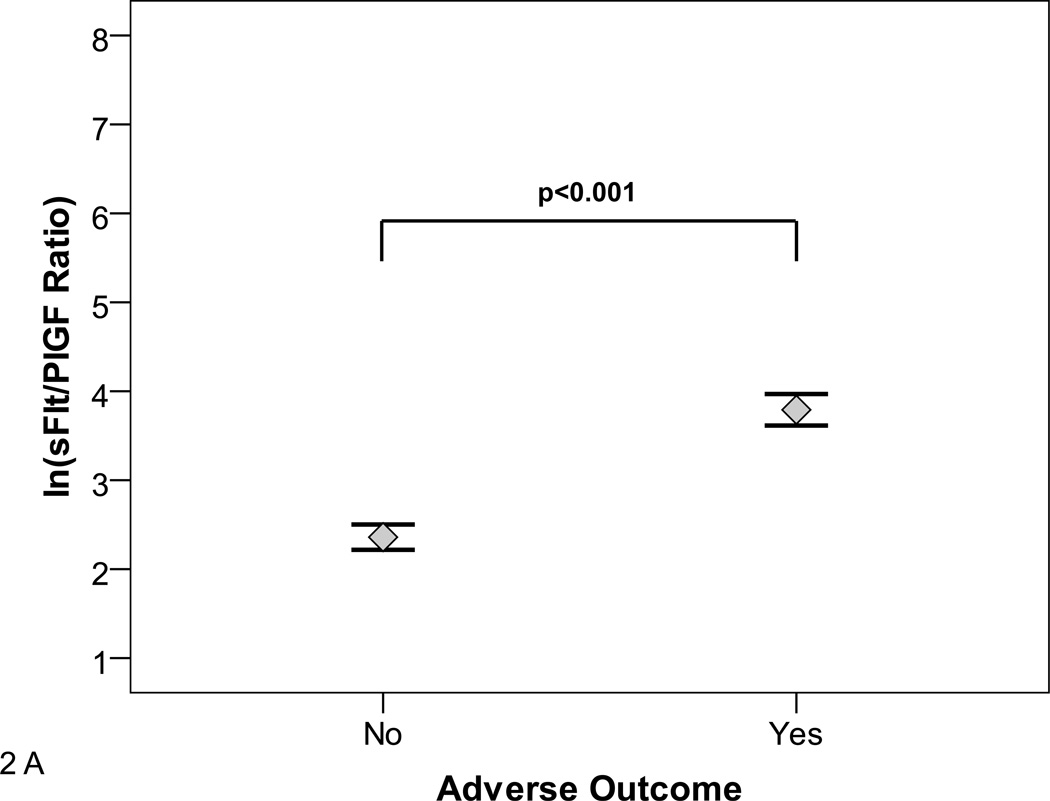
We prospectively studied 616 women who were evaluated for suspected preeclampsia. We measured plasma levels of antiangiogenic soluble fms-like tyrosine kinase 1 (sFlt1) and proangiogenic placental growth factor (PlGF) at presentation and examined for an association between the sFlt1/PlGF ratio and subsequent adverse maternal and perinatal outcomes within 2 weeks. The median sFlt1/PlGF ratio at presentation was elevated in participants who experienced any adverse outcome compared with those who did not (47.0 [25th-75th percentile, 15.5-112.2] versus 10.8 [25th-75th percentile, 4.1-28.6]; P<0.0001). Among those presenting at <34 weeks (n=167), the results were more striking (226.6 [25th-75th percentile, 50.4-547.3] versus 4.5 [25th-75th percentile, 2.0-13.5]; P<0.0001), and the risk was markedly elevated when the highest sFlt1/PlGF ratio tertile was compared with the lowest (odds ratio, 47.8; 95% confidence interval, 14.6-156.6). Among participants presenting at <34 weeks, the addition of sFlt1/PlGF ratio to hypertension and proteinuria significantly improved the prediction for subsequent adverse outcomes (area under the curve, 0.93 for hypertension, proteinuria, and sFlt1/PlGF versus 0.84 for hypertension and proteinuria alone; P=0.001). Delivery occurred within 2 weeks of presentation in 86.0% of women with an sFlt1/PlGF ratio ≥85 compared with 15.8% of women with an sFlt1/PlGF ratio <85 (hazard ratio, 15.2; 95% confidence interval, 8.0-28.7).
In women with suspected preeclampsia presenting at <34 weeks, circulating sFlt1/PlGF ratio predicts adverse outcomes occurring within 2 weeks. The accuracy of this test is substantially better than that of current approaches and may be useful in risk stratification and management. Additional studies are warranted to validate these findings.
循环血管生成因子失衡在子痫前期的发病机制中起核心作用。
我们前瞻性地研究了 616 名疑似子痫前期的患者。我们在就诊时测量了血浆中抗血管生成的可溶性 fms 样酪氨酸激酶 1(sFlt1)和促血管生成的胎盘生长因子(PlGF)水平,并检查了 sFlt1/PlGF 比值与 2 周内随后发生的不良母婴围产结局之间的关系。与未发生任何不良结局的患者相比,发生任何不良结局的患者就诊时的 sFlt1/PlGF 比值中位数升高(47.0[25 百分位数-75 百分位数,15.5-112.2]比 10.8[25 百分位数-75 百分位数,4.1-28.6];P<0.0001)。在就诊时<34 周的患者中(n=167),结果更为明显(226.6[25 百分位数-75 百分位数,50.4-547.3]比 4.5[25 百分位数-75 百分位数,2.0-13.5];P<0.0001),当最高 sFlt1/PlGF 比值 tertile 与最低 tertile 相比时,风险显著升高(优势比,47.8;95%置信区间,14.6-156.6)。在就诊时<34 周的患者中,与高血压和蛋白尿相比,sFlt1/PlGF 比值的加入显著提高了对随后不良结局的预测能力(曲线下面积,高血压、蛋白尿和 sFlt1/PlGF 的 0.93 比高血压和蛋白尿的 0.84;P=0.001)。就诊时 sFlt1/PlGF 比值≥85 的女性中有 86.0%在 2 周内分娩,而 sFlt1/PlGF 比值<85 的女性中有 15.8%在 2 周内分娩(风险比,15.2;95%置信区间,8.0-28.7)。
在就诊时<34 周的疑似子痫前期患者中,循环 sFlt1/PlGF 比值可预测 2 周内发生的不良结局。该检测方法的准确性明显优于目前的方法,可能有助于危险分层和管理。需要进一步的研究来验证这些发现。