Department of Genetics, University of Pennsylvania, 415 Curie Boulevard, Philadelphia, PA 19104, USA.
Genome Biol. 2012 Jan 20;13(1):R1. doi: 10.1186/gb-2012-13-1-r1.
Genomic analysis of high-altitude populations residing in the Andes and Tibet has revealed several candidate loci for involvement in high-altitude adaptation, a subset of which have also been shown to be associated with hemoglobin levels, including EPAS1, EGLN1, and PPARA, which play a role in the HIF-1 pathway. Here, we have extended this work to high- and low-altitude populations living in Ethiopia, for which we have measured hemoglobin levels. We genotyped the Illumina 1M SNP array and employed several genome-wide scans for selection and targeted association with hemoglobin levels to identify genes that play a role in adaptation to high altitude.
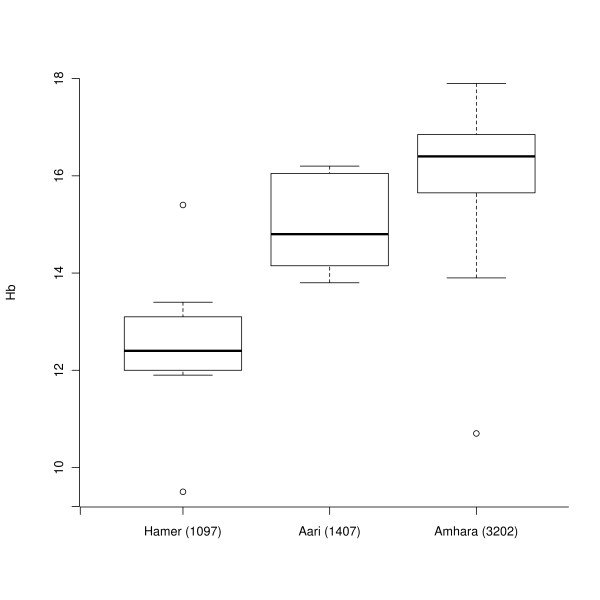
We have identified a set of candidate genes for positive selection in our high-altitude population sample, demonstrated significantly different hemoglobin levels between high- and low-altitude Ethiopians and have identified a subset of candidate genes for selection, several of which also show suggestive associations with hemoglobin levels.
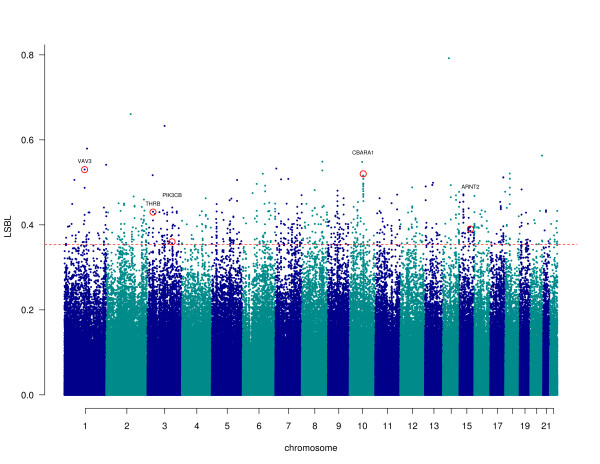
We highlight several candidate genes for involvement in high-altitude adaptation in Ethiopia, including CBARA1, VAV3, ARNT2 and THRB. Although most of these genes have not been identified in previous studies of high-altitude Tibetan or Andean population samples, two of these genes (THRB and ARNT2) play a role in the HIF-1 pathway, a pathway implicated in previous work reported in Tibetan and Andean studies. These combined results suggest that adaptation to high altitude arose independently due to convergent evolution in high-altitude Amhara populations in Ethiopia.
对居住在安第斯山脉和西藏的高海拔人群进行基因组分析,揭示了一些候选基因参与高海拔适应,其中一些基因也与血红蛋白水平有关,包括 EPAS1、EGLN1 和 PPARA,它们在 HIF-1 途径中发挥作用。在这里,我们将这项工作扩展到了居住在埃塞俄比亚的高海拔和低海拔人群,我们已经测量了他们的血红蛋白水平。我们对 Illumina 1M SNP 芯片进行了基因分型,并进行了几次全基因组扫描,以寻找与血红蛋白水平相关的选择和靶向关联,从而确定在适应高海拔方面发挥作用的基因。
我们已经确定了一组候选基因,这些基因在我们的高海拔人群样本中受到正选择,高海拔和低海拔埃塞俄比亚人之间的血红蛋白水平存在显著差异,并且已经确定了一组候选基因受到选择,其中一些基因也与血红蛋白水平有一定的关联。
我们强调了埃塞俄比亚参与高海拔适应的几个候选基因,包括 CBARA1、VAV3、ARNT2 和 THRB。尽管这些基因中的大多数在之前对高海拔藏族或安第斯人群样本的研究中没有被发现,但其中两个基因(THRB 和 ARNT2)在 HIF-1 途径中发挥作用,该途径在之前的藏族和安第斯研究中也有报道。这些综合结果表明,由于埃塞俄比亚的阿姆哈拉高地人群的趋同进化,高海拔适应是独立出现的。