Velez-Montoya Raul, Guerrero-Naranjo Jose Luis, Garcia-Aguirre Gerardo, Morales-Cantón Virgilio, Fromow-Guerra Jans, Quiroz-Mercado Hugo
Department of Ophthalmology, University of Colorado Health and Science Center, Rocky Mountain Lions Eye Institute, University of Colorado School of Medicine, CO, USA.
Clin Ophthalmol. 2011;5:1709-15. doi: 10.2147/OPTH.S26838. Epub 2011 Dec 20.
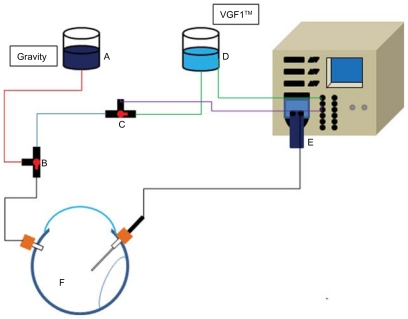
Perfluorocarbon liquid (PCL)-perfused vitrectomy has been shown in previous studies to be feasible, safe, and to have advantages in managing complicated cases of tractional retinal detachment. The present study had the objectives of describing the anatomical results and measuring surgical time and PCL consumption when combining PCL-perfused techniques with modern vitrectomy equipment.
A prospective, interventional consecutive case series was investigated. We enrolled patients with diabetic tractional retinal detachment, complicated by proliferative vitreoretinopathy and poor vision. A 23 gauge PCL-perfused vitrectomy was done with three-dimensional settings. During the procedure, we assessed the degree of surgical bleeding, visualization quality, and difficulty of membrane dissections. Visual acuity, intraocular pressure, and anatomical success were assessed at one and 3 months of follow-up.
Twelve patients were enrolled in this study. There were no statistical significant changes in intraocular pressure and visual acuity throughout the follow-up period. Surgery was performed in a hemorrhage-free environment in almost all cases, with good visualization and low technical difficulty. The mean complete surgical time was 94.92 ± 25.03 minutes. The mean effective vitrectomy time was 22.50 ± 19.04 minutes and the mean PCL consumption was 25.08 ± 9.76 mL, with a speed of 1.11 mL/minute. Anatomical success was 67% at 3 months.
Although the technique proved to have some advantages in managing complicated cases of diabetic tractional retinal detachment, there was a high consumption of PCL. A redesign of the entire system is needed in order to decrease the amount of PCL needed for the technique.
在先前的研究中,全氟碳液体(PCL)灌注玻璃体切除术已被证明是可行、安全的,并且在处理复杂的牵引性视网膜脱离病例方面具有优势。本研究的目的是描述解剖学结果,并在将PCL灌注技术与现代玻璃体切除设备相结合时测量手术时间和PCL消耗量。
对一个前瞻性、介入性连续病例系列进行了研究。我们纳入了患有糖尿病牵引性视网膜脱离、并发增生性玻璃体视网膜病变且视力较差的患者。采用三维设置进行23G PCL灌注玻璃体切除术。在手术过程中,我们评估了手术出血量、可视化质量和膜剥离的难度。在随访1个月和3个月时评估视力、眼压和解剖学成功率。
本研究共纳入12例患者。在整个随访期间,眼压和视力均无统计学上的显著变化。几乎所有病例的手术均在无出血的环境中进行,可视化良好且技术难度低。平均总手术时间为94.92±25.03分钟。平均有效玻璃体切除时间为22.50±19.04分钟,平均PCL消耗量为25.08±9.76 mL,速度为1.11 mL/分钟。3个月时的解剖学成功率为67%。
尽管该技术在处理复杂的糖尿病牵引性视网膜脱离病例中被证明具有一些优势,但PCL的消耗量较大。需要对整个系统进行重新设计,以减少该技术所需的PCL量。