• 文献检索
  • 文档翻译
  • 深度研究
  • 学术资讯
  • Suppr Zotero 插件Zotero 插件
  • 邀请有礼
  • 套餐&价格
  • 历史记录
应用&插件
Suppr Zotero 插件Zotero 插件浏览器插件Mac 客户端Windows 客户端微信小程序
定价
高级版会员购买积分包购买API积分包
服务
文献检索文档翻译深度研究API 文档MCP 服务
关于我们
关于 Suppr公司介绍联系我们用户协议隐私条款
关注我们

Suppr 超能文献

核心技术专利:CN118964589B侵权必究
粤ICP备2023148730 号-1Suppr @ 2026

文献检索

告别复杂PubMed语法,用中文像聊天一样搜索,搜遍4000万医学文献。AI智能推荐,让科研检索更轻松。

立即免费搜索

文件翻译

保留排版,准确专业,支持PDF/Word/PPT等文件格式,支持 12+语言互译。

免费翻译文档

深度研究

AI帮你快速写综述,25分钟生成高质量综述,智能提取关键信息,辅助科研写作。

立即免费体验

相似文献

1
Algorithms for Design of Continuum Robots Using the Concentric Tubes Approach: A Neurosurgical Example.使用同心管方法设计连续体机器人的算法:一个神经外科实例。
IEEE Int Conf Robot Autom. 2011 May 9:667-673. doi: 10.1109/ICRA.2011.5980311.
2
Design Optimization of Concentric Tube Robots Based on Task and Anatomical Constraints.基于任务和解剖学约束的同心管机器人设计优化
IEEE Int Conf Robot Autom. 2011 May 9;2011:398-403. doi: 10.1109/ICRA.2011.5979960.
3
Concentric Tube Robot Design and Optimization Based on Task and Anatomical Constraints.基于任务和解剖学约束的同心管机器人设计与优化
IEEE Trans Robot. 2015 Feb 3;31(1):67-84. doi: 10.1109/TRO.2014.2378431.
4
Real-Time Shape Estimation for Concentric Tube Continuum Robots with a Single Force/Torque Sensor.基于单力/扭矩传感器的同心管连续体机器人实时形状估计
Front Robot AI. 2021 Oct 4;8:734033. doi: 10.3389/frobt.2021.734033. eCollection 2021.
5
Equilibrium Conformations of Concentric-tube Continuum Robots.同心管连续体机器人的平衡构象
Int J Rob Res. 2010 Sep 1;29(10):1263-1280. doi: 10.1177/0278364910367543.
6
Learning the Complete Shape of Concentric Tube Robots.了解同心管机器人的完整形状。
IEEE Trans Med Robot Bionics. 2020 May;2(2):140-147. doi: 10.1109/tmrb.2020.2974523. Epub 2020 Feb 19.
7
Optimizing Design Parameters for Sets of Concentric Tube Robots using Sampling-based Motion Planning.使用基于采样的运动规划优化同心管机器人组的设计参数。
Rep U S. 2015 Sep 28;2015:4381-4387. doi: 10.1109/IROS.2015.7353999.
8
Designing Stable Concentric Tube Robots Using Piecewise Straight Tubes.使用分段直管设计稳定的同心管机器人。
IEEE Robot Autom Lett. 2017 Jan;2(1):298-304. doi: 10.1109/LRA.2016.2606656. Epub 2016 Sep 7.
9
Asymptotically Optimal Kinematic Design of Robots using Motion Planning.基于运动规划的机器人渐近最优运动学设计
Auton Robots. 2019 Feb;43(2):345-357. doi: 10.1007/s10514-018-9766-x. Epub 2018 Jun 29.
10
Toward the Design of Personalized Continuum Surgical Robots.向个性化连续体手术机器人设计迈进。
Ann Biomed Eng. 2018 Oct;46(10):1522-1533. doi: 10.1007/s10439-018-2062-2. Epub 2018 May 31.

引用本文的文献

1
A Telescopic Tendon-Driven Needle Robot for Minimally Invasive Neurosurgery.一种用于微创神经外科手术的伸缩式肌腱驱动针机器人。
Rep U S. 2023 Oct;2023:10301-10307. doi: 10.1109/iros55552.2023.10341660. Epub 2023 Dec 13.
2
A Survey on Design, Actuation, Modeling, and Control of Continuum Robot.连续体机器人的设计、驱动、建模与控制综述
Cyborg Bionic Syst. 2022 Jul 25;2022:9754697. doi: 10.34133/2022/9754697. eCollection 2022.
3
Model-based Design of the COAST Guidewire Robot for Large Deflection.用于大挠度的COAST导丝机器人的基于模型的设计。
IEEE Robot Autom Lett. 2023 Sep;8(9):5345-5352. doi: 10.1109/lra.2023.3286125. Epub 2023 Jun 14.
4
Eccentric Tube Robots as Multiarmed Steerable Sheaths.作为多臂可控鞘管的偏心管机器人
IEEE Trans Robot. 2022 Feb;38(1):477-490. doi: 10.1109/tro.2021.3080659. Epub 2021 Jun 15.
5
Design Considerations for a Steerable Needle Robot to Maximize Reachable Lung Volume.用于最大化可到达肺容积的可控针状机器人的设计考量
IEEE Int Conf Robot Autom. 2021 May-Jun;2021. doi: 10.1109/icra48506.2021.9561342. Epub 2021 Oct 18.
6
Inverse Kinematics of Concentric Tube Robots in the Presence of Environmental Constraints.存在环境约束时同心管机器人的逆运动学
Appl Bionics Biomech. 2021 Aug 14;2021:4107732. doi: 10.1155/2021/4107732. eCollection 2021.
7
Steering a Multi-armed Robotic Sheath Using Eccentric Precurved Tubes.使用偏心预弯管操控多臂机器人鞘管
IEEE Robot Autom Mag. 2019 May;2019:9834-9840. doi: 10.1109/ICRA.2019.8794245. Epub 2019 Aug 12.
8
Design optimization of a contact-aided continuum robot for endobronchial interventions based on anatomical constraints.基于解剖约束的接触辅助式支气管内介入连续体机器人设计优化。
Int J Comput Assist Radiol Surg. 2019 Jul;14(7):1137-1146. doi: 10.1007/s11548-019-01972-8. Epub 2019 Apr 15.
9
Modeling Tube Clearance and Bounding the Effect of Friction in Concentric Tube Robot Kinematics.同心管机器人运动学中管道间隙建模与摩擦力影响范围界定
IEEE Trans Robot. 2019 Apr;35(2):353-370. doi: 10.1109/TRO.2018.2878906. Epub 2018 Nov 14.
10
Toward the Design of Personalized Continuum Surgical Robots.向个性化连续体手术机器人设计迈进。
Ann Biomed Eng. 2018 Oct;46(10):1522-1533. doi: 10.1007/s10439-018-2062-2. Epub 2018 May 31.

本文引用的文献

1
Equilibrium Conformations of Concentric-tube Continuum Robots.同心管连续体机器人的平衡构象
Int J Rob Res. 2010 Sep 1;29(10):1263-1280. doi: 10.1177/0278364910367543.
2
Stiffness Control of Surgical Continuum Manipulators.手术连续体操纵器的刚度控制
IEEE Trans Robot. 2011 Apr;27(2). doi: 10.1109/TRO.2011.2105410.
3
Real-time Position Control of Concentric Tube Robots.同心管机器人的实时位置控制
IEEE Int Conf Robot Autom. 2010 May 3;2010:562-568. doi: 10.1109/ROBOT.2010.5509311.
4
A Geometrically Exact Model for Externally Loaded Concentric-Tube Continuum Robots.用于外部加载同心管连续体机器人的几何精确模型。
IEEE Trans Robot. 2010;26(5):769-780. doi: 10.1109/TRO.2010.2062570.
5
Stiffness Control of a Continuum Manipulator in Contact with a Soft Environment.与软环境接触的连续体机械手的刚度控制
Rep U S. 2010 Dec 3;2010:863-870. doi: 10.1109/IROS.2010.5650405.
6
Quasistatic Modeling of Concentric Tube Robots with External Loads.具有外部负载的同心管机器人的准静态建模
Rep U S. 2010 Dec 3;2010:2325-2332. doi: 10.1109/IROS.2010.5651240.
7
Design and Control of Concentric-Tube Robots.同心管机器人的设计与控制
IEEE Trans Robot. 2010 Apr 1;26(2):209-225. doi: 10.1109/TRO.2009.2035740.
8
Endoscopic third ventriculostomy in the treatment of childhood hydrocephalus in Uganda: report of a scoring system that predicts success.乌干达内镜下第三脑室造瘘术治疗儿童脑积水:预测手术成功的评分系统报告
J Neurosurg Pediatr. 2010 Feb;5(2):143-8. doi: 10.3171/2009.9.PEDS09196.
9
Robotic neurological surgery applications: accuracy and consistency or pure fantasy?机器人神经外科手术应用:是精准与稳定还是纯粹的幻想?
Stereotact Funct Neurosurg. 2009;87(2):88-93. doi: 10.1159/000202974. Epub 2009 Feb 18.
10
The future of cerebral surgery: a kaleidoscope of opportunities.脑部手术的未来:机遇纷呈。
Neurosurgery. 2008 Jun;62(6 Suppl 3):1555-79; discussion 1579-82. doi: 10.1227/01.neu.0000333820.33143.0d.

使用同心管方法设计连续体机器人的算法:一个神经外科实例。

Algorithms for Design of Continuum Robots Using the Concentric Tubes Approach: A Neurosurgical Example.

作者信息

Anor Tomer, Madsen Joseph R, Dupont Pierre

机构信息

Department of Neurosurgery, Children's Hospital Boston, Harvard Medical School, Boston, MA 02115 USA (

出版信息

IEEE Int Conf Robot Autom. 2011 May 9:667-673. doi: 10.1109/ICRA.2011.5980311.

DOI:10.1109/ICRA.2011.5980311
PMID:22270831
原文链接:https://pmc.ncbi.nlm.nih.gov/articles/PMC3262313/
Abstract

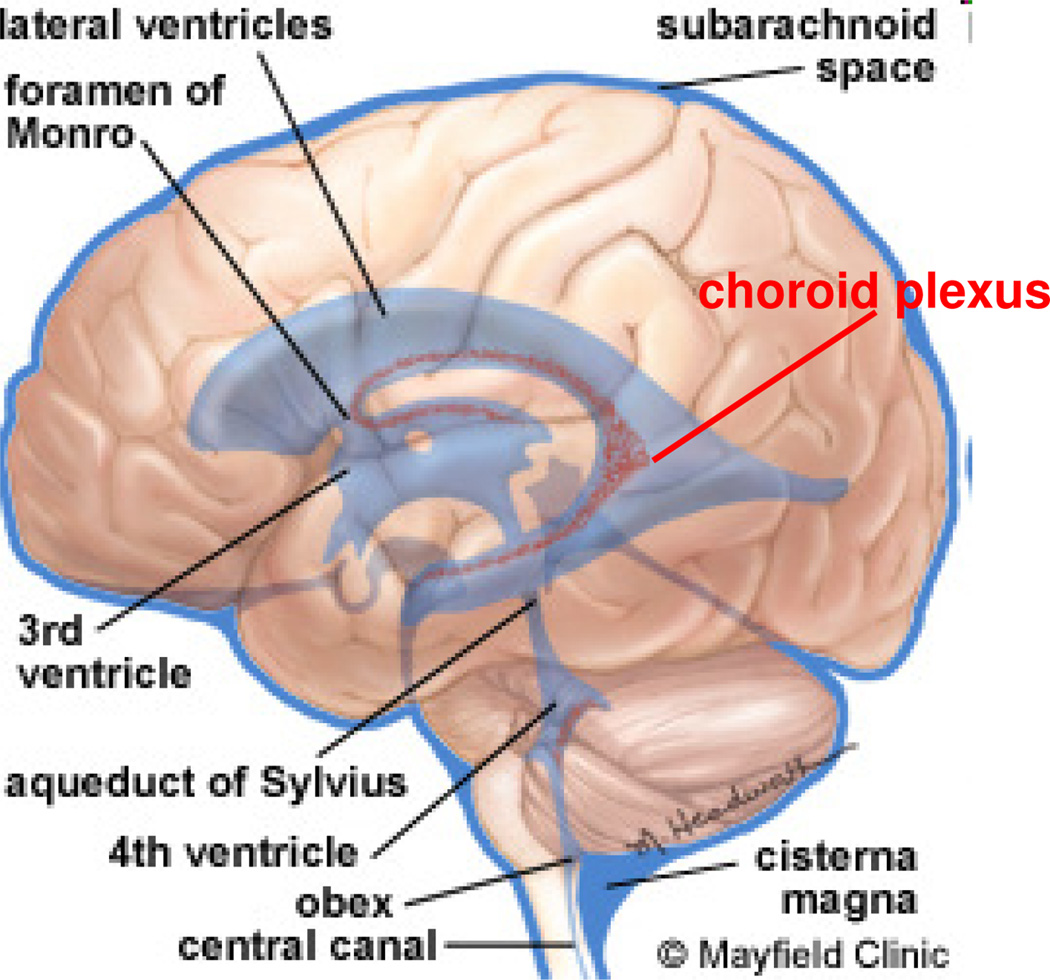
We propose a novel systematic approach to optimizing the design of concentric tube robots for neurosurgical procedures. These procedures require that the robot approach specified target sites while navigating and operating within an anatomically constrained work space. The availability of preoperative imaging makes our approach particularly suited for neurosurgery, and we illustrate the method with the example of endoscopic choroid plexus ablation. A novel parameterization of the robot characteristics is used in conjunction with a global pattern search optimization method. The formulation returns the design of the least-complex robot capable of reaching single or multiple target points in a confined space with constrained optimization metrics. A particular advantage of this approach is that it identifies the need for either fixed-curvature versus variable-curvature sections. We demonstrate the performance of the method in four clinically relevant examples.

摘要

我们提出了一种新颖的系统方法,用于优化神经外科手术中同心管机器人的设计。这些手术要求机器人在解剖结构受限的工作空间内导航和操作时接近指定的目标部位。术前成像的可用性使我们的方法特别适用于神经外科手术,我们以内镜脉络丛消融为例来说明该方法。机器人特性的一种新颖参数化方法与全局模式搜索优化方法结合使用。该公式返回能够在受限空间内以受限优化指标到达单个或多个目标点的最不复杂机器人的设计。这种方法的一个特别优点是它确定了对固定曲率与可变曲率部分的需求。我们在四个临床相关示例中展示了该方法的性能。
https://cdn.ncbi.nlm.nih.gov/pmc/blobs/12f8/3262313/985eeb992516/nihms346108f9.jpg
https://cdn.ncbi.nlm.nih.gov/pmc/blobs/12f8/3262313/b62beb89543c/nihms346108f1.jpg
https://cdn.ncbi.nlm.nih.gov/pmc/blobs/12f8/3262313/99e42b74719c/nihms346108f2.jpg
https://cdn.ncbi.nlm.nih.gov/pmc/blobs/12f8/3262313/949e6f261319/nihms346108f3.jpg
https://cdn.ncbi.nlm.nih.gov/pmc/blobs/12f8/3262313/9078b3af97a5/nihms346108f4.jpg
https://cdn.ncbi.nlm.nih.gov/pmc/blobs/12f8/3262313/74c4481ac562/nihms346108f5.jpg
https://cdn.ncbi.nlm.nih.gov/pmc/blobs/12f8/3262313/30535b9b08a8/nihms346108f6.jpg
https://cdn.ncbi.nlm.nih.gov/pmc/blobs/12f8/3262313/f278bca576b2/nihms346108f7.jpg
https://cdn.ncbi.nlm.nih.gov/pmc/blobs/12f8/3262313/bf2360178278/nihms346108f8.jpg
https://cdn.ncbi.nlm.nih.gov/pmc/blobs/12f8/3262313/985eeb992516/nihms346108f9.jpg
https://cdn.ncbi.nlm.nih.gov/pmc/blobs/12f8/3262313/b62beb89543c/nihms346108f1.jpg
https://cdn.ncbi.nlm.nih.gov/pmc/blobs/12f8/3262313/99e42b74719c/nihms346108f2.jpg
https://cdn.ncbi.nlm.nih.gov/pmc/blobs/12f8/3262313/949e6f261319/nihms346108f3.jpg
https://cdn.ncbi.nlm.nih.gov/pmc/blobs/12f8/3262313/9078b3af97a5/nihms346108f4.jpg
https://cdn.ncbi.nlm.nih.gov/pmc/blobs/12f8/3262313/74c4481ac562/nihms346108f5.jpg
https://cdn.ncbi.nlm.nih.gov/pmc/blobs/12f8/3262313/30535b9b08a8/nihms346108f6.jpg
https://cdn.ncbi.nlm.nih.gov/pmc/blobs/12f8/3262313/f278bca576b2/nihms346108f7.jpg
https://cdn.ncbi.nlm.nih.gov/pmc/blobs/12f8/3262313/bf2360178278/nihms346108f8.jpg
https://cdn.ncbi.nlm.nih.gov/pmc/blobs/12f8/3262313/985eeb992516/nihms346108f9.jpg