Department of Molecular Oncology, Göttingen Center of Molecular Biosciences, University of Göttingen, 37077 Göttingen, Germany.
J Exp Med. 2012 Feb 13;209(2):275-89. doi: 10.1084/jem.20111117. Epub 2012 Jan 23.
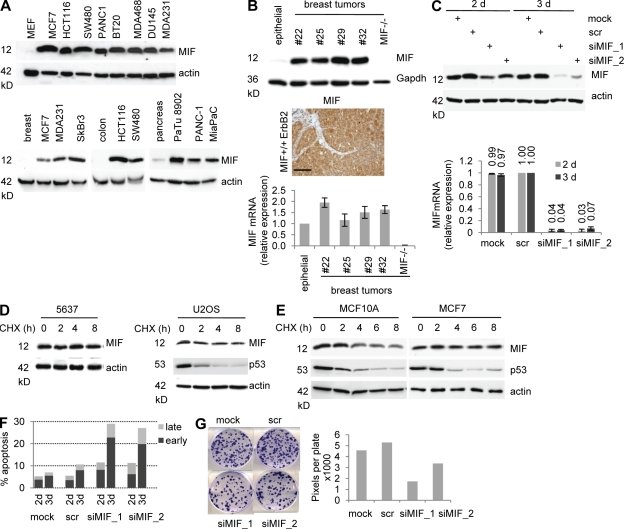
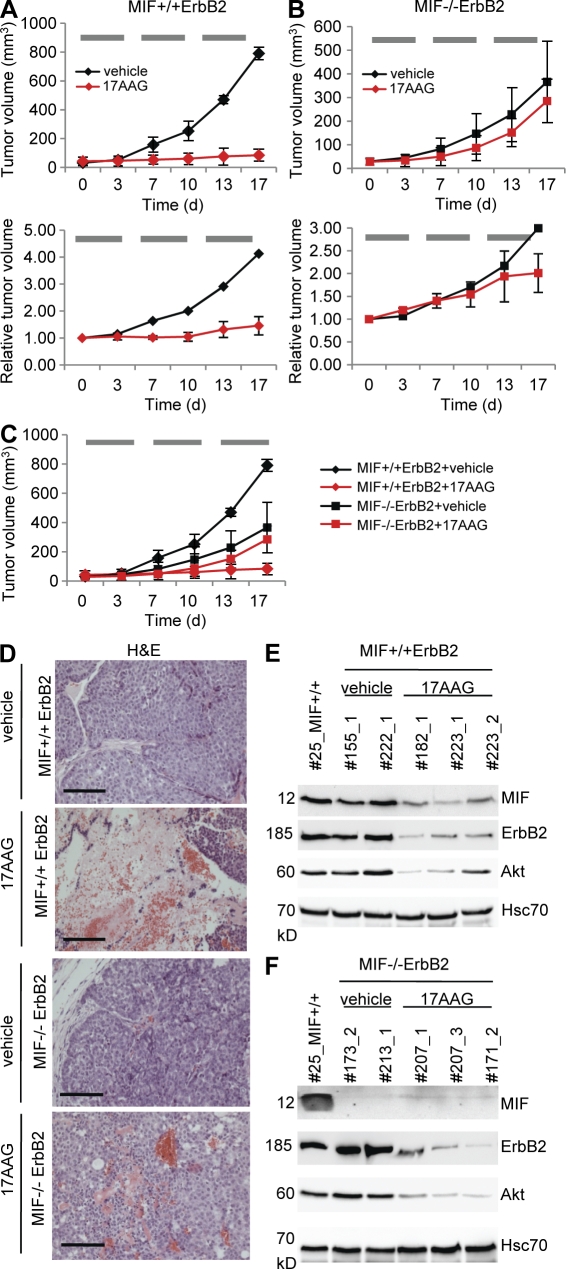
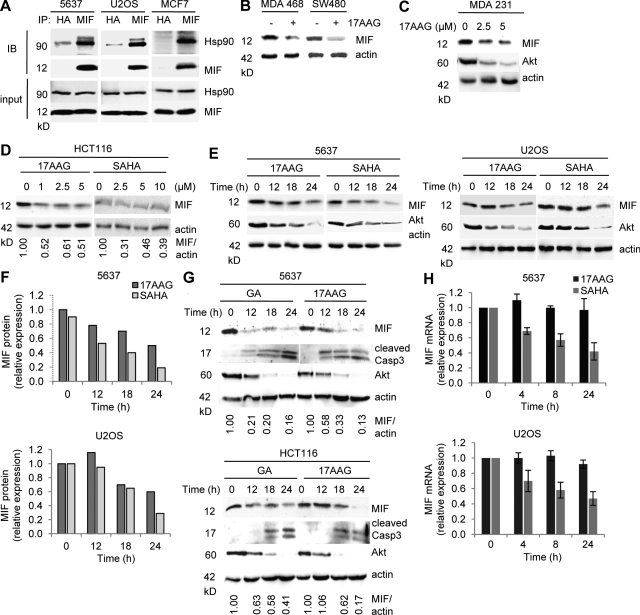
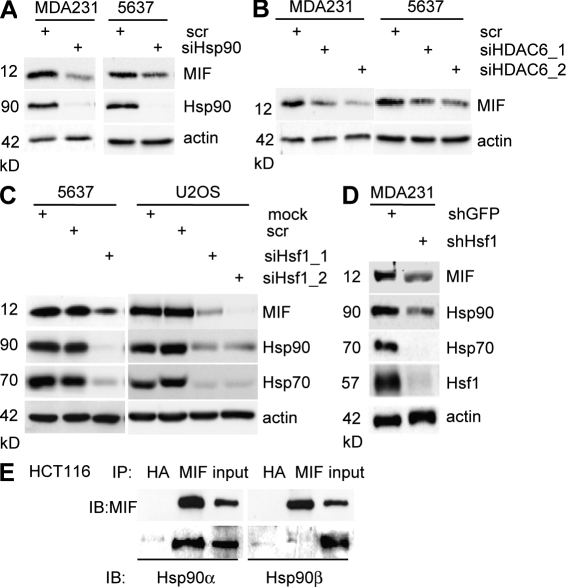
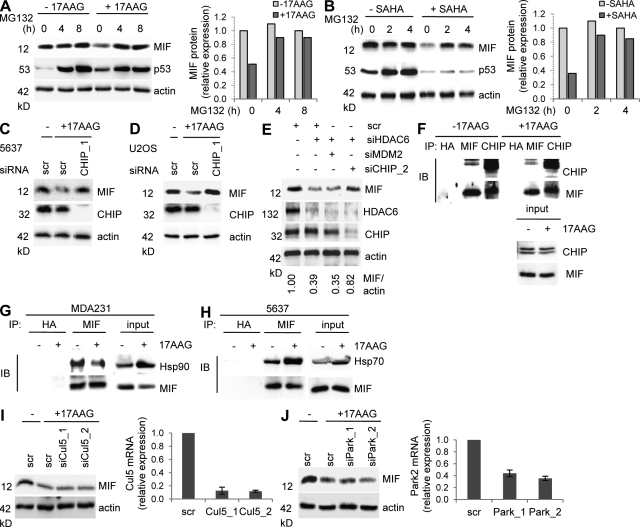
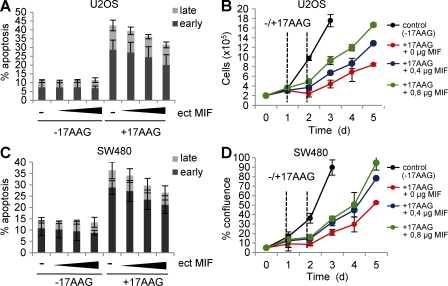
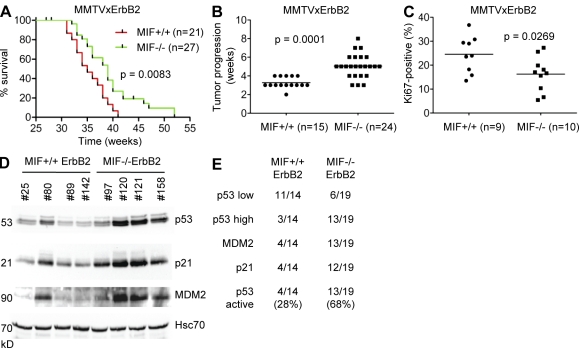
Intracellular macrophage migration inhibitory factor (MIF) often becomes stabilized in human cancer cells. MIF can promote tumor cell survival, and elevated MIF protein correlates with tumor aggressiveness and poor prognosis. However, the molecular mechanism facilitating MIF stabilization in tumors is not understood. We show that the tumor-activated HSP90 chaperone complex protects MIF from degradation. Pharmacological inhibition of HSP90 activity, or siRNA-mediated knockdown of HSP90 or HDAC6, destabilizes MIF in a variety of human cancer cells. The HSP90-associated E3 ubiquitin ligase CHIP mediates the ensuing proteasome-dependent MIF degradation. Cancer cells contain constitutive endogenous MIF-HSP90 complexes. siRNA-mediated MIF knockdown inhibits proliferation and triggers apoptosis of cultured human cancer cells, whereas HSP90 inhibitor-induced apoptosis is overridden by ectopic MIF expression. In the ErbB2 transgenic model of human HER2-positive breast cancer, genetic ablation of MIF delays tumor progression and prolongs overall survival of mice. Systemic treatment with the HSP90 inhibitor 17AAG reduces MIF expression and blocks growth of MIF-expressing, but not MIF-deficient, tumors. Together, these findings identify MIF as a novel HSP90 client and suggest that HSP90 inhibitors inhibit ErbB2-driven breast tumor growth at least in part by destabilizing MIF.
细胞内巨噬细胞移动抑制因子(MIF)在人类癌细胞中经常变得稳定。MIF 可以促进肿瘤细胞存活,并且升高的 MIF 蛋白与肿瘤侵袭性和预后不良相关。然而,促进 MIF 在肿瘤中稳定的分子机制尚不清楚。我们表明,肿瘤激活的 HSP90 伴侣复合物保护 MIF 免受降解。HSP90 活性的药理学抑制,或 HSP90 或 HDAC6 的 siRNA 介导的敲低,使各种人类癌细胞中的 MIF 不稳定。HSP90 相关的 E3 泛素连接酶 CHIP 介导随后的蛋白酶体依赖性 MIF 降解。癌细胞含有组成性的内源性 MIF-HSP90 复合物。siRNA 介导的 MIF 敲低抑制培养的人类癌细胞的增殖并触发细胞凋亡,而 HSP90 抑制剂诱导的细胞凋亡被外源性 MIF 表达所掩盖。在人类 HER2 阳性乳腺癌的 ErbB2 转基因模型中,MIF 的基因缺失延迟肿瘤进展并延长小鼠的总生存期。HSP90 抑制剂 17AAG 的系统治疗降低了 MIF 的表达并阻断了 MIF 表达的肿瘤的生长,但不阻断 MIF 缺陷型肿瘤的生长。总之,这些发现将 MIF 鉴定为一种新型的 HSP90 客户,并表明 HSP90 抑制剂通过使 MIF 不稳定来抑制 ErbB2 驱动的乳腺癌肿瘤生长至少部分是通过使 MIF 不稳定来抑制 ErbB2 驱动的乳腺癌肿瘤生长。