Hematology Division, Department of Medicine, The Johns Hopkins University School of Medicine, Baltimore, Maryland, United States of America.
PLoS One. 2012;7(1):e30034. doi: 10.1371/journal.pone.0030034. Epub 2012 Jan 20.
Although metastatic colon cancer is a leading cause of cancer death worldwide, the molecular mechanisms that enable colon cancer cells to metastasize remain unclear. Emerging evidence suggests that metastatic cells develop by usurping transcriptional networks from embryonic stem (ES) cells to facilitate an epithelial-mesenchymal transition (EMT), invasion, and metastatic progression. Previous studies identified HMGA1 as a key transcription factor enriched in ES cells, colon cancer, and other aggressive tumors, although its role in these settings is poorly understood.
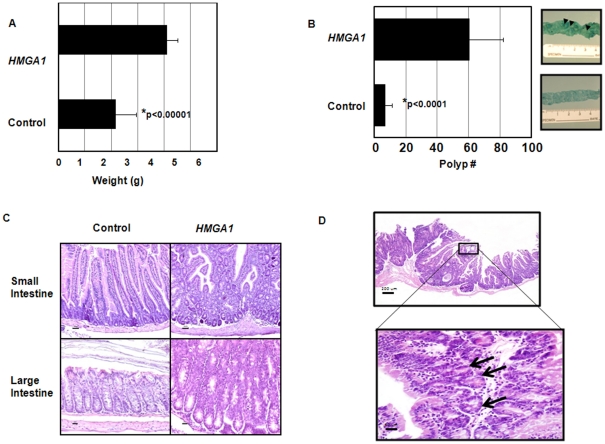
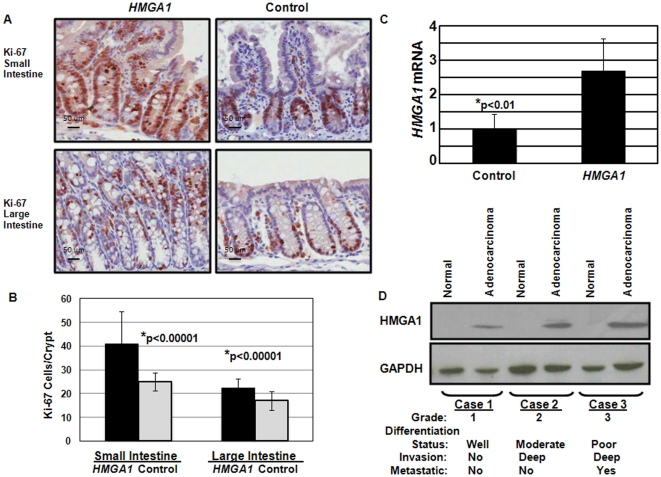
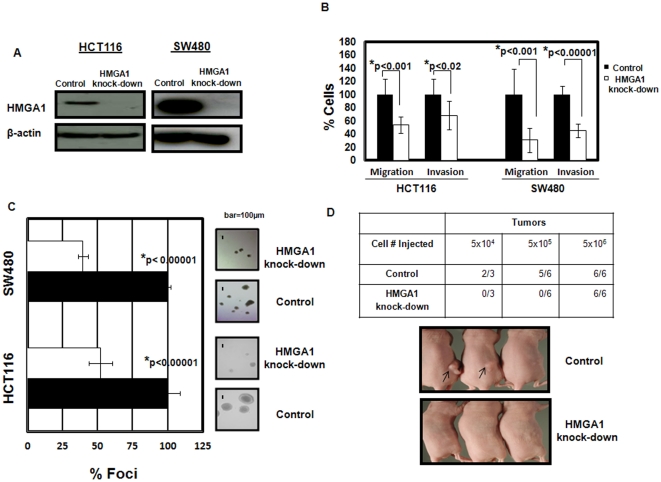
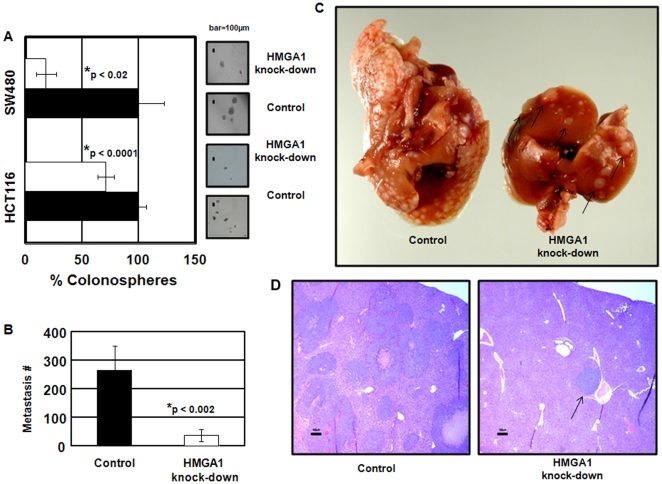
METHODS/PRINCIPAL FINDINGS: To determine how HMGA1 functions in metastatic colon cancer, we manipulated HMGA1 expression in transgenic mice and colon cancer cells. We discovered that HMGA1 drives proliferative changes, aberrant crypt formation, and intestinal polyposis in transgenic mice. In colon cancer cell lines from poorly differentiated, metastatic tumors, knock-down of HMGA1 blocks anchorage-independent cell growth, migration, invasion, xenograft tumorigenesis and three-dimensional colonosphere formation. Inhibiting HMGA1 expression blocks tumorigenesis at limiting dilutions, consistent with depletion of tumor-initiator cells in the knock-down cells. Knock-down of HMGA1 also inhibits metastatic progression to the liver in vivo. In metastatic colon cancer cells, HMGA1 induces expression of Twist1, a gene involved in embryogenesis, EMT, and tumor progression, while HMGA1 represses E-cadherin, a gene that is down-regulated during EMT and metastatic progression. In addition, HMGA1 is among the most enriched genes in colon cancer compared to normal mucosa.
Our findings demonstrate for the first time that HMGA1 drives proliferative changes and polyp formation in the intestines of transgenic mice and induces metastatic progression and stem-like properties in colon cancer cells. These findings indicate that HMGA1 is a key regulator, both in metastatic progression and in the maintenance of a stem-like state. Our results also suggest that HMGA1 or downstream pathways could be rational therapeutic targets in metastatic, poorly differentiated colon cancer.
尽管转移性结肠癌是全球范围内导致癌症死亡的主要原因,但使结肠癌细胞转移的分子机制仍不清楚。新出现的证据表明,转移性细胞通过篡夺胚胎干细胞(ES)细胞中的转录网络来促进上皮-间充质转化(EMT)、侵袭和转移进展。以前的研究表明,HMGA1 是 ES 细胞、结肠癌和其他侵袭性肿瘤中丰富的关键转录因子,尽管其在这些环境中的作用仍不清楚。
方法/主要发现:为了确定 HMGA1 在转移性结肠癌中的作用,我们在转基因小鼠和结肠癌细胞中操纵 HMGA1 的表达。我们发现 HMGA1 驱动转基因小鼠中的增殖变化、异常隐窝形成和肠息肉形成。在分化不良、转移性肿瘤的结肠癌细胞系中,敲低 HMGA1 可阻断非依赖性细胞生长、迁移、侵袭、异种移植物肿瘤发生和三维结肠球体形成。抑制 HMGA1 的表达可在限制稀释时阻断肿瘤发生,这与敲低细胞中肿瘤起始细胞的耗竭一致。敲低 HMGA1 还可抑制体内向肝脏的转移进展。在转移性结肠癌细胞中,HMGA1 诱导参与胚胎发生、EMT 和肿瘤进展的 Twist1 基因的表达,同时 HMGA1 抑制 EMT 和转移进展过程中下调的 E-钙粘蛋白基因的表达。此外,与正常黏膜相比,HMGA1 是结肠癌中最丰富的基因之一。
我们的研究结果首次证明,HMGA1 可驱动转基因小鼠肠道中的增殖变化和息肉形成,并诱导结肠癌细胞的转移进展和干细胞样特性。这些发现表明,HMGA1 是转移和维持干细胞样状态的关键调节剂。我们的研究结果还表明,HMGA1 或下游途径可能是转移性、分化不良的结肠癌的合理治疗靶点。