Department of Biomedical Sciences and Cancer Biology Center, Texas Tech University Health Sciences Center, Amarillo, TX 79106, USA.
BMC Med. 2012 Jan 26;10:9. doi: 10.1186/1741-7015-10-9.
Signal transducer and activator of transcription 3 (STAT3) is activated in majority of ovarian tumors and confers resistance to cisplatin treatment in patients with ovarian cancer. We have reported previously that diindolylmethane (DIM) inhibits the growth of ovarian cancer cells. However, to date the exact mechanism by which DIM induces growth suppressive effects has not been clear. In this report the mode of action of DIM is investigated.
Six human ovarian cancer cell lines and an ovarian tumor xenograft animal model were used to study the effect of diindolylmethane alone or in combination with cisplatin.
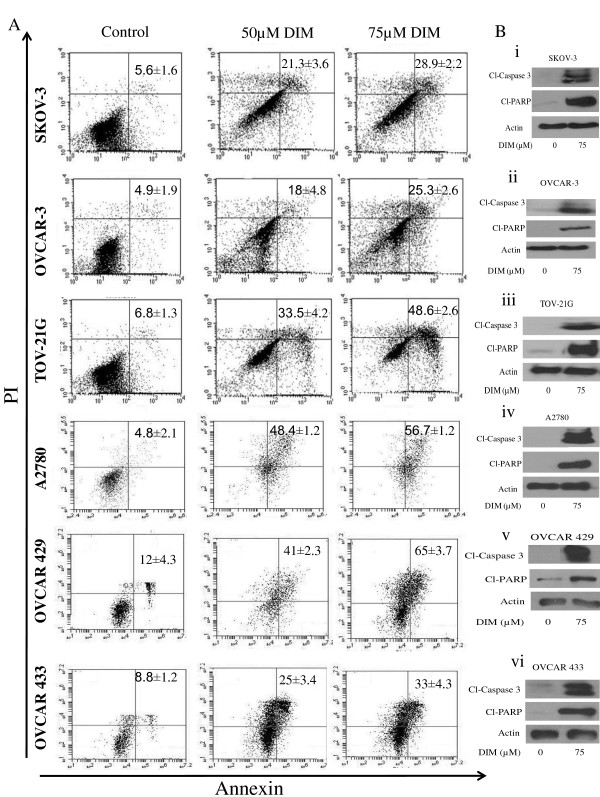
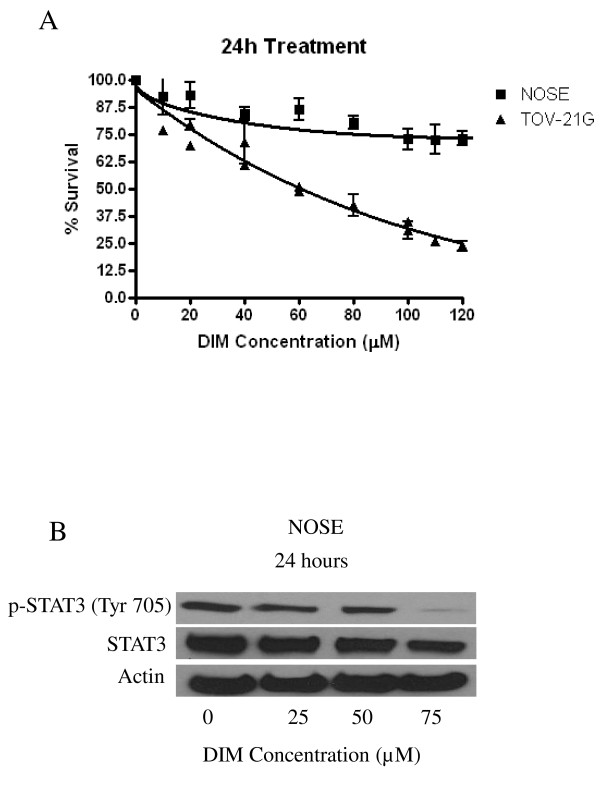
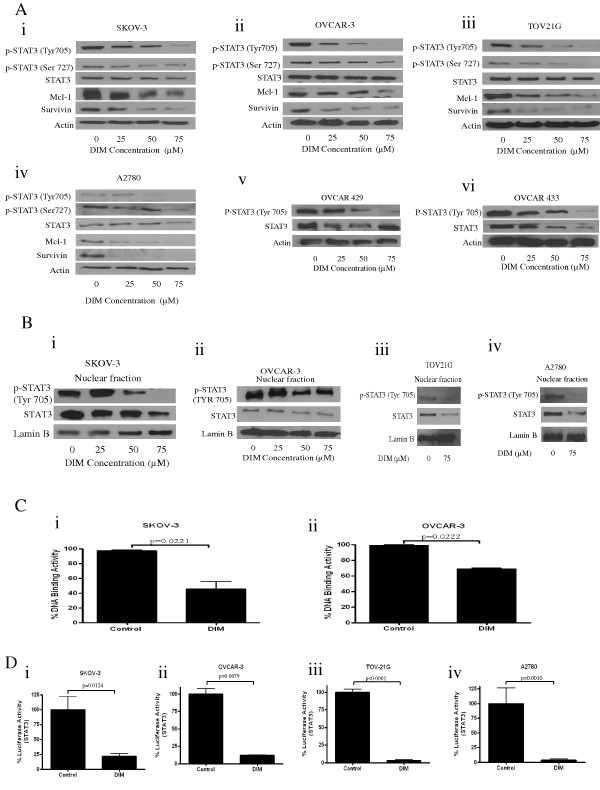
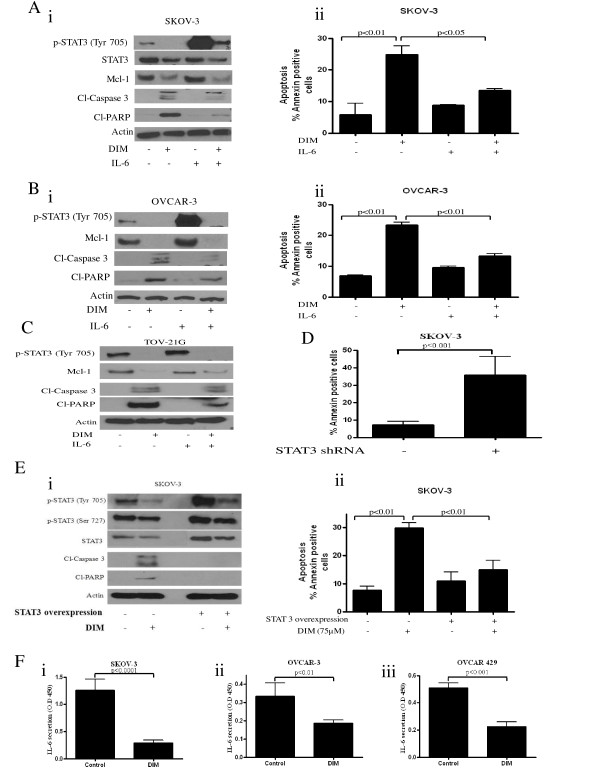
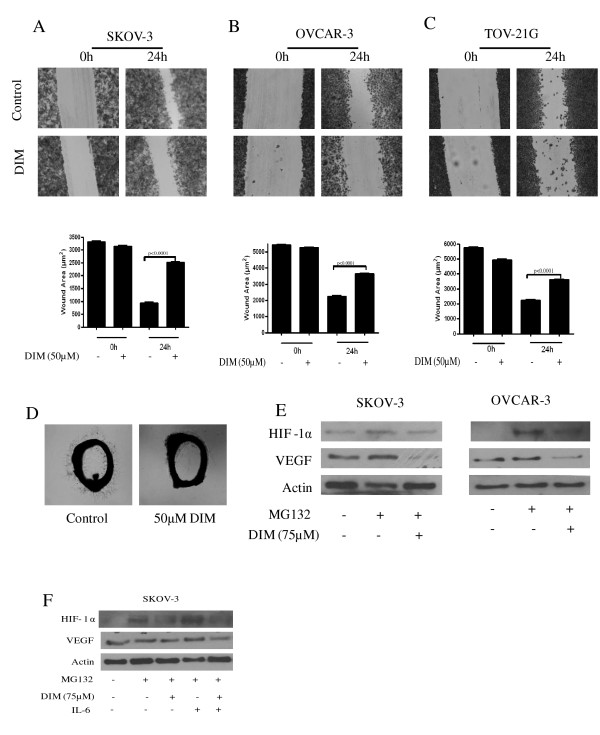
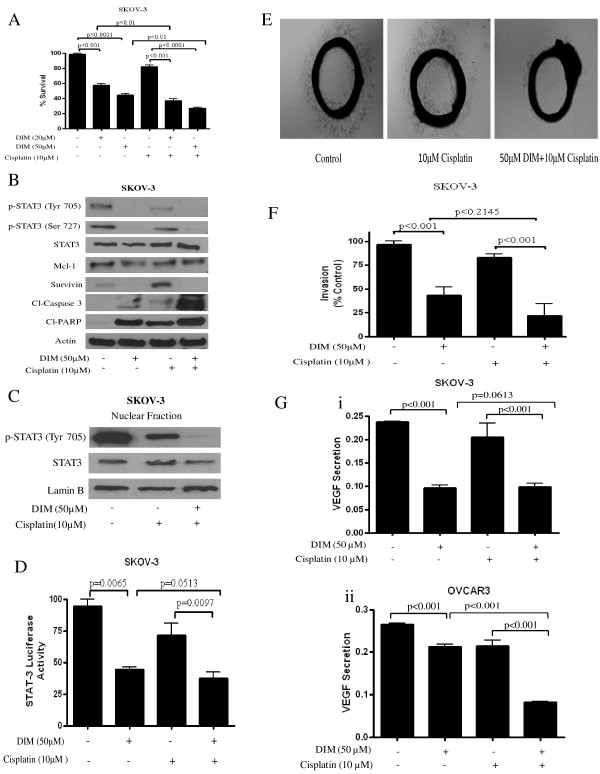
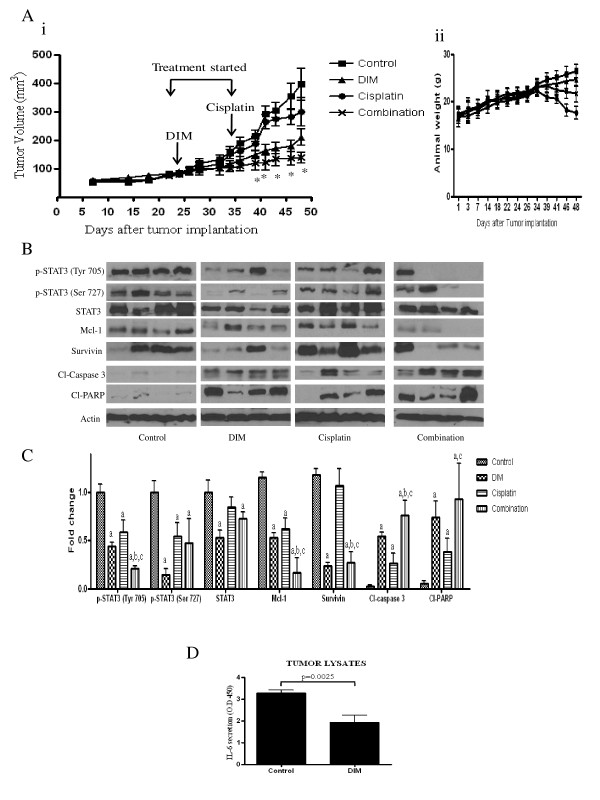
Diindolylmethane treatment induced apoptosis in all six ovarian cancer cell lines. Phosphorylation of STAT3 at Tyr-705 and Ser-727 was reduced by DIM in a concentration-dependent manner. In addition, diindolylmethane treatment inhibited nuclear translocation, DNA binding, and transcriptional activity of STAT3. Interleukin (IL)-6-induced phosphorylation of STAT3 at Tyr-705 was significantly blocked by DIM. Overexpression of STAT3 by gene transfection blocked DIM-induced apoptosis. In addition, DIM treatment reduced the levels of IL-6 in ovarian cancer cells and in the tumors. DIM treatment also inhibited cell invasion and angiogenesis by suppressing hypoxia-inducible factor 1α (HIF-1α) and vascular epithelial growth factor (VEGF). Importantly, diindolylmethane treatment potentiated the effects of cisplatin in SKOV-3 cells by targeting STAT3. Oral administration of 3 mg diindolylmethane per day and subsequent administration of cisplatin substantially inhibited in vivo tumor growth. Western blotting analysis of tumor lysates indicated increased apoptosis and reduced STAT3 activation.
These findings provide a rationale for further clinical investigation of DIM alone or in combination for chemoprevention and/or chemotherapy of ovarian cancer.
信号转导子和转录激活子 3(STAT3)在大多数卵巢肿瘤中被激活,并赋予卵巢癌患者对顺铂治疗的耐药性。我们之前曾报道过二吲哚甲烷(DIM)可抑制卵巢癌细胞的生长。然而,迄今为止,DIM 诱导生长抑制作用的确切机制尚不清楚。在本报告中,研究了 DIM 的作用方式。
使用六种人卵巢癌细胞系和卵巢肿瘤异种移植动物模型来研究 DIM 单独或与顺铂联合使用的效果。
DIM 处理诱导了所有六种卵巢癌细胞系的细胞凋亡。DIM 以浓度依赖性方式降低 STAT3 的 Tyr-705 和 Ser-727 磷酸化。此外,DIM 处理抑制了 STAT3 的核转位、DNA 结合和转录活性。IL-6 诱导的 STAT3 的 Tyr-705 磷酸化被 DIM 显著阻断。通过基因转染过表达 STAT3 可阻断 DIM 诱导的细胞凋亡。此外,DIM 处理降低了卵巢癌细胞和肿瘤中的 IL-6 水平。DIM 处理还通过抑制缺氧诱导因子 1α(HIF-1α)和血管内皮生长因子(VEGF)来抑制细胞侵袭和血管生成。重要的是,DIM 处理通过靶向 STAT3 增强了 SKOV-3 细胞中顺铂的作用。每天口服 3mg DIM 并随后给予顺铂可显著抑制体内肿瘤生长。肿瘤裂解物的 Western 印迹分析表明细胞凋亡增加和 STAT3 激活减少。
这些发现为进一步临床研究 DIM 单独或联合用于卵巢癌的化学预防和/或化疗提供了依据。