Department of Physics, University of Idaho, Moscow, Idaho 83844, USA.
J Nanobiotechnology. 2012 Jan 27;10:6. doi: 10.1186/1477-3155-10-6.
The design of biomimetic materials that parallel the morphology and biology of extracellular matrixes is key to the ability to grow functional tissues in vitro and to enhance the integration of biomaterial implants into existing tissues in vivo. Special attention has been put into mimicking the nanostructures of the extracellular matrix of bone, as there is a need to find biomaterials that can enhance the bonding between orthopedic devices and this tissue.
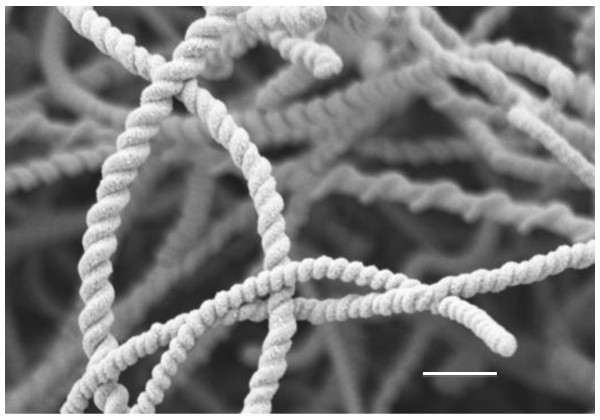
We have tested the ability of normal human osteoblasts to propagate and differentiate on silicon dioxide nanosprings, which can be easily grown on practically any surface. In addition, we tested different metals and metal alloys as coats for the nanosprings in tissue culture experiments with bone cells.
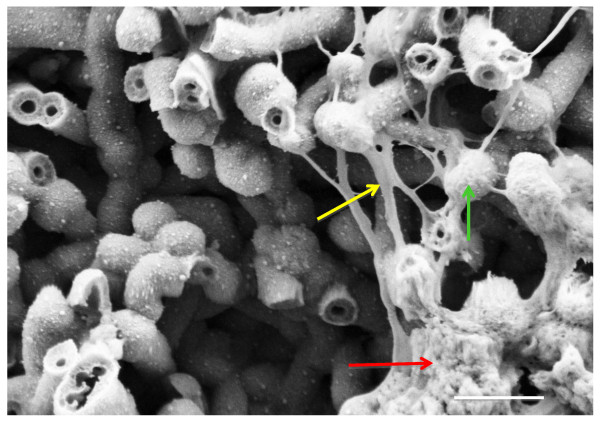
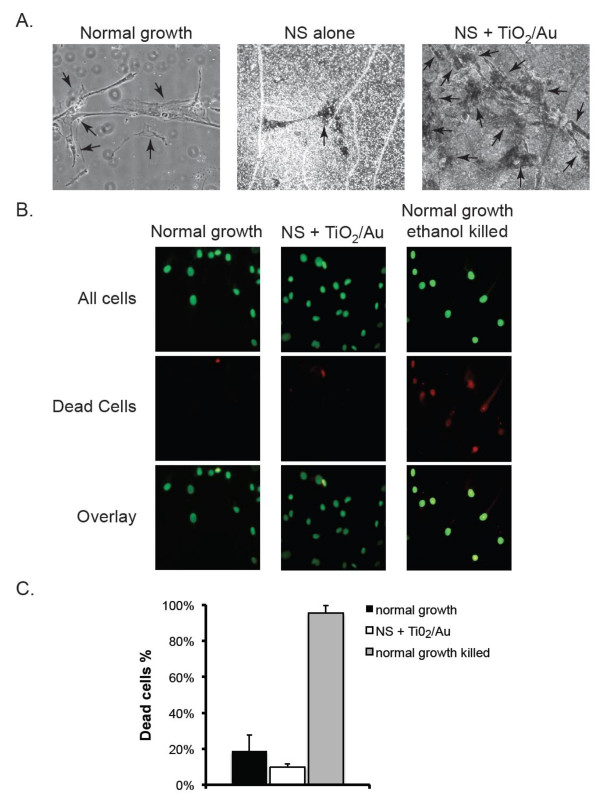
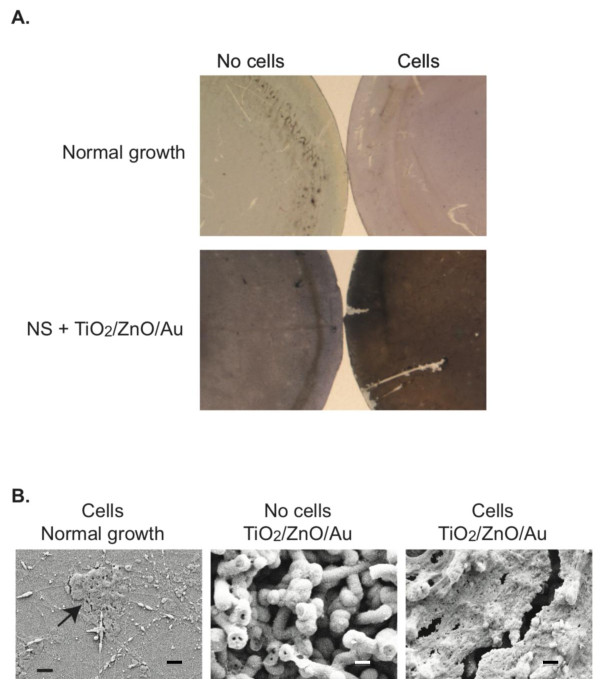
Normal human osteoblasts grown on coated nanosprings exhibited an enhanced rate of propagation, differentiation into bone forming cells and mineralization. While osteoblasts did not attach effectively to bare nanowires grown on glass, these cells propagated successfully on nanosprings coated with titanium oxide and gold. We observed a 270 fold increase in the division rate of osteoblasts when grow on titanium/gold coated nanosprings. This effect was shown to be dependent on the nanosprings, as the coating by themselves did not alter the growth rate of osteoblast. We also observed that titanium/zinc/gold coated nanosprings increased the levels of osteoblast production of alkaline phosphatase seven folds. This result indicates that osteoblasts grown on this metal alloy coated nanosprings are differentiating to mature bone making cells. Consistent with this hypothesis, we showed that osteoblasts grown on the same metal alloy coated nanosprings have an enhanced ability to deposit calcium salt.
We have established that metal/metal alloy coated silicon dioxide nanosprings can be used as a biomimetic material paralleling the morphology and biology of osteogenic extracellular matrix. The coated nanosprings enhance normal human osteoblasts cellular behaviors needed for improving osseointegration of orthopedic materials. Thus, metal-coated nanosprings represent a novel biomaterial that could be exploited for improving success rates of orthopedic implant procedures.
仿生材料的设计模仿细胞外基质的形态和生物学特性,是体外培养功能性组织和增强生物材料植入物与现有组织体内整合能力的关键。特别关注模仿骨细胞外基质的纳米结构,因为需要找到可以增强骨科器械与该组织之间结合的生物材料。
我们已经测试了正常人类成骨细胞在二氧化硅纳米弹簧上繁殖和分化的能力,这些纳米弹簧可以很容易地在几乎任何表面上生长。此外,我们在骨细胞的组织培养实验中测试了不同的金属和金属合金作为纳米弹簧的涂层。
在涂覆纳米弹簧上生长的正常人类成骨细胞表现出更快的繁殖、向成骨细胞分化和矿化的速度。虽然成骨细胞不能有效地附着在玻璃上生长的裸纳米线上,但这些细胞在涂覆有氧化钛和金的纳米弹簧上成功繁殖。我们观察到在涂覆有钛/金纳米弹簧上成骨细胞的分裂率增加了 270 倍。这种效应依赖于纳米弹簧,因为涂层本身不会改变成骨细胞的生长速度。我们还观察到钛/锌/金涂覆纳米弹簧使成骨细胞碱性磷酸酶的产生水平增加了七倍。这一结果表明,在这种金属合金涂覆纳米弹簧上生长的成骨细胞正在分化为成熟的骨形成细胞。与这一假设一致,我们表明在相同金属合金涂覆纳米弹簧上生长的成骨细胞具有增强的沉积钙盐的能力。
我们已经确定,金属/金属合金涂覆的二氧化硅纳米弹簧可用作模仿成骨细胞外基质形态和生物学特性的仿生材料。涂覆的纳米弹簧增强了改善骨科材料骨整合的正常人类成骨细胞的细胞行为。因此,金属涂覆纳米弹簧代表了一种新型生物材料,可用于提高骨科植入物手术的成功率。