Theoretical Biology and Bioinformatics, Universiteit Utrecht, Utrecht, The Netherlands.
PLoS One. 2012;7(1):e29952. doi: 10.1371/journal.pone.0029952. Epub 2012 Jan 23.
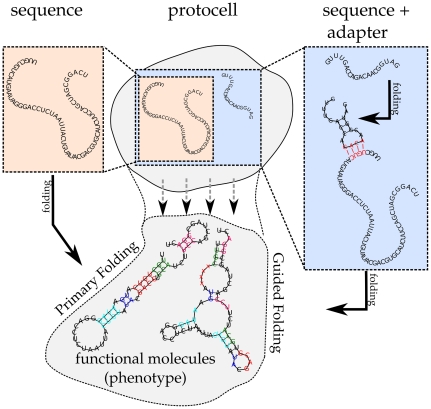
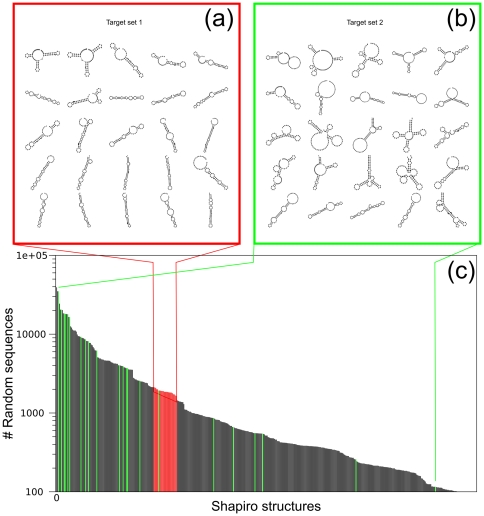
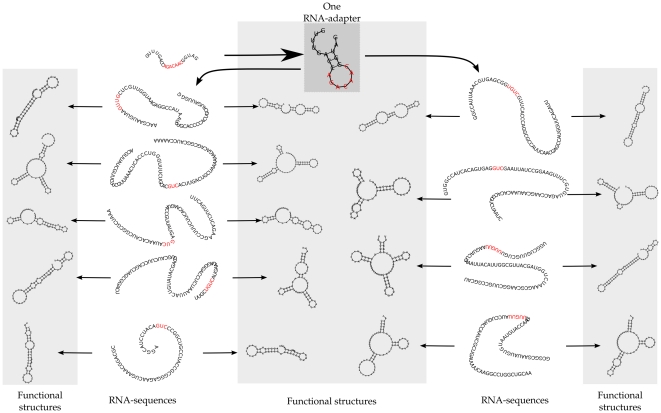
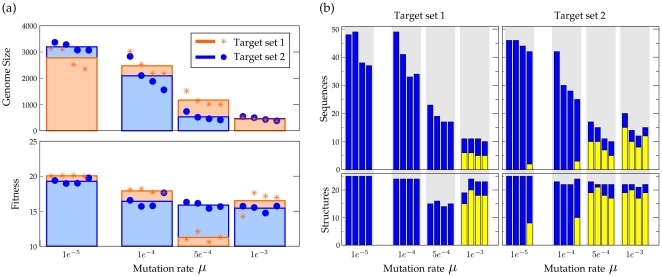
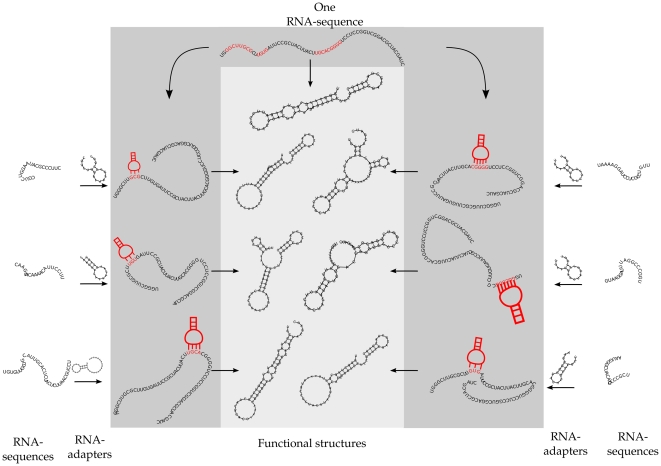
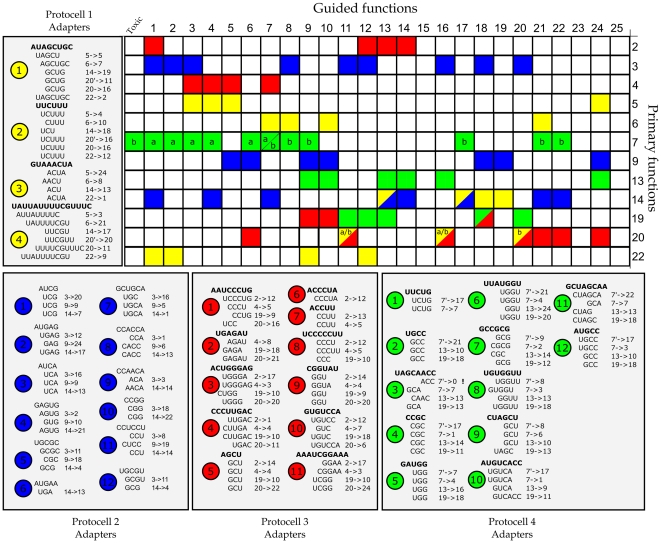
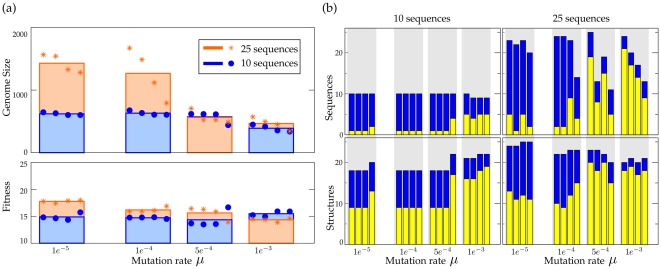
It is still not clear how prebiotic replicators evolved towards the complexity found in present day organisms. Within the most realistic scenario for prebiotic evolution, known as the RNA world hypothesis, such complexity has arisen from replicators consisting solely of RNA. Within contemporary life, remarkably many RNAs are involved in modifying other RNAs. In hindsight, such RNA-RNA modification might have helped in alleviating the limits of complexity posed by the information threshold for RNA-only replicators. Here we study the possible role of such self-modification in early evolution, by modeling the evolution of protocells as evolving replicators, which have the opportunity to incorporate these mechanisms as a molecular tool. Evolution is studied towards a set of 25 arbitrary 'functional' structures, while avoiding all other (misfolded) structures, which are considered to be toxic and increase the death-rate of a protocell. The modeled protocells contain a genotype of different RNA-sequences while their phenotype is the ensemble of secondary structures they can potentially produce from these RNA-sequences. One of the secondary structures explicitly codes for a simple sequence-modification tool. This 'RNA-adapter' can block certain positions on other RNA-sequences through antisense base-pairing. The altered sequence can produce an alternative secondary structure, which may or may not be functional. We show that the modifying potential of interacting RNA-sequences enables these protocells to evolve high fitness under high mutation rates. Moreover, our model shows that because of toxicity of misfolded molecules, redundant coding impedes the evolution of self-modification machinery, in effect restraining the evolvability of coding structures. Hence, high mutation rates can actually promote the evolution of complex coding structures by reducing redundant coding. Protocells can successfully use RNA-adapters to modify their genotype-phenotype mapping in order to enhance the coding capacity of their genome and fit more information on smaller sized genomes.
目前尚不清楚前生物复制子如何朝着当今生物中发现的复杂性进化。在最现实的前生物进化情景中,即 RNA 世界假说中,这种复杂性是由仅由 RNA 组成的复制子产生的。在当代生命中,许多 RNA 都参与了修饰其他 RNA 的过程。事后看来,这种 RNA-RNA 修饰可能有助于缓解仅由 RNA 复制子的信息阈值所带来的复杂性限制。在这里,我们通过将原始细胞建模为具有机会将这些机制作为分子工具纳入的进化复制子,来研究这种自我修饰在早期进化中的可能作用。进化是针对一组 25 个任意的“功能”结构进行研究的,同时避免了所有其他(错误折叠)结构,这些结构被认为是有毒的,并增加了原始细胞的死亡率。建模的原始细胞包含不同 RNA 序列的基因型,而它们的表型是它们可以从这些 RNA 序列中潜在产生的二级结构的集合。二级结构明确编码了一种简单的序列修饰工具。这种“RNA 适配器”可以通过反义碱基配对阻止其他 RNA 序列上的某些位置。改变的序列可以产生替代的二级结构,可能是功能性的,也可能不是功能性的。我们表明,相互作用的 RNA 序列的修饰潜力使这些原始细胞能够在高突变率下进化出高适应性。此外,我们的模型表明,由于错误折叠分子的毒性,冗余编码阻碍了自我修饰机制的进化,从而限制了编码结构的进化能力。因此,高突变率实际上可以通过减少冗余编码来促进复杂编码结构的进化。原始细胞可以成功地使用 RNA 适配器来修饰它们的基因型-表型映射,以提高其基因组的编码能力并在更小的基因组上适应更多的信息。