Life and Health Sciences Research Institute (ICVS), School of Health Sciences, University of Minho, Braga, Portugal.
PLoS One. 2012;7(1):e30517. doi: 10.1371/journal.pone.0030517. Epub 2012 Jan 23.
Leukemia inhibitory factor (LIF) and interleukin-6 (IL-6) are members of the family of the glycoprotein 130 (gp130)-type cytokines. These cytokines share gp130 as a common signal transducer, which explains why they show some functional redundancy. Recently, it was demonstrated that IL-6 promotes fetal lung branching. Additionally, LIF has been implicated in developmental processes of some branching organs. Thus, in this study LIF expression pattern and its effects on fetal rat lung morphogenesis were assessed.
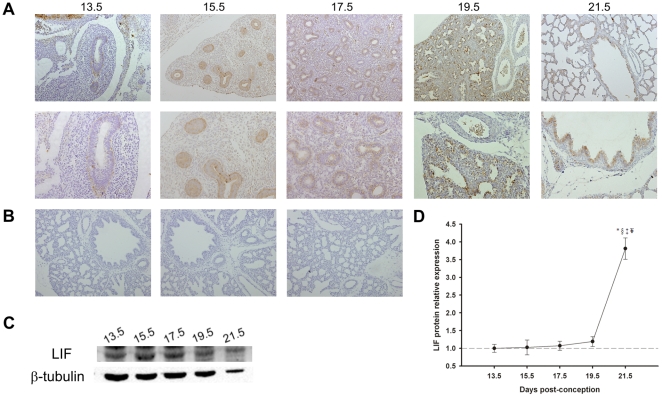
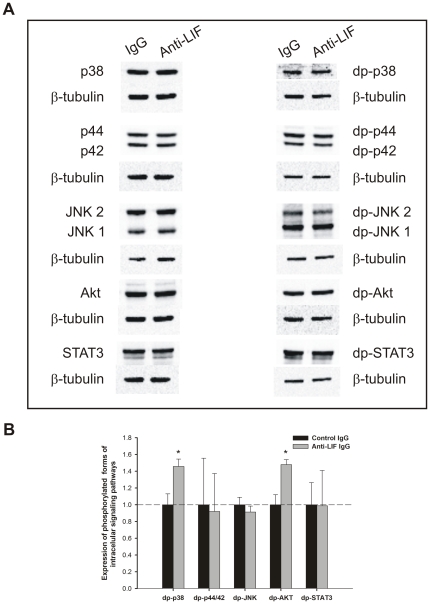
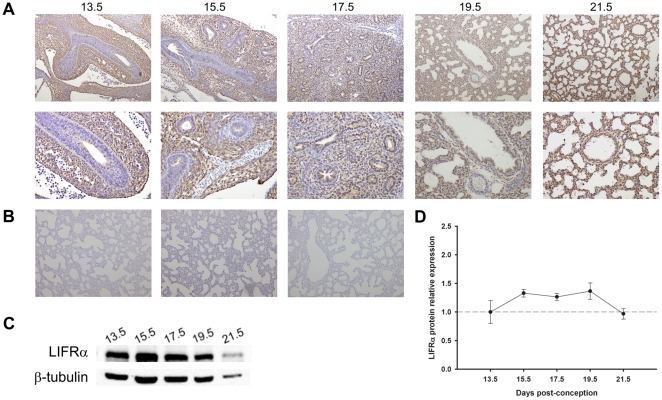
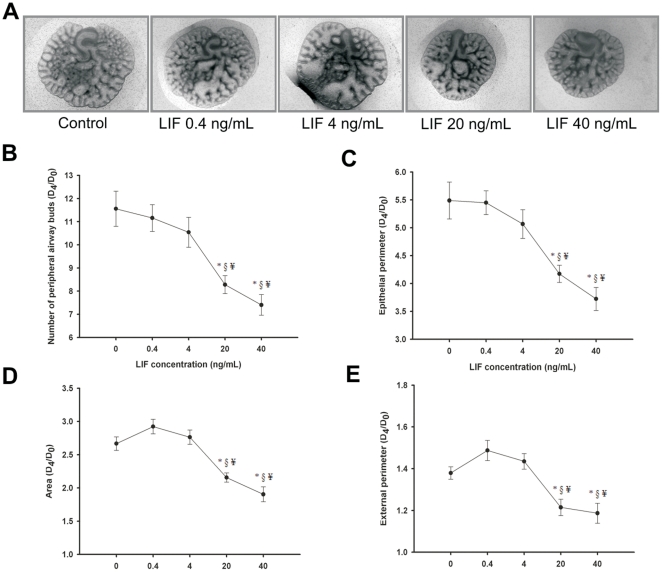
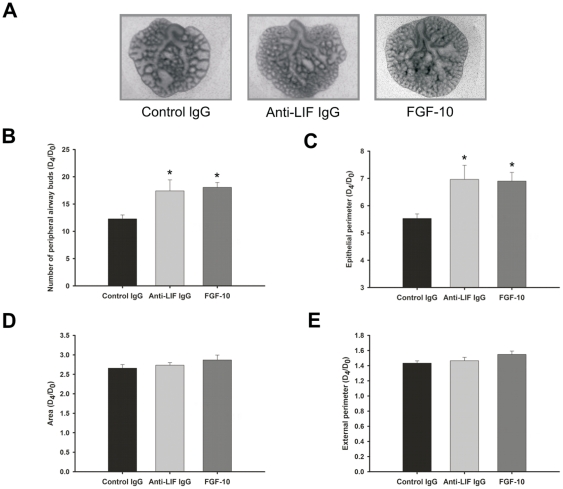
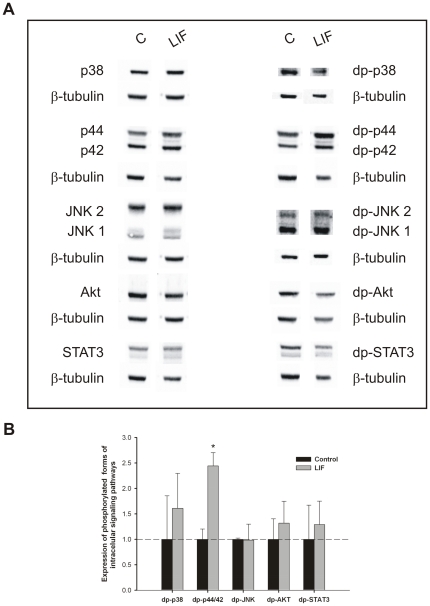
METHODOLOGY/PRINCIPAL FINDINGS: LIF and its subunit receptor LIFRα expression levels were evaluated by immunohistochemistry and western blot in fetal rat lungs of different gestational ages, ranging from 13.5 to 21.5 days post-conception. Throughout all gestational ages studied, LIF was constitutively expressed in pulmonary epithelium, whereas LIFRα was first mainly expressed in the mesenchyme, but after pseudoglandular stage it was also observed in epithelial cells. These results point to a LIF epithelium-mesenchyme cross-talk, which is known to be important for lung branching process. Regarding functional studies, fetal lung explants were cultured with increasing doses of LIF or LIF neutralizing antibodies during 4 days. MAPK, AKT, and STAT3 phosphorylation in the treated lung explants was analyzed. LIF supplementation significantly inhibited lung growth in spite of an increase in p44/42 phosphorylation. On the other hand, LIF inhibition significantly stimulated lung growth via p38 and Akt pathways.
CONCLUSIONS/SIGNIFICANCE: The present study describes that LIF and its subunit receptor LIFRα are constitutively expressed during fetal lung development and that they have an inhibitory physiological role on fetal lung branching.
白血病抑制因子 (LIF) 和白细胞介素-6 (IL-6) 是糖蛋白 130 (gp130) 型细胞因子家族的成员。这些细胞因子共享 gp130 作为共同的信号转导器,这解释了它们为什么表现出一些功能冗余。最近,研究表明 IL-6 促进胎儿肺分支。此外,LIF 已被牵连到一些分支器官的发育过程中。因此,在这项研究中,评估了 LIF 的表达模式及其对胎鼠肺形态发生的影响。
方法/主要发现:通过免疫组织化学和 Western blot 评估了不同胎龄(从妊娠后 13.5 天到 21.5 天)的胎鼠肺中 LIF 和其亚基受体 LIFRα 的表达水平。在研究的所有胎龄中,LIF 都在肺上皮细胞中持续表达,而 LIFRα 最初主要在间质中表达,但在假腺期后也在上皮细胞中观察到。这些结果表明 LIF 上皮-间质的相互作用,这对于肺分支过程很重要。关于功能研究,在 4 天的时间里,用不同剂量的 LIF 或 LIF 中和抗体培养胎肺外植体。分析处理后的肺外植体中 MAPK、AKT 和 STAT3 的磷酸化。尽管 p44/42 磷酸化增加,但 LIF 补充显著抑制了肺生长。另一方面,LIF 抑制通过 p38 和 Akt 途径显著刺激了肺生长。
结论/意义:本研究描述了 LIF 和其亚基受体 LIFRα 在胎儿肺发育过程中持续表达,并且它们对胎儿肺分支具有抑制性的生理作用。