Pulmonary, Allergy, and Critical Care Medicine Division, Department of Medicine, University of Pittsburgh, Pittsburgh, Pennsylvania 15213, USA.
Shock. 2012 Apr;37(4):373-7. doi: 10.1097/SHK.0b013e31824bcb72.
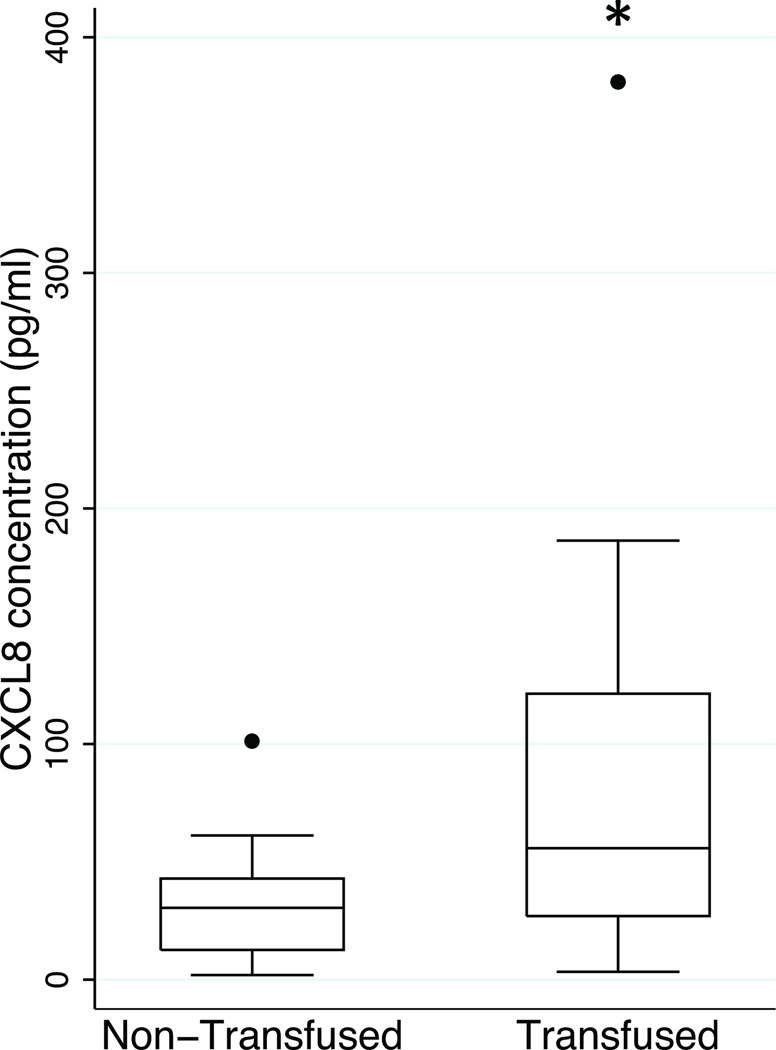
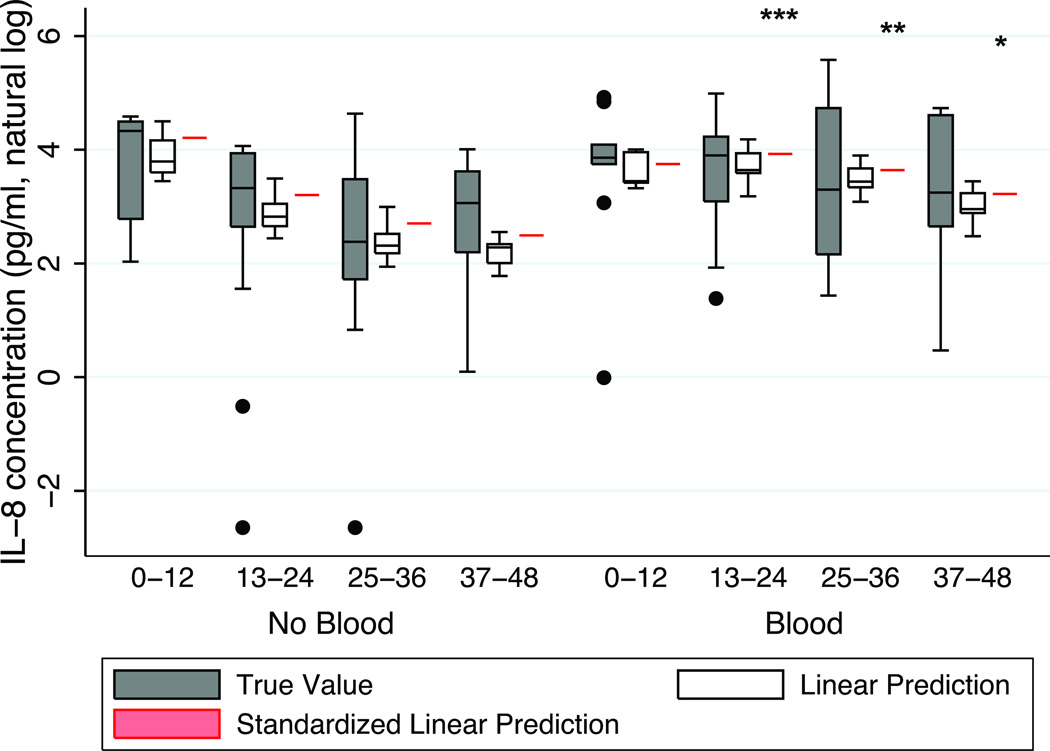
Red blood cell (RBC) transfusion is associated with alterations in systemic concentrations of IL-8/CXCL8 functional homologs in a murine model. Whether RBC transfusion alters systemic neutrophil chemokine concentrations in individuals sustaining traumatic injury is not known. We conducted a retrospective, single-center study of severely injured trauma patients presenting within 12 h of injury with a base deficit greater than 6 and hypotension in the field. Plasma concentrations of 25 chemokines, cytokines, and growth factors were obtained from both transfused (n = 22) and nontransfused (n = 33) groups in the first 48 h following admission. The transfused group (mean RBC units, 2.7 [SD, 1.7]) tended to be older (49.9 [SD, 21.1] vs. 40.4 [SD, 19.9] years, P = 0.10), with a higher percentage of females (40.9% vs. 18.2%, P = 0.06) and a higher Injury Severity Score (27.1 [SD, 12.7] vs. 21.4 [SD, 10.2], P = 0.07). In univariate and multivariate analyses, transfusion was associated with increased hospital and intensive care unit length of stay but not ventilator-free days. Plasma CXCL8 concentrations were higher in the transfused (84 [SD, 88] pg/mL) than the nontransfused group (31 [SD, 21] pg/mL, P = 0.003). Using a linear prediction model to calculate bioanalyte concentrations standardized for age, sex, Injury Severity Score, and admission SBP, we observed that CXCL8 concentrations diverged within 12 h following injury, with the transfused group showing persistently elevated CXCL8 concentrations by contrast to the decay observed in the nontransfused group. Other bioanalytes showed no differences across time. Red blood cell transfusion is associated with persistently elevated neutrophil chemokine CXCL8 concentrations following traumatic injury.
红细胞(RBC)输血与在小鼠模型中改变全身白细胞介素 8(IL-8)/CXCL8 功能同系物的浓度有关。在遭受创伤的个体中,RBC 输血是否改变全身中性粒细胞趋化因子浓度尚不清楚。我们对在受伤后 12 小时内出现基础不足大于 6 和现场低血压的严重创伤患者进行了一项回顾性单中心研究。在入院后 48 小时内,从接受输血(n=22)和未接受输血(n=33)的两组中获得了 25 种趋化因子、细胞因子和生长因子的血浆浓度。输血组(平均 RBC 单位,2.7 [SD,1.7])年龄较大(49.9 [SD,21.1] vs. 40.4 [SD,19.9] 岁,P=0.10),女性比例较高(40.9% vs. 18.2%,P=0.06),损伤严重程度评分较高(27.1 [SD,12.7] vs. 21.4 [SD,10.2],P=0.07)。在单变量和多变量分析中,输血与住院和重症监护病房住院时间延长相关,但与无呼吸机天数无关。与未输血组(31 [SD,21] pg/ml,P=0.003)相比,输血组(84 [SD,88] pg/ml)的血浆 CXCL8 浓度更高。使用线性预测模型计算标准化为年龄、性别、损伤严重程度评分和入院收缩压的生物分析物浓度,我们观察到 CXCL8 浓度在受伤后 12 小时内发生分歧,与未输血组观察到的下降相比,输血组的 CXCL8 浓度持续升高。其他生物分析物在整个时间内没有差异。红细胞输血与创伤后持续升高的中性粒细胞趋化因子 CXCL8 浓度有关。