Developmental Biology and Regenerative Medicine Program, Saban Research Institute of Children's Hospital Los Angeles, Los Angeles, California, United States of America.
PLoS One. 2012;7(1):e31032. doi: 10.1371/journal.pone.0031032. Epub 2012 Jan 27.
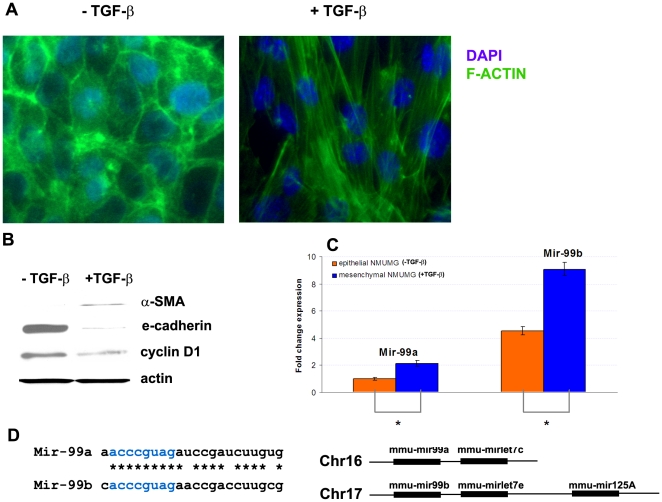
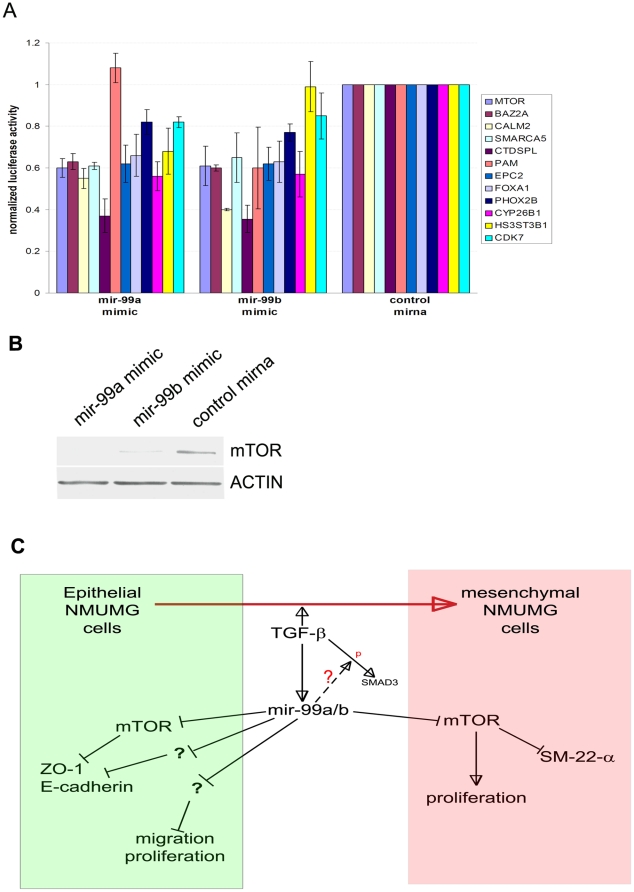
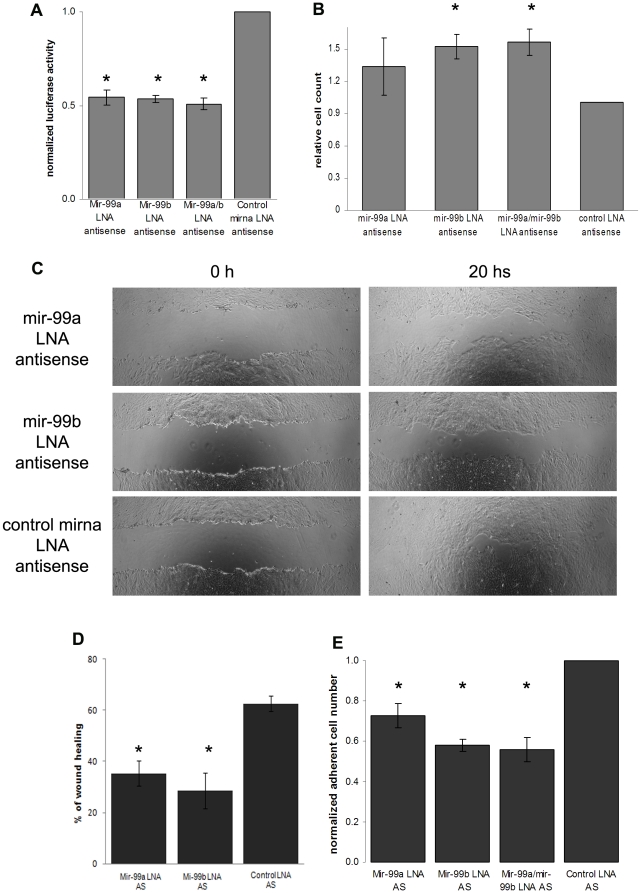
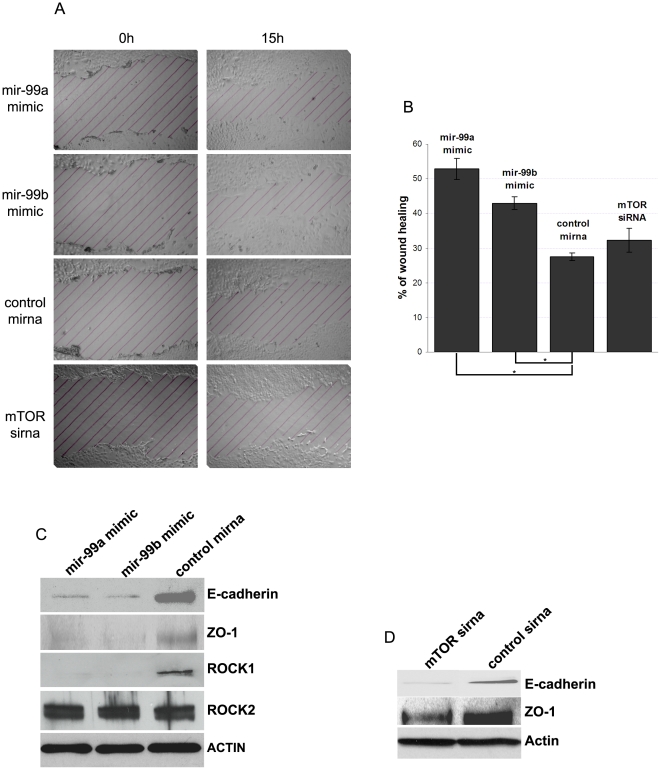
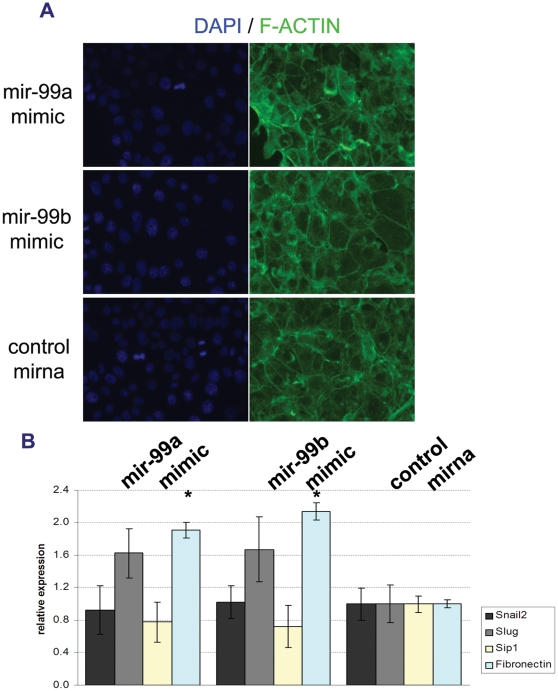
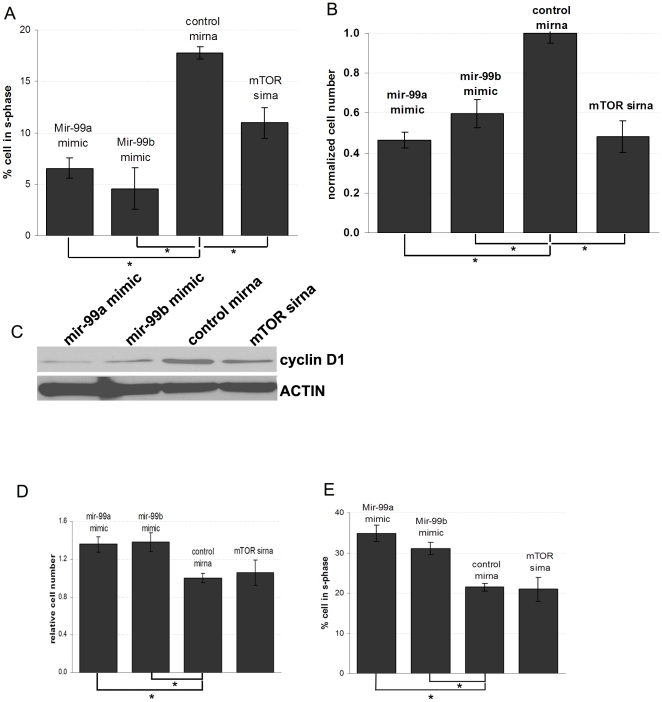
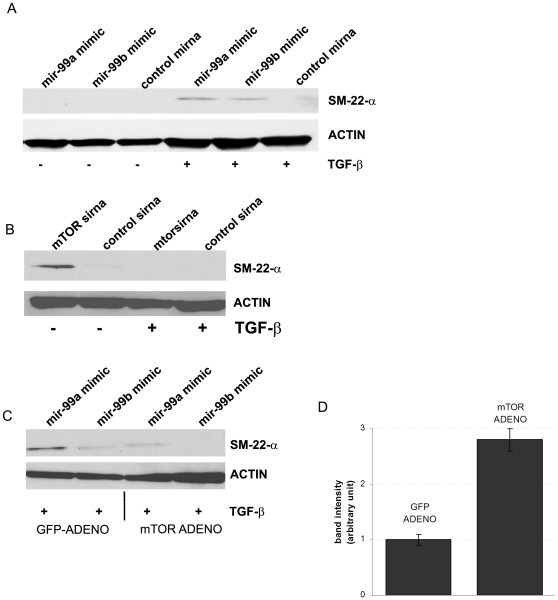
Epithelial to mesenchymal transition (EMT) is a key process during embryonic development and disease development and progression. During EMT, epithelial cells lose epithelial features and express mesenchymal cell markers, which correlate with increased cell migration and invasion. Transforming growth factor-β (TGF-β) is a multifunctional cytokine that induces EMT in multiple cell types. The TGF-β pathway is regulated by microRNAs (miRNAs), which are small non-coding RNAs regulating the translation of specific messenger RNAs.Herein, we identified mir-99a and mir-99b as two novel TGF-β target miRNA genes, the expression of which increased during TGF-β induced EMT of NMUMG cells. Mir-99a and mir-99b inhibition decreased TGF-β activity by inhibiting SMAD3 phosphorylation, resulting in decreased migration and increased proliferation in response to TGF-β. However, mir-99a and mir-99b inhibition was insufficient to block TGF-β induced EMT of NMUMG cells.Mir-99a and mir-99b over-expression in epithelial NMUMG cells resulted in increased proliferation, migration and fibronectin expression, while E-cadherin and ZO-1 expression were negatively regulated.In conclusion, we identified mir-99a and mir-99b as two novel modulators of TGF-β pathway that alter SMAD3 phosphorylation, in turn altering cell migration and adhesion of mesenchymal NMUMG cells. The effect of mir-99a and mir-99b over-expression on NMUMUG proliferation is dependent upon the epithelial or mesenchymal status of the cells. Our study suggests that mir-99a and mir-99b may function as modulators within a complex network of factors regulating TGF-β induced breast epithelial to mesenchymal transition, as well as proliferation and migration of breast cancer cells, providing a possible target for future translationally oriented studies in this area.
上皮-间充质转化(EMT)是胚胎发育和疾病发展及进展过程中的一个关键过程。在 EMT 过程中,上皮细胞失去上皮特征并表达间充质细胞标志物,这与细胞迁移和侵袭的增加相关。转化生长因子-β(TGF-β)是一种多功能细胞因子,可诱导多种细胞类型发生 EMT。TGF-β 途径受 microRNAs(miRNAs)的调控,miRNAs 是调节特定信使 RNA 翻译的小非编码 RNA。在此,我们鉴定出 mir-99a 和 mir-99b 是两种新型 TGF-β 靶 miRNA 基因,其表达在 NMUMG 细胞的 TGF-β 诱导 EMT 过程中增加。mir-99a 和 mir-99b 的抑制通过抑制 SMAD3 磷酸化降低了 TGF-β 的活性,从而导致 TGF-β 刺激下迁移减少和增殖增加。然而,mir-99a 和 mir-99b 的抑制不足以阻断 TGF-β 诱导的 NMUMG 细胞 EMT。上皮 NMUMG 细胞中 mir-99a 和 mir-99b 的过表达导致增殖、迁移和纤维连接蛋白表达增加,而 E-钙粘蛋白和 ZO-1 表达受到负调控。总之,我们鉴定出 mir-99a 和 mir-99b 是 TGF-β 途径的两个新型调节剂,可改变 SMAD3 磷酸化,进而改变 NMUMG 细胞的迁移和黏附。mir-99a 和 mir-99b 过表达对 NMUMUG 增殖的影响取决于细胞的上皮或间充质状态。我们的研究表明,mir-99a 和 mir-99b 可能作为调节 TGF-β 诱导的乳腺上皮-间充质转化以及乳腺癌细胞增殖和迁移的复杂网络中的调节剂,为该领域未来具有转化潜力的研究提供了可能的靶点。