Ghanaati Hossein, Firouznia Kavous, Vaziri Bozorg Seyed Mehran, Ghasemi Esfe Ahmad Reza, Motevallei Marzieh, Abedini Mohammad Reza, Sadeghi Saed Rahmat
Advanced Diagnostic and Interventional Radiology Research Center (ADIR), Imam Khomeini Hospital,Tehran University of Medical Sciences, Tehran, Iran.
Hepat Mon. 2010 Winter;10(1):57-61. Epub 2010 Mar 1.
Palliation therapy is the only available therapeutic method for most patients with tumor-induced obstructive jaundice. Metallic stents are now performed percutaneously as an alternative route to the endoscopic approach. It is widely accepted because of its safety, good patency rate, and minimal invasiveness. This study was designed to evaluate the long-term results of metallic self-expandable stent insertion in patients with malignant stenosis of the biliary tree.
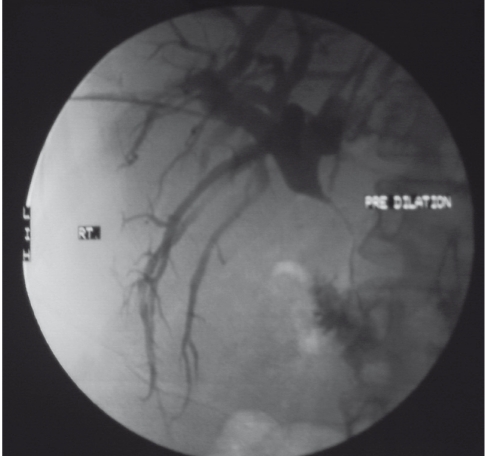
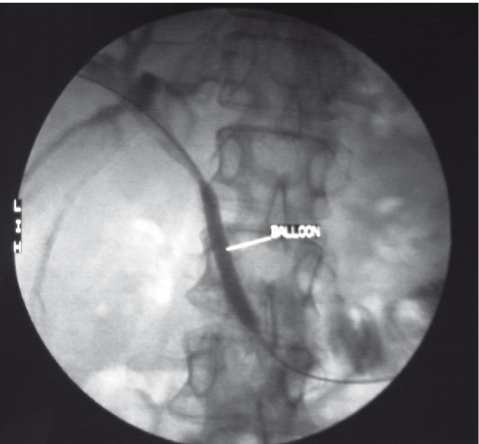
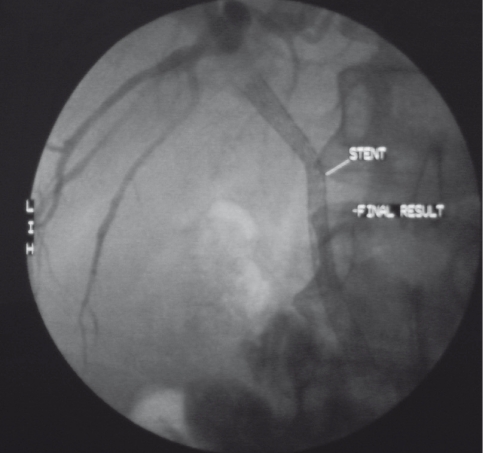
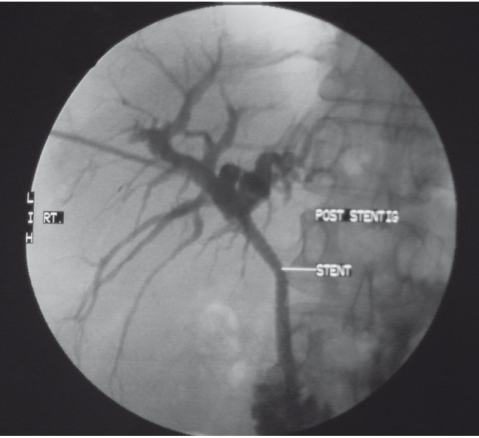
It is a longitudinal study of patients with percutaneously biliary stenting from September 2005 to March 2009. The patients had unresectable malignant biliary obstruction with unsuccessful endoscopic stenting and access. Percutaneous transhepatic cholangiogram performed after adequate local anesthesia, under sonographic or fluoroscopic guidance. Stenting or balloon dilation was performed through the hydrophilic guide wire. Among 50 patients, 45 stents were placed in biliary tree stenosis sites. Patients' follow-up was during the first, second, third, and then the sixth month after insertion of biliary stents. Stent patency was considered successful in our patients, when there were no lab results or sonographic appearance of biliary tree obstruction.
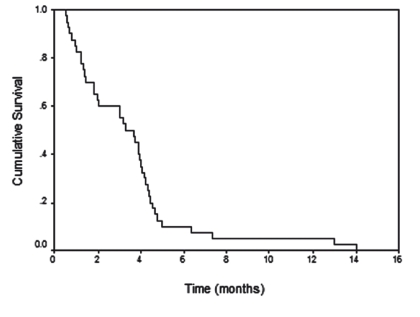
10(20%) patients' stent placement treatment failed because of unsuccessful technical procedure. The stenosis of biliary tract was complete and passage of guide wire was not possible through the tumor growth. 6 (15 %) patients with successful stent placements died within one month (mean, 22 days). Total serum bilirubin resolved to below 1.5 mg/dl within 30 days for 36 (90%) patients with successful stent placements. Early complications not leading to death occurred in 28% of cases. The mean survival time for all patients who underwent stent placement was 140 days (16-420days). The mean patency rate for all stents was 147 days.
Percutaneous biliary stenting is a safe procedure with few technical complications and a high success rate of palliation for patients with malignant biliary jaundice. Early complications are mostly managed conservatively and death is mainly due to systemic effects of the malignant disease.
姑息治疗是大多数肿瘤性梗阻性黄疸患者唯一可行的治疗方法。金属支架目前可经皮置入,作为内镜治疗的替代途径。因其安全性、良好的通畅率和微创性而被广泛接受。本研究旨在评估金属自膨式支架置入治疗胆管恶性狭窄患者的长期疗效。
这是一项对2005年9月至2009年3月经皮胆道支架置入患者的纵向研究。患者患有无法切除的恶性胆道梗阻,内镜支架置入及通路建立失败。在充分局部麻醉下,于超声或透视引导下行经皮肝穿刺胆管造影。通过亲水导丝进行支架置入或球囊扩张。50例患者中,45枚支架置入胆管狭窄部位。患者在胆管支架置入后的第1、2、3个月及随后的第6个月进行随访。当实验室检查结果或超声检查未显示胆管梗阻时,我们认为患者的支架通畅为成功。
10例(20%)患者因技术操作失败导致支架置入治疗失败。胆道狭窄完全,导丝无法穿过肿瘤生长部位。6例(15%)支架置入成功的患者在1个月内死亡(平均22天)。36例(90%)支架置入成功的患者在30天内总血清胆红素降至1.5mg/dl以下。28%的病例发生未导致死亡的早期并发症。所有接受支架置入的患者平均生存时间为140天(16 - 420天)。所有支架的平均通畅率为147天。
经皮胆道支架置入术是一种安全的手术,技术并发症少,对恶性胆管黄疸患者的姑息治疗成功率高。早期并发症大多通过保守治疗处理,死亡主要归因于恶性疾病的全身影响。