Laboratory of Neuroendocrinology-Molecular Cell Physiology, Institute of Pathophysiology, Faculty of Medicine, University of Ljubljana, Slovenia.
ASN Neuro. 2012 Mar 22;4(2):e00080. doi: 10.1042/AN20110061.
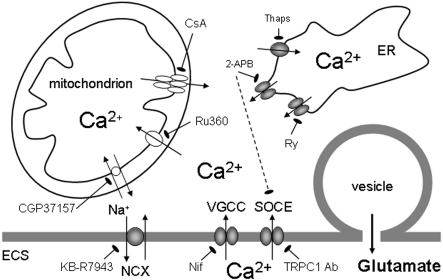
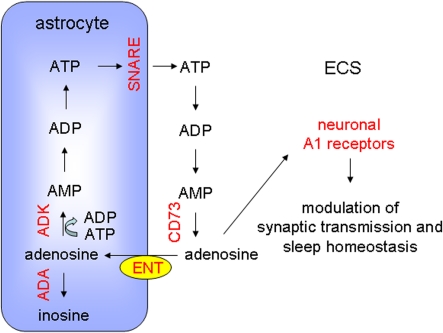
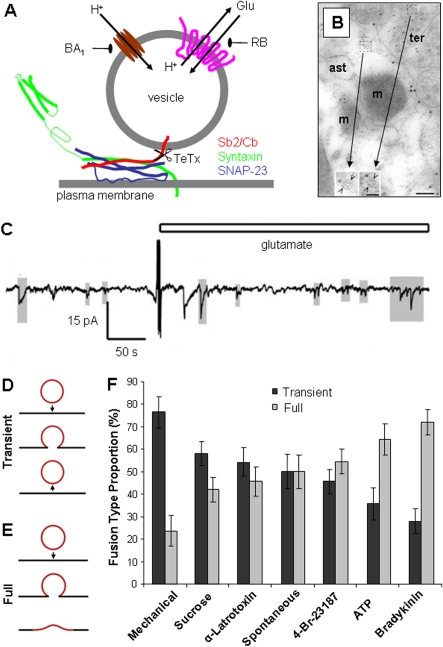
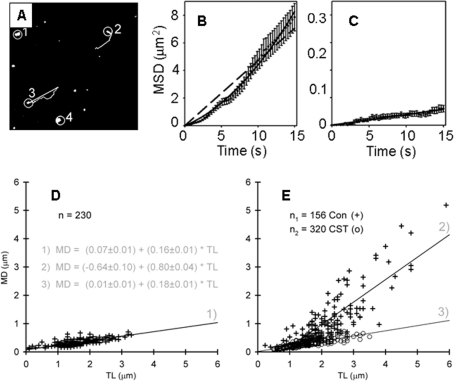
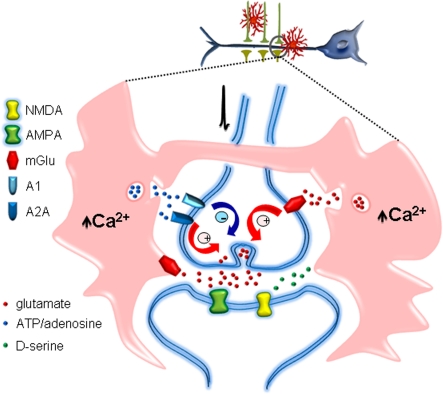
Astroglial cells, due to their passive electrical properties, were long considered subservient to neurons and to merely provide the framework and metabolic support of the brain. Although astrocytes do play such structural and housekeeping roles in the brain, these glial cells also contribute to the brain's computational power and behavioural output. These more active functions are endowed by the Ca(2+)-based excitability displayed by astrocytes. An increase in cytosolic Ca(2+) levels in astrocytes can lead to the release of signalling molecules, a process termed gliotransmission, via the process of regulated exocytosis. Dynamic components of astrocytic exocytosis include the vesicular-plasma membrane secretory machinery, as well as the vesicular traffic, which is governed not only by general cytoskeletal elements but also by astrocyte-specific IFs (intermediate filaments). Gliotransmitters released into the ECS (extracellular space) can exert their actions on neighbouring neurons, to modulate synaptic transmission and plasticity, and to affect behaviour by modulating the sleep homoeostat. Besides these novel physiological roles, astrocytic Ca(2+) dynamics, Ca(2+)-dependent gliotransmission and astrocyte-neuron signalling have been also implicated in brain disorders, such as epilepsy. The aim of this review is to highlight the newer findings concerning Ca(2+) signalling in astrocytes and exocytotic gliotransmission. For this we report on Ca(2+) sources and sinks that are necessary and sufficient for regulating the exocytotic release of gliotransmitters and discuss secretory machinery, secretory vesicles and vesicle mobility regulation. Finally, we consider the exocytotic gliotransmission in the modulation of synaptic transmission and plasticity, as well as the astrocytic contribution to sleep behaviour and epilepsy.
星形胶质细胞由于其被动的电特性,长期以来被认为是从属于神经元的,仅仅提供大脑的框架和代谢支持。尽管星形胶质细胞在大脑中确实扮演着这样的结构和管家角色,但这些神经胶质细胞也有助于大脑的计算能力和行为输出。星形胶质细胞表现出的基于 Ca(2+)的兴奋性赋予了它们这些更活跃的功能。星形胶质细胞胞质 Ca(2+)水平的升高会导致信号分子的释放,这一过程称为神经胶质传递,通过调节性胞吐作用来实现。星形胶质细胞胞吐作用的动态成分包括囊泡-质膜分泌机制,以及囊泡运输,这不仅由一般的细胞骨架元素控制,还由星形胶质细胞特异性 IFs(中间丝)控制。释放到细胞外间隙 (ECS) 中的神经胶质递质可以作用于邻近的神经元,调节突触传递和可塑性,并通过调节睡眠稳态来影响行为。除了这些新的生理作用外,星形胶质细胞 Ca(2+)动力学、Ca(2+)-依赖性神经胶质传递和星形胶质细胞-神经元信号转导也与癫痫等脑部疾病有关。本文的目的是强调星形胶质细胞 Ca(2+)信号转导和胞吐性神经胶质传递的新发现。为此,我们报告了调节神经胶质递质胞吐释放所必需和充分的 Ca(2+)源和汇,并讨论了分泌机制、分泌囊泡和囊泡迁移的调节。最后,我们考虑了胞吐性神经胶质传递在突触传递和可塑性调节中的作用,以及星形胶质细胞对睡眠行为和癫痫的贡献。