Molecular Metabolism Group, University of Edinburgh/British Heart Foundation Centre for Cardiovascular Science, Queen's Medical Research Institute, University of Edinburgh, Edinburgh, UK.
Diabetes. 2012 Mar;61(3):642-52. doi: 10.2337/db11-1054. Epub 2012 Feb 7.
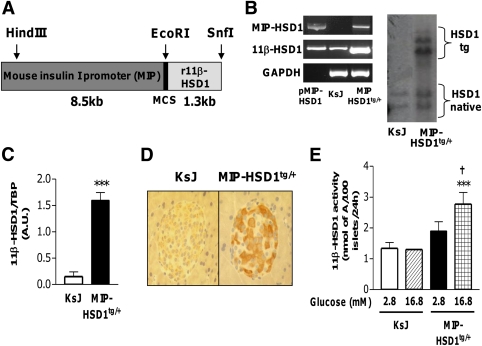
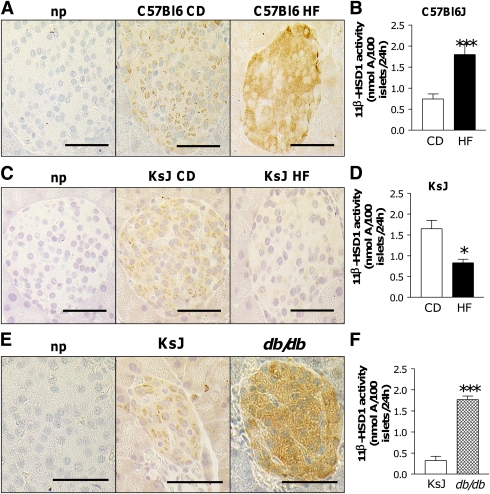
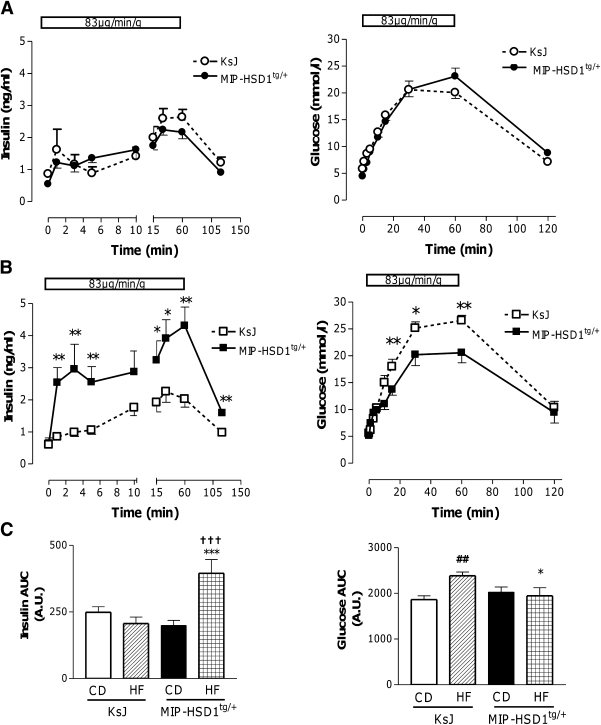
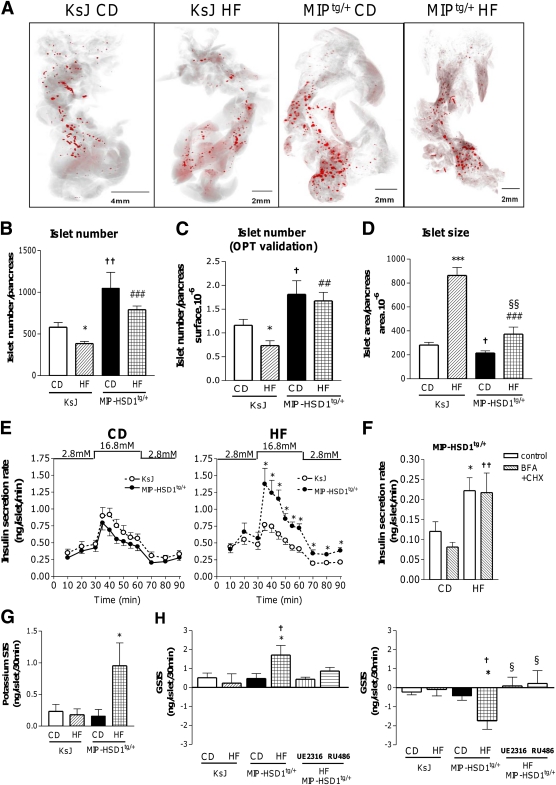
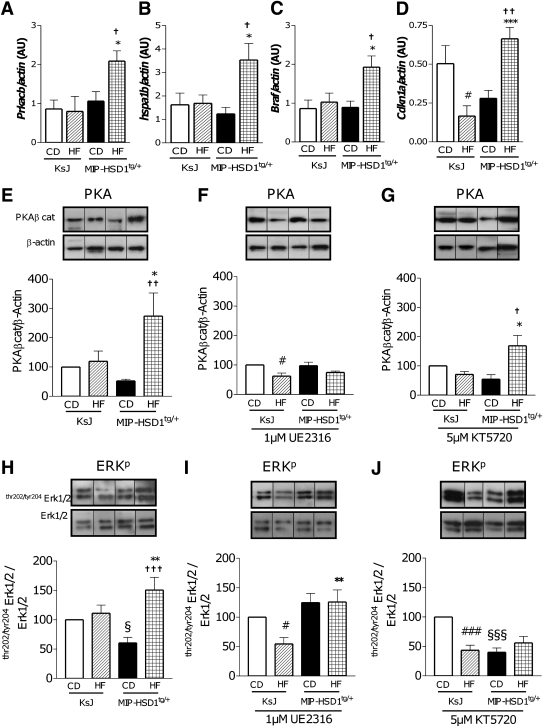
Type 2 diabetes ultimately results from pancreatic β-cell failure. Abnormally elevated intracellular regeneration of glucocorticoids by the enzyme 11β-hydroxysteroid dehydrogenase type 1 (11β-HSD1) in fat or liver may underlie pathophysiological aspects of the metabolic syndrome. Elevated 11β-HSD1 is also found in pancreatic islets of obese/diabetic rodents and is hypothesized to suppress insulin secretion and promote diabetes. To define the direct impact of elevated pancreatic β-cell 11β-HSD1 on insulin secretion, we generated β-cell-specific, 11β-HSD1-overexpressing (MIP-HSD1) mice on a strain background prone to β-cell failure. Unexpectedly, MIP-HSD1(tg/+) mice exhibited a reversal of high fat-induced β-cell failure through augmentation of the number and intrinsic function of small islets in association with induction of heat shock, protein kinase A, and extracellular signal-related kinase and p21 signaling pathways. 11β-HSD1(-/-) mice showed mild β-cell impairment that was offset by improved glucose tolerance. The benefit of higher β-cell 11β-HSD1 exhibited a threshold because homozygous MIP-HSD1(tg/tg) mice and diabetic Lep(db/db) mice with markedly elevated β-cell 11β-HSD1 levels had impaired basal β-cell function. Optimal elevation of β-cell 11β-HSD1 represents a novel biological mechanism supporting compensatory insulin hypersecretion rather than exacerbating metabolic disease. These findings have immediate significance for current therapeutic strategies for type 2 diabetes.
2 型糖尿病最终源于胰岛β细胞衰竭。脂肪或肝脏中酶 11β-羟类固醇脱氢酶 1(11β-HSD1)异常升高导致的细胞内糖皮质激素再生,可能是代谢综合征病理生理方面的基础。肥胖/糖尿病啮齿动物的胰岛中也发现了升高的 11β-HSD1,并且据推测它会抑制胰岛素分泌并促进糖尿病的发生。为了明确升高的胰岛β细胞 11β-HSD1 对胰岛素分泌的直接影响,我们在易于发生β细胞衰竭的品系背景下生成了胰岛β细胞特异性、11β-HSD1 过表达(MIP-HSD1)的小鼠。出人意料的是,MIP-HSD1(tg/+) 小鼠通过增加小胰岛的数量和固有功能,逆转了高脂肪诱导的β细胞衰竭,同时还诱导了热休克、蛋白激酶 A 和细胞外信号相关激酶以及 p21 信号通路。11β-HSD1(-/-) 小鼠表现出轻微的β细胞损伤,但葡萄糖耐量得到改善而得到补偿。更高的β细胞 11β-HSD1 表现出一种阈值效益,因为纯合子 MIP-HSD1(tg/tg) 小鼠和β细胞 11β-HSD1 水平显著升高的糖尿病 Lep(db/db) 小鼠的基础β细胞功能受损。β细胞 11β-HSD1 的最佳升高代表了一种新的生物学机制,支持代偿性胰岛素分泌过多,而不是加重代谢疾病。这些发现对当前 2 型糖尿病的治疗策略具有直接意义。