Department of Microbiology and Immunology, University of Michigan Medical School, Ann Arbor, USA.
mBio. 2012 Feb 7;3(1). doi: 10.1128/mBio.00303-11. Print 2012.
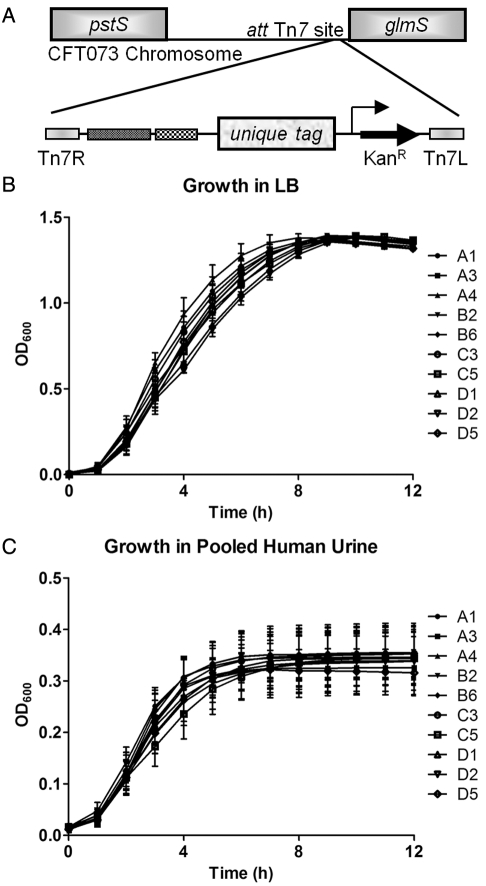
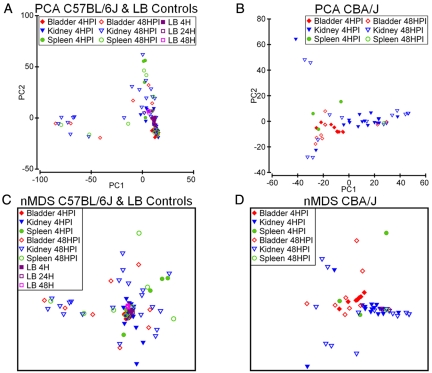
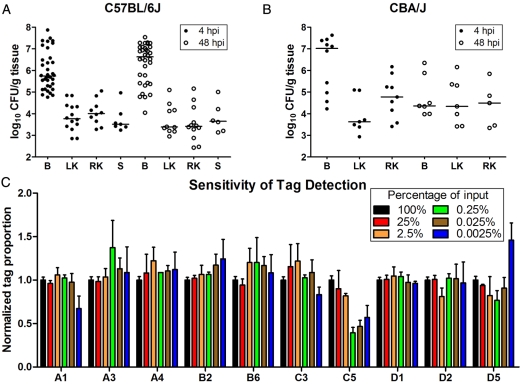
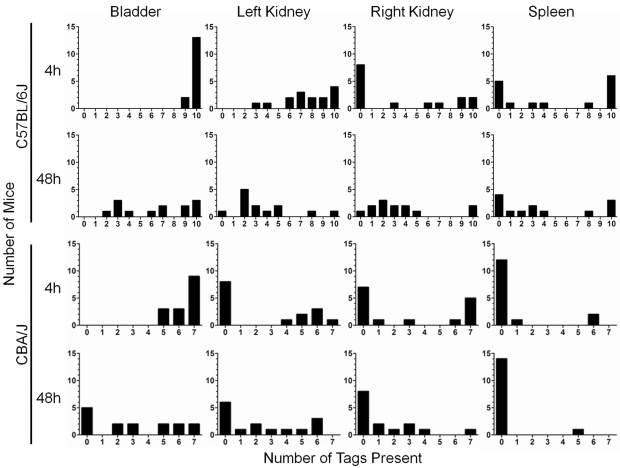
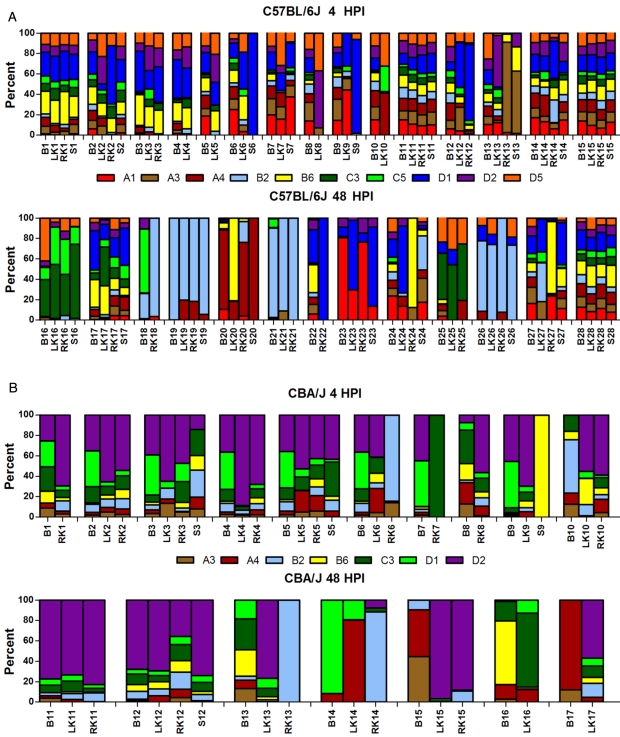
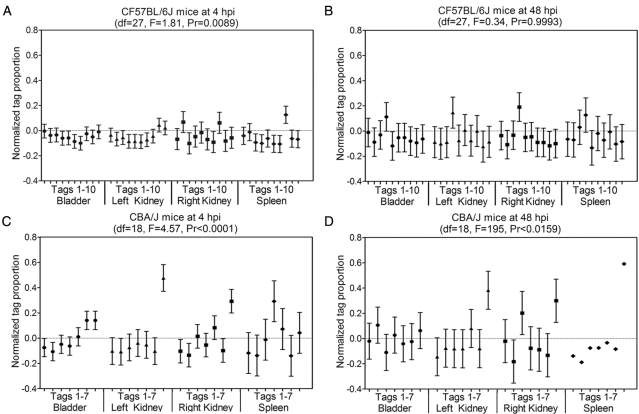
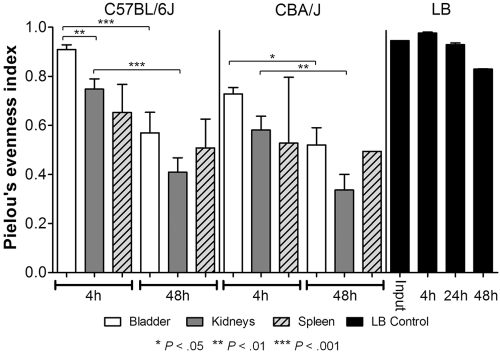
The urinary tract is one of the most frequent sites of bacterial infection in humans. Uropathogenic Escherichia coli (UPEC) strains are the leading cause of urinary tract infections (UTIs) and are responsible for greater than 80% of uncomplicated cases in adults. Infection of the urinary tract occurs in an ascending manner, with colonization of the bladder leading to possible kidney infection and bacteremia. The goal of this study was to examine the population dynamics of UPEC in vivo using a murine model of ascending UTI. To track individual UPEC lineages within a host, we constructed 10 isogenic clones of UPEC strain CFT073 by inserting unique signature tag sequences between the pstS and glmS genes at the attTn7 chromosomal site. Mice were transurethrally inoculated with a mixture containing equal numbers of unique clones. After 4 and 48 h, the tags present in the bladders, kidneys, and spleens of infected mice were enumerated using tag-specific primers and quantitative real-time PCR. The results indicated that kidney infection and bacteremia associated with UTI are most likely the result of multiple rounds of ascension and dissemination from motile UPEC subpopulations, with a distinct bottleneck existing between the kidney and bloodstream. The abundance of tagged lineages became more variable as infection progressed, especially after bacterial ascension to the upper urinary tract. Analysis of the population kinetics of UPEC during UTI revealed metapopulation dynamics, with lineages that constantly increased and decreased in abundance as they migrated from one organ to another.
Urinary tract infections are some of the most common infections affecting humans, and Escherichia coli is the primary cause in most uncomplicated cases. These infections occur in an ascending manner, with bacteria traveling from the bladder to the kidneys and potentially the bloodstream. Little is known about the spatiotemporal population dynamics of uropathogenic E. coli within a host. Here we describe a novel approach for tracking lineages of isogenic tagged E. coli strains within a murine host by the use of quantitative real-time PCR. Understanding the in vivo population dynamics and the factors that shape the bacterial population may prove to be of significant value in the development of novel vaccines and drug therapies.
尿路感染是人类最常见的细菌感染部位之一。尿路致病性大肠杆菌(UPEC)菌株是尿路感染(UTI)的主要原因,占成人单纯性病例的 80%以上。尿路感染呈上行性感染,膀胱定植可能导致肾脏感染和菌血症。本研究的目的是使用小鼠上行性尿路感染模型研究 UPEC 的群体动力学。为了在宿主内追踪 UPEC 的个体谱系,我们通过在 attTn7 染色体位点的 pstS 和 glmS 基因之间插入独特的标记标签序列,构建了 UPEC 菌株 CFT073 的 10 个同工克隆。通过经尿道接种含有相等数量的独特克隆的混合物来感染小鼠。4 和 48 小时后,使用标记特异性引物和定量实时 PCR 对感染小鼠的膀胱、肾脏和脾脏中的标记物进行计数。结果表明,尿路感染相关的肾脏感染和菌血症很可能是由运动性 UPEC 亚群多次上升和传播引起的,在肾脏和血液之间存在明显的瓶颈。随着感染的进展,标记谱系的丰度变得更加多变,尤其是在细菌上升到上尿路之后。在 UTI 期间对 UPEC 的种群动力学分析揭示了复合种群动力学,随着谱系从一个器官迁移到另一个器官,其丰度不断增加和减少。
尿路感染是影响人类的最常见感染之一,大肠杆菌是大多数简单病例的主要原因。这些感染呈上行性,细菌从膀胱向上传播到肾脏,并可能传播到血液中。宿主内尿路致病性大肠杆菌的时空群体动态知之甚少。在这里,我们描述了一种通过使用定量实时 PCR 在小鼠宿主内跟踪同源标记大肠杆菌菌株谱系的新方法。了解体内种群动力学以及塑造细菌种群的因素可能对新型疫苗和药物治疗的开发具有重要意义。