• 文献检索
  • 文档翻译
  • 深度研究
  • 学术资讯
  • Suppr Zotero 插件Zotero 插件
  • 邀请有礼
  • 套餐&价格
  • 历史记录
应用&插件
Suppr Zotero 插件Zotero 插件浏览器插件Mac 客户端Windows 客户端微信小程序
定价
高级版会员购买积分包购买API积分包
服务
文献检索文档翻译深度研究API 文档MCP 服务
关于我们
关于 Suppr公司介绍联系我们用户协议隐私条款
关注我们

Suppr 超能文献

核心技术专利:CN118964589B侵权必究
粤ICP备2023148730 号-1Suppr @ 2026

文献检索

告别复杂PubMed语法,用中文像聊天一样搜索,搜遍4000万医学文献。AI智能推荐,让科研检索更轻松。

立即免费搜索

文件翻译

保留排版,准确专业,支持PDF/Word/PPT等文件格式,支持 12+语言互译。

免费翻译文档

深度研究

AI帮你快速写综述,25分钟生成高质量综述,智能提取关键信息,辅助科研写作。

立即免费体验

采用 ZnGa2O4/ZnO 核壳纳米线的 NO2 气体传感器的灵敏度评估——一种新方法。

The assessment for sensitivity of a NO2 gas sensor with ZnGa2O4/ZnO core-shell nanowires--a novel approach.

机构信息

Micro Systems Technology Center, ITRI South, Industrial Technology Research Institute, Tainan 709, Taiwan.

出版信息

Sensors (Basel). 2010;10(4):3057-72. doi: 10.3390/s100403057. Epub 2010 Mar 30.

DOI:10.3390/s100403057
PMID:22319286
原文链接:https://pmc.ncbi.nlm.nih.gov/articles/PMC3274213/
Abstract

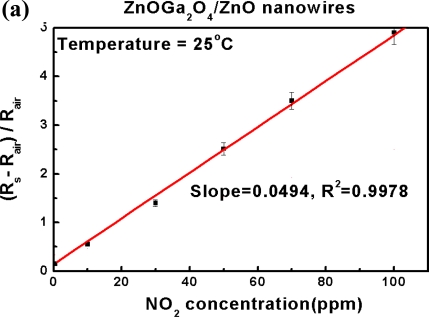
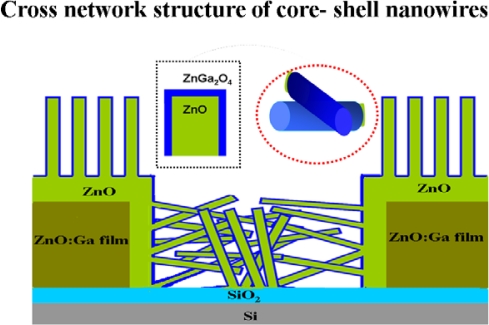
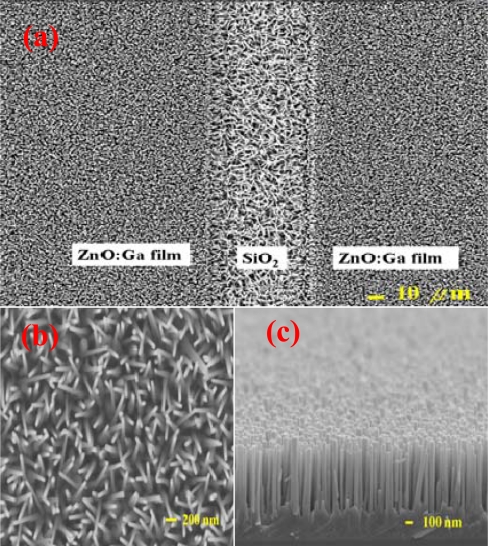
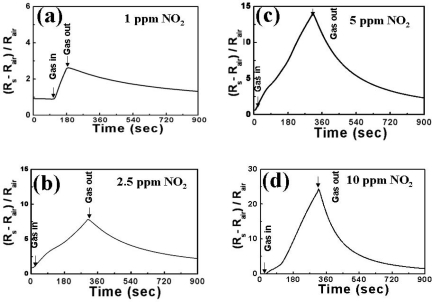
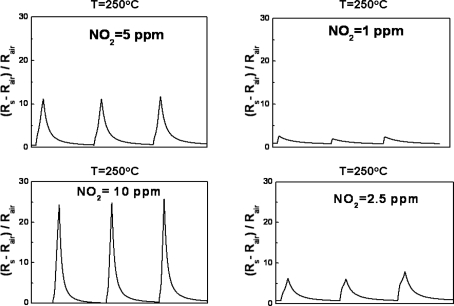
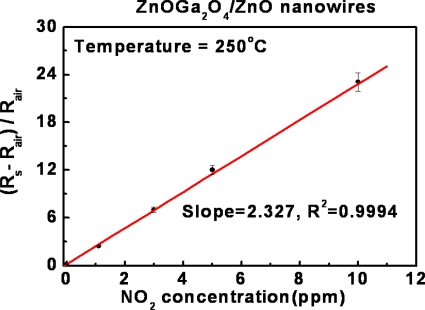
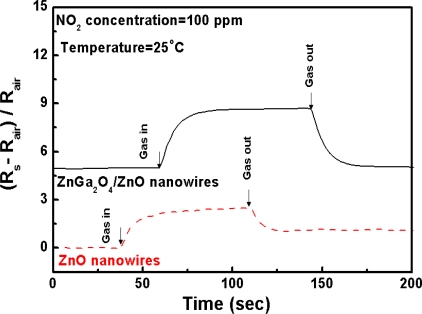
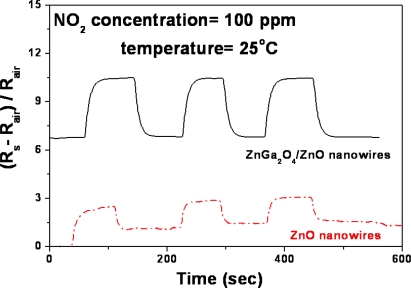
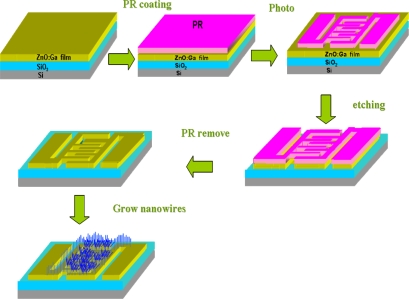
The application of novel core-shell nanowires composed of ZnGa2O4/ZnO to improve the sensitivity of NO2 gas sensors is demonstrated in this study. The growth of ZnGa2O4/ZnO core-shell nanowires is performed by reactive evaporation on patterned ZnO:Ga/SiO2/Si templates at 600 °C. This is to form the homogeneous structure of the sensors investigated in this report to assess their sensitivity in terms of NO2 detection. These novel NO2 gas sensors were evaluated at working temperatures of 25 °C and at 250 °C, respectively. The result reveals the ZnGa2O4/ZnO core-shell nanowires present a good linear relationship (R2>0.99) between sensitivity and NO2 concentration at both working temperatures. These core-shell nanowire sensors also possess the highest response (<90 s) and recovery (<120 s) values with greater repeatability seen for NO2 sensors at room temperature, unlike traditional sensors that only work effectively at much higher temperatures. The data in this study indicates the newly-developed ZnGa2O4/ZnO core-shell nanowire based sensors are highly promising for industrial applications.

摘要

本研究展示了由 ZnGa2O4/ZnO 组成的新型核壳纳米线在提高 NO2 气体传感器灵敏度方面的应用。通过在 600°C 的图案化 ZnO:Ga/SiO2/Si 模板上进行反应蒸发来生长 ZnGa2O4/ZnO 核壳纳米线,以形成本报告中研究的传感器的均匀结构,从而评估它们在 NO2 检测方面的灵敏度。这些新型 NO2 气体传感器分别在 25°C 和 250°C 的工作温度下进行了评估。结果表明,在两种工作温度下,ZnGa2O4/ZnO 核壳纳米线的灵敏度与 NO2 浓度之间均呈现出良好的线性关系(R2>0.99)。与传统传感器相比,这些核壳纳米线传感器在室温下具有更高的响应值(<90 s)和恢复值(<120 s),并且具有更好的重复性,而传统传感器仅在更高的温度下才能有效工作。本研究的数据表明,新开发的基于 ZnGa2O4/ZnO 核壳纳米线的传感器非常有希望用于工业应用。
https://cdn.ncbi.nlm.nih.gov/pmc/blobs/13c1/3274213/f7196b64e278/sensors-10-03057f9a.jpg
https://cdn.ncbi.nlm.nih.gov/pmc/blobs/13c1/3274213/aa9d70403cb5/sensors-10-03057f1.jpg
https://cdn.ncbi.nlm.nih.gov/pmc/blobs/13c1/3274213/53c303f3d446/sensors-10-03057f2.jpg
https://cdn.ncbi.nlm.nih.gov/pmc/blobs/13c1/3274213/1f4ecef71757/sensors-10-03057f3a.jpg
https://cdn.ncbi.nlm.nih.gov/pmc/blobs/13c1/3274213/a6cb55f818df/sensors-10-03057f4.jpg
https://cdn.ncbi.nlm.nih.gov/pmc/blobs/13c1/3274213/fd3d6a372dda/sensors-10-03057f5.jpg
https://cdn.ncbi.nlm.nih.gov/pmc/blobs/13c1/3274213/9d1a03a00cd9/sensors-10-03057f6.jpg
https://cdn.ncbi.nlm.nih.gov/pmc/blobs/13c1/3274213/3089a18e7a74/sensors-10-03057f7.jpg
https://cdn.ncbi.nlm.nih.gov/pmc/blobs/13c1/3274213/1d3d9a05346b/sensors-10-03057f8.jpg
https://cdn.ncbi.nlm.nih.gov/pmc/blobs/13c1/3274213/f7196b64e278/sensors-10-03057f9a.jpg
https://cdn.ncbi.nlm.nih.gov/pmc/blobs/13c1/3274213/aa9d70403cb5/sensors-10-03057f1.jpg
https://cdn.ncbi.nlm.nih.gov/pmc/blobs/13c1/3274213/53c303f3d446/sensors-10-03057f2.jpg
https://cdn.ncbi.nlm.nih.gov/pmc/blobs/13c1/3274213/1f4ecef71757/sensors-10-03057f3a.jpg
https://cdn.ncbi.nlm.nih.gov/pmc/blobs/13c1/3274213/a6cb55f818df/sensors-10-03057f4.jpg
https://cdn.ncbi.nlm.nih.gov/pmc/blobs/13c1/3274213/fd3d6a372dda/sensors-10-03057f5.jpg
https://cdn.ncbi.nlm.nih.gov/pmc/blobs/13c1/3274213/9d1a03a00cd9/sensors-10-03057f6.jpg
https://cdn.ncbi.nlm.nih.gov/pmc/blobs/13c1/3274213/3089a18e7a74/sensors-10-03057f7.jpg
https://cdn.ncbi.nlm.nih.gov/pmc/blobs/13c1/3274213/1d3d9a05346b/sensors-10-03057f8.jpg
https://cdn.ncbi.nlm.nih.gov/pmc/blobs/13c1/3274213/f7196b64e278/sensors-10-03057f9a.jpg

相似文献

1
The assessment for sensitivity of a NO2 gas sensor with ZnGa2O4/ZnO core-shell nanowires--a novel approach.采用 ZnGa2O4/ZnO 核壳纳米线的 NO2 气体传感器的灵敏度评估——一种新方法。
Sensors (Basel). 2010;10(4):3057-72. doi: 10.3390/s100403057. Epub 2010 Mar 30.
2
NO2 Gas Sensing Properties of Multiple Networked ZnGa2O4 Nanorods Coated with TiO2.涂覆TiO₂的多网络ZnGa₂O₄纳米棒的NO₂气敏特性
J Nanosci Nanotechnol. 2015 Jan;15(1):433-8. doi: 10.1166/jnn.2015.8333.
3
UV-enhanced NO2 gas sensing properties of SnO2-core/ZnO-shell nanowires at room temperature.室温下 SnO2 核/ZnO 壳纳米线的增强型 UV-NO2 气敏性能。
ACS Appl Mater Interfaces. 2013 May 22;5(10):4285-92. doi: 10.1021/am400500a. Epub 2013 May 13.
4
Synthesis of nanograined ZnO nanowires and their enhanced gas sensing properties.纳米晶 ZnO 纳米线的合成及其增强的气敏性能。
ACS Appl Mater Interfaces. 2012 Jul 25;4(7):3650-6. doi: 10.1021/am300741r. Epub 2012 Jul 12.
5
Chemical Bath Deposition of ZnO/ZnGaO Core-Shell Nanowire Heterostructures Using Partial Chemical Conversion.利用部分化学转化法化学浴沉积ZnO/ZnGaO核壳纳米线异质结构
Nanomaterials (Basel). 2024 Jun 7;14(12):991. doi: 10.3390/nano14120991.
6
Light assisted room temperature ethanol gas sensing of ZnO-ZnS nanowires.ZnO-ZnS纳米线的光辅助室温乙醇气敏特性
J Nanosci Nanotechnol. 2014 Dec;14(12):9025-8. doi: 10.1166/jnn.2014.10065.
7
Low-Voltage-Driven Sensors Based on ZnO Nanowires for Room-Temperature Detection of NO and CO Gases.基于氧化锌纳米线的低压驱动传感器用于室温下检测一氧化氮和一氧化碳气体
ACS Appl Mater Interfaces. 2019 Jul 10;11(27):24172-24183. doi: 10.1021/acsami.9b07208. Epub 2019 Jun 27.
8
From GaN to ZnGa(2)O(4) through a low-temperature process: nanotube and heterostructure arrays.通过低温工艺从氮化镓到锌镓氧化物(ZnGa₂O₄):纳米管和异质结构阵列
ACS Appl Mater Interfaces. 2014 Jan 22;6(2):882-7. doi: 10.1021/am404158f. Epub 2014 Jan 6.
9
Ultraviolet light-emitting diode-assisted highly sensitive room temperature NO gas sensors based on low-temperature solution-processed ZnO/TiO nanorods decorated with plasmonic Au nanoparticles.基于低温溶液法制备的、由等离子体金纳米颗粒修饰的ZnO/TiO纳米棒的紫外发光二极管辅助高灵敏度室温NO气体传感器。
Nanoscale. 2021 Jul 28;13(28):12177-12184. doi: 10.1039/d1nr01001h. Epub 2021 Jul 14.
10
Boosting the performance of NO gas sensors based on n-n type mesoporous ZnO@InO heterojunction nanowires: conducting probe atomic force microscopic elucidation of room temperature local electron transport.基于n-n型介孔ZnO@InO异质结纳米线提高NO气体传感器的性能:室温下局部电子传输的导电探针原子力显微镜阐释
Nanoscale Adv. 2020 Aug 12;2(10):4785-4797. doi: 10.1039/d0na00318b. eCollection 2020 Oct 13.

引用本文的文献

1
Zinc Gallium Oxide-A Review from Synthesis to Applications.氧化锌镓——从合成到应用的综述
Nanomaterials (Basel). 2020 Nov 5;10(11):2208. doi: 10.3390/nano10112208.
2
Room-Temperature Ammonia Gas Sensing Using Mixed-Valent CuCoO Nanoplatelets: Performance Enhancement through Stoichiometry Control.使用混合价态CuCoO纳米片进行室温氨气传感:通过化学计量控制提高性能。
ACS Omega. 2018 Feb 15;3(2):1977-1982. doi: 10.1021/acsomega.7b01958. eCollection 2018 Feb 28.
3
Synthesis and gas sensing properties of membrane template-grown hollow ZnO nanowires.

本文引用的文献

1
Fabrication of optically enhanced ZnO nanorods and microrods using novel biocatalysts.使用新型生物催化剂制备光学增强的氧化锌纳米棒和微米棒。
J Nanosci Nanotechnol. 2005 Nov;5(11):1915-8. doi: 10.1166/jnn.2005.422.
2
Vertically well aligned P-doped ZnO nanowires synthesized on ZnO-Ga/glass templates.在ZnO-Ga/玻璃模板上合成的垂直取向良好的P掺杂ZnO纳米线。
Chem Commun (Camb). 2005 Jul 28(28):3571-3. doi: 10.1039/b504881h. Epub 2005 Jun 10.
3
Inhalation of NO2 and blood borne cancer cell spread to the lungs.吸入二氧化氮与血源癌细胞扩散至肺部。
膜模板生长的中空ZnO纳米线的合成及其气敏特性
Nano Converg. 2017;4(1):27. doi: 10.1186/s40580-017-0121-2. Epub 2017 Oct 25.
4
Fabrication and NO2 gas sensing performance of TeO2-core/CuO-shell heterostructure nanorod sensors.碲化碲核/氧化铜壳异质结构纳米棒传感器的制备及其对二氧化氮气体的传感性能
Nanoscale Res Lett. 2014 Nov 27;9(1):638. doi: 10.1186/1556-276X-9-638. eCollection 2014.
5
A survey on gas sensing technology.气体传感技术综述。
Sensors (Basel). 2012;12(7):9635-65. doi: 10.3390/s120709635. Epub 2012 Jul 16.
Arch Environ Health. 1981 Jan-Feb;36(1):36-9. doi: 10.1080/00039896.1981.10667604.
4
The higher oxides of nitrogen: inhalation toxicology.氮的高级氧化物:吸入毒理学
Environ Res. 1978 Jun;15(3):443-72. doi: 10.1016/0013-9351(78)90125-1.