FNRS, Neurologie ULB-Erasme, 808 Route de Lennik, 1070 Bruxelles, Belgium.
Sensors (Basel). 2010;10(4):3180-94. doi: 10.3390/s100403180. Epub 2010 Apr 1.
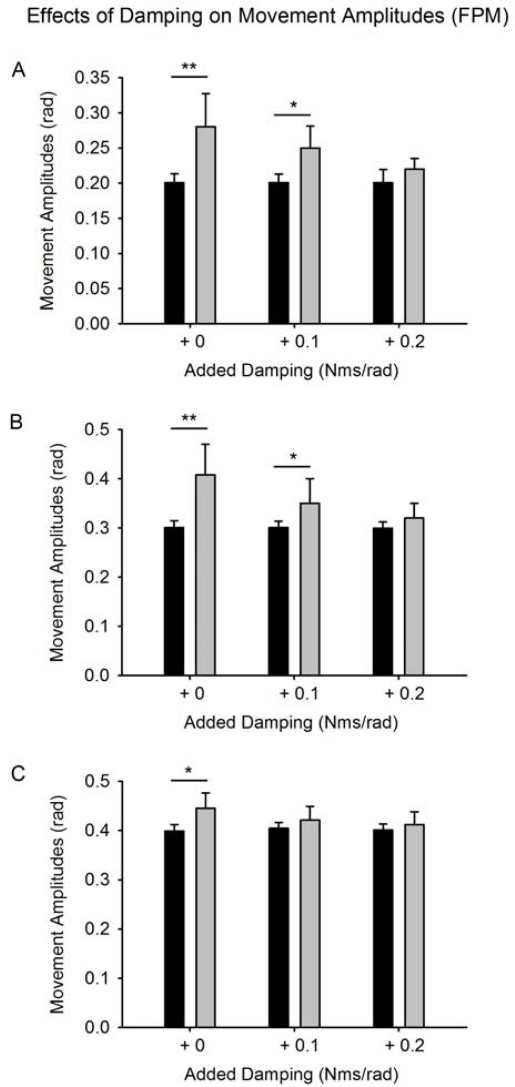
The pathophysiological assessment of joint properties and voluntary motion in neurological patients remains a challenge. This is typically the case in cerebellar patients, who exhibit dysmetric movements due to the dysfunction of cerebellar circuitry. Several tools have been developed, but so far most of these tools have remained confined to laboratories, with a lack of standardization. We report on a new device which combines the use of electromyographic (EMG) sensors with haptic technology for the dynamic investigation of wrist properties. The instrument is composed of a drivetrain, a haptic controller and a signal acquisition unit. Angular accuracy is 0.00611 rad, nominal torque is 6 N·m, maximal rotation velocity is 34.907 rad/sec, with a range of motion of -1.0472 to +1.0472 rad. The inertia of the motor and handgrip is 0.004 kg·m2. This is the first standardized myohaptic instrument allowing the dynamic characterization of wrist properties, including under the condition of artificial damping. We show that cerebellar patients are unable to adapt EMG activities when faced with an increase in damping while performing fast reversal movements. The instrument allows the extraction of an electrophysiological signature of a cerebellar deficit.
神经科患者关节特性和自主运动的病理生理学评估仍然是一个挑战。这在小脑患者中尤为明显,由于小脑回路功能障碍,他们会出现运动失调。已经开发出了几种工具,但到目前为止,这些工具大多数仍局限于实验室,缺乏标准化。我们报告了一种新的设备,它将肌电图(EMG)传感器与触觉技术结合在一起,用于动态研究手腕特性。该仪器由传动系统、触觉控制器和信号采集单元组成。角精度为 0.00611 弧度,标称扭矩为 6 N·m,最大旋转速度为 34.907 弧度/秒,运动范围为-1.0472 至+1.0472 弧度。电机和手柄的惯性为 0.004 kg·m2。这是第一个允许动态表征手腕特性的标准化肌动觉仪器,包括在人工阻尼条件下。我们表明,小脑患者在进行快速反转运动时,面对阻尼增加,无法调整肌电活动。该仪器可以提取小脑缺陷的电生理特征。